FREE! Click here to Join FunTrivia. Thousands of games, quizzes, and lots more!
Quiz about How Grand Bizarre Lets Shop In Istanbul

How Grand Bizarre! Let's Shop In Istanbul... Quiz


The Grand Bazaar in Istanbul, Turkey was established in 1461 AD and is one of the world's oldest and largest covered markets. Come and shop for some amazing, unique goods. Match the item to its photo.

by stephgm67. Estimated time: 3 mins.
  1. Home
  2. »
  3. Quizzes
  4. »
  5. World Trivia
  6. »
  7. World Sites
  8. »
  9. Malls & Shopping Centers

Author
stephgm67
Time
3 mins
Type
Quiz #
422,905
Updated
Feb 02 26
# Qns
10
Difficulty
Easy
Avg Score
9 / 10
Plays
25
Last 3 plays: krajack99 (10/10), Guest 72 (10/10), Guest 68 (6/10).
Drag-Drop or Click from Right
Options
Peshtemal towel Tavla set Iznik ware Zultanite jewelry Kilim tapestry Cezve set Crimson sumac Nazar boncuğu (evil eye) Turkish Delight Nargile pipe


 View Image Attributions for This Quiz

Most Recent Scores
Today : krajack99: 10/10
Today : Guest 72: 10/10
Today : Guest 68: 6/10
Today : cov1: 10/10
Today : GoodwinPD: 10/10
Today : pennie1478: 10/10
Today : xchasbox: 10/10
Today : Dizart: 10/10
Today : Guest 72: 7/10

Quiz Answer Key and Fun Facts
1. Iznik ware

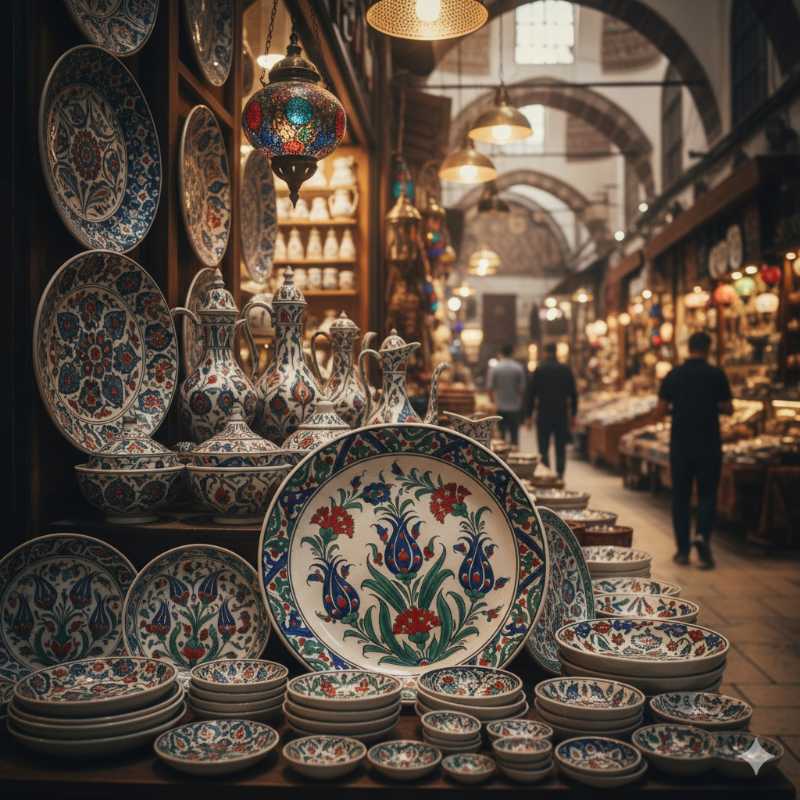
The Grand Bazaar is a fantastic place to shop for the famed iznik ware. These are ceramic pieces whose origins date back to the 1400s AD. Originally developed in the town of İznik (in modern day Turkey) to rival Chinese porcelain, these ceramics are distinct for their high quartz content (often up to 80%), which gives them an almost-glass like look. They are also known for their deep, vibrant colors such as blue and "tomato red".

Whereas mass-produced "lookalikes" abound, the Bazaar hosts many areas with artisans who have done the intricate manufacturing process and detailed hand painting. A single tile, for example, by one of these craftspeople can take upwards of 2 months to create. When you buy one, you will know it's totally original as the high-end pieces are freehand-painted rather than stamped, meaning no two items are exactly alike.
2. Kilim tapestry

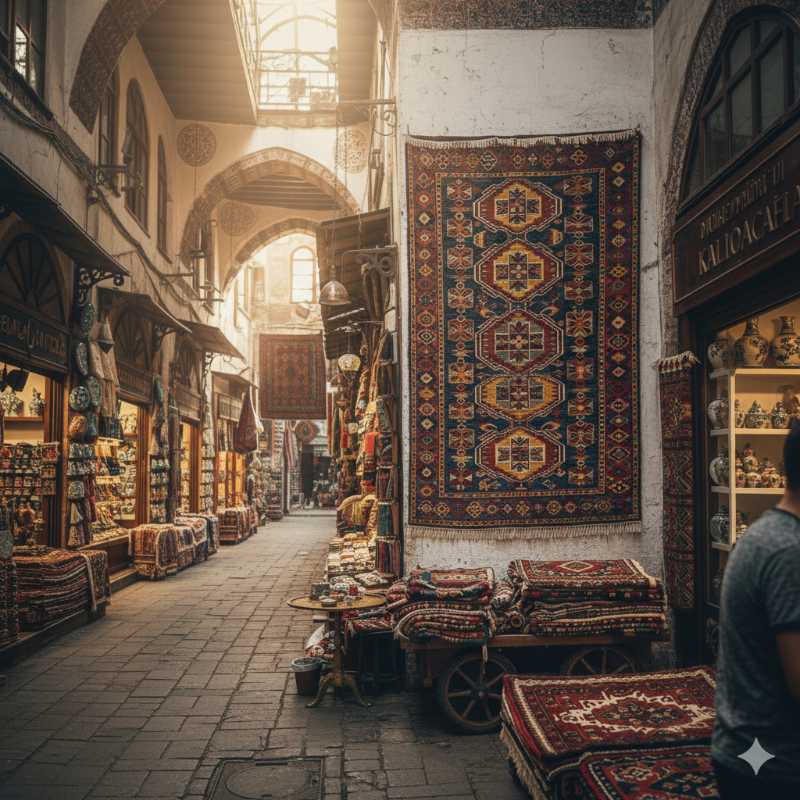
A kilim is not just a rug to be thrown down on the floor. It is a flat-woven tapestry that symbolizes important ideas of the artist. Being flat-woven means they are "knotless", using warp and weft threads, resulting in a lightweight and reversible fabric. Kilims hold a history of being used for a large variety of tasks. These could be everything from a bedroll to a saddle blanket to a prayer rug.

Shopping with the craftsperson who made them or the person selling them is an experience unto itself. As you peruse the rugs, you are normally invited to share a cup of tea. Then various rugs are brought out and their stories told. For example, a "water path" pattern represents the flow of life or an "evil eye" symbol protects the household from spiritual harm. Hopefully you will find one that touches your soul.
3. Cezve set

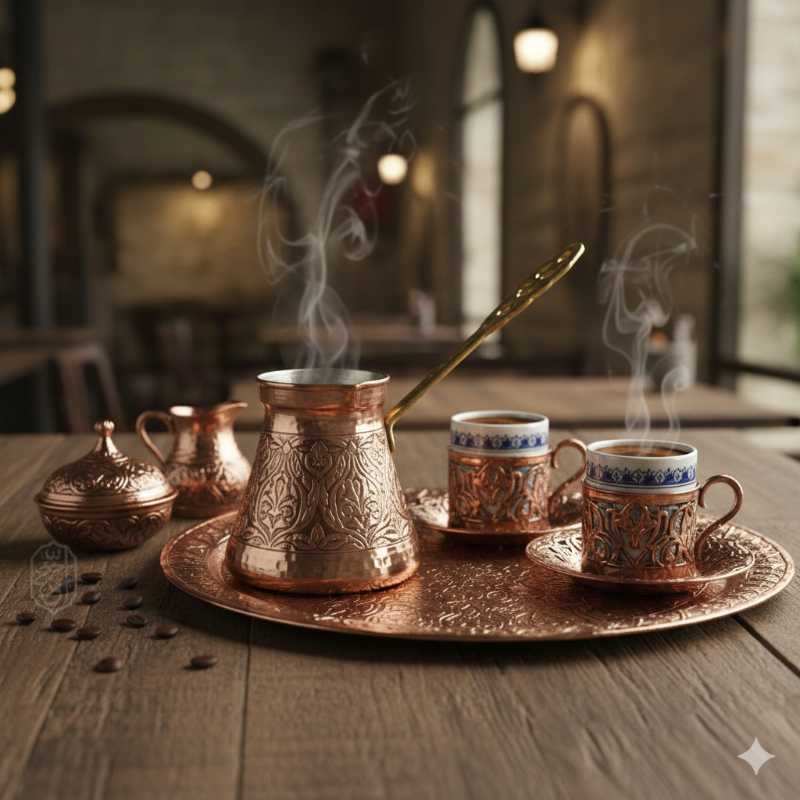
Partaking of Turkish coffee is a cultural heritage in Turkey and has been a tradition since the 1500s AD. The coffee itself is extremely finely ground coffee and is unfiltered. It is served in a cezve, which is a small, long-handled pot. A cezve set includes the pot, small porcelain cups, a tray and a lidded bowl for treats. These sets are traditionally hand-hammered from thick copper.

The sets are usually engraved with various patterns by the artist and the handles themselves can be shaped so the whole piece resembles an artwork. Buying one of these at the Grand Bazaar is, of course, all about enjoying the brew. The vendor will normally serve a cup to you while regaling you with stories. In Turkish culture, the phrase "A cup of coffee has forty years of memory" is one of the most beloved proverbs. It means that even a small act of kindness creates a bond of friendship that should be honored for a lifetime.
4. Nargile pipe

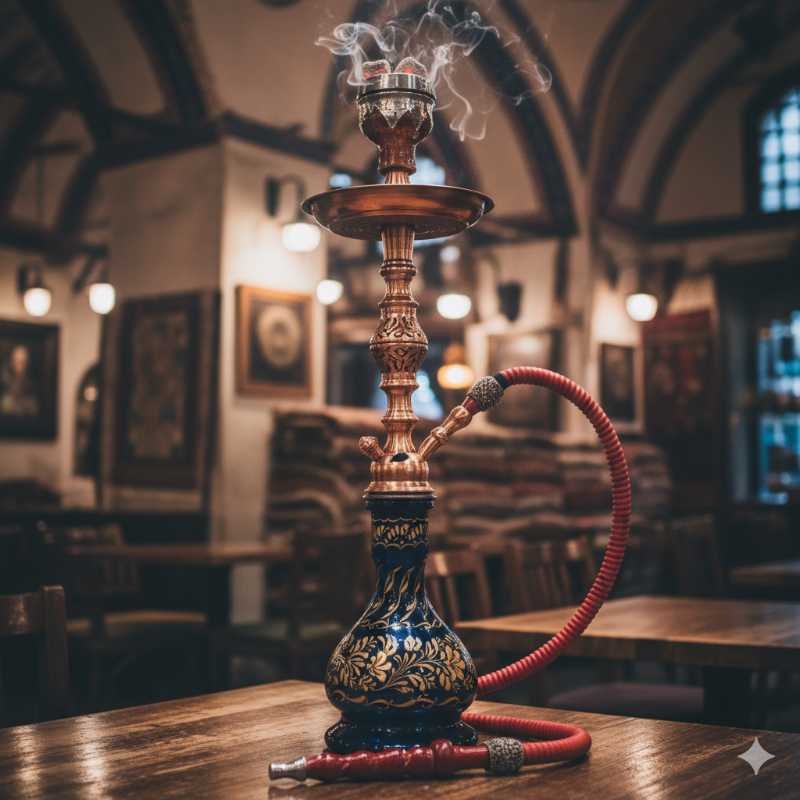
Nargile pipes, or hookahs, originated in the 1500s AD in India, designed to purify tobacco smoke through water. The nargile pipe is considered a monument to the art of Ottoman leisure. A traditional set consists of four main parts: the ornate metal body, the glass base, the long hose, and the clay tobacco bowl.

In the Grand Bazaar, you will find ones with bodies made of solid brass or silver-plated copper, often hand-etched with Islamic geometry and floral motifs. They are made to be presented proudly at one's home. The vendor at the Bazaar will typically ask you to join in the social ritual of trying the various tobaccos. They will also ensure that you understand the best way to utilize this piece to get the full benefit of its aid in quiet pleasure.
5. Zultanite jewelry

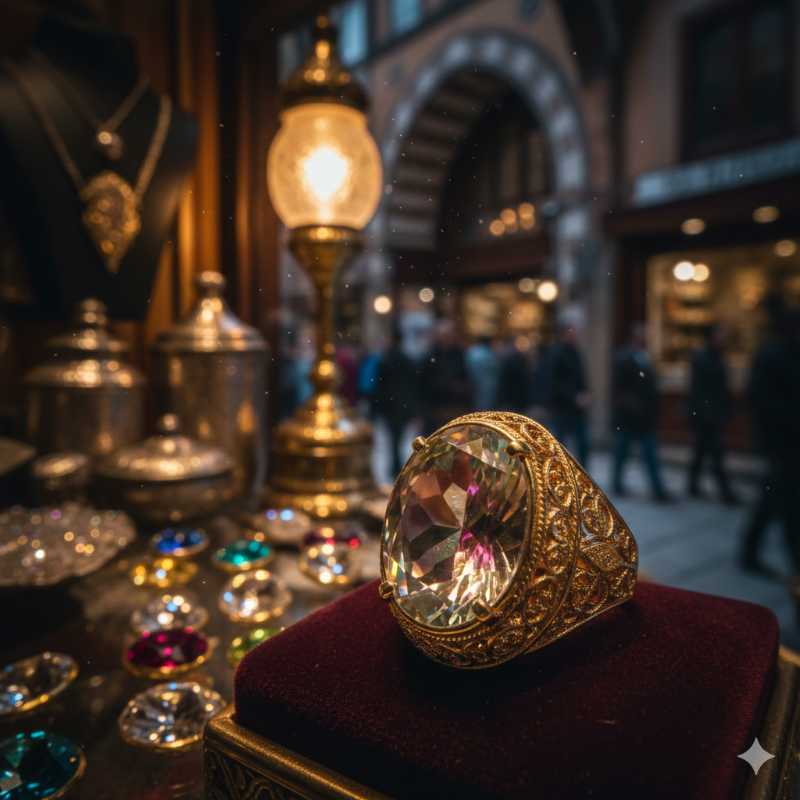
Zultanite is a gemstone that is mined in the remote Anatolian Mountains of Turkey. This is the only place on earth from which it can be mined. It can change color depending on the light source. For example, in the sunlight it can appear bright green but indoors or by candles it can turn orange or pink. The stone is very difficult to cut so large pieces are hard to find, but the smaller ones can go in jewellery pieces from sterling silver to high karat gold.

Shopping for this involves more than haggling with the merchant at the bazaar. The first step you will do is look at the vendor's authenticity card which is proof of a reputable seller. Then you will work with the vendor's penlight to see the color changes, as well as to make sure it is not 100% perfect as natural tiny marks can prove it came from the earth. Only then will you begin your bargaining process over a cup of tea or coffee.
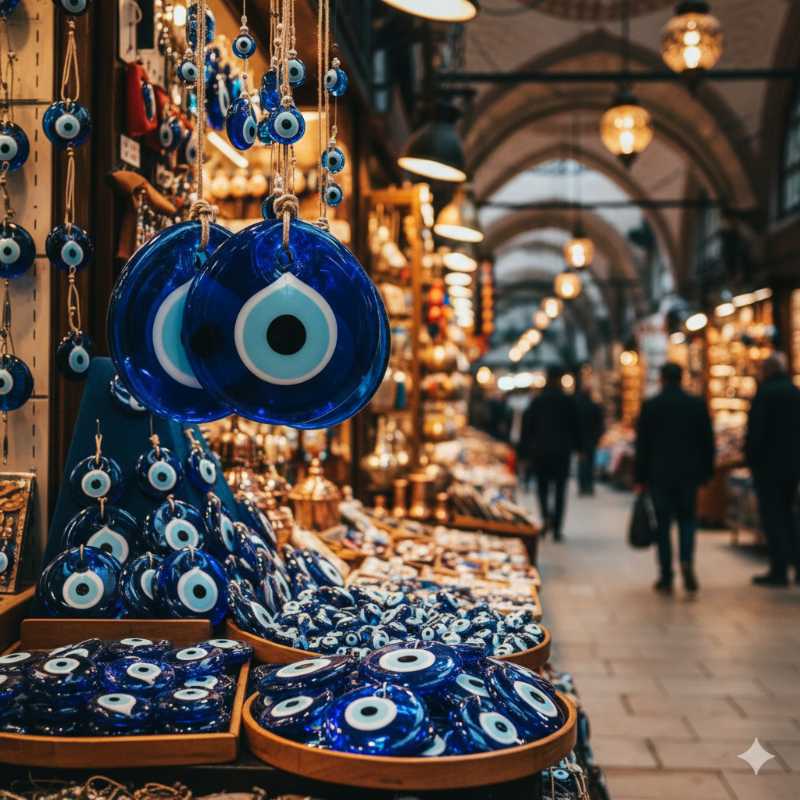
6. Nazar boncuğu (evil eye)

The history of these blue glass discs dates back over 5,000 years. They are amulets to offset bad luck. The idea is that an evil eye cast upon somebody can unintentionally bring bad luck, illness, or broken objects. To "reflect" this malevolent energy back to the sender, Turks hang these amulets everywhere. The nazar boncuğu can range in size from tiny beads to massive discs that are set into walls.

While shopping in the Grand Bazaar, you can find them as cheaper trinkets to very high-end artistic works. A common local superstition says that a nazar bead is most effective when given as a gift rather than bought for oneself, as the act of giving reinforces the protective bond. Finally, do not be upset if your amulet breaks while shopping, as it means that the amulet has successfully absorbed a powerful curse on your behalf!
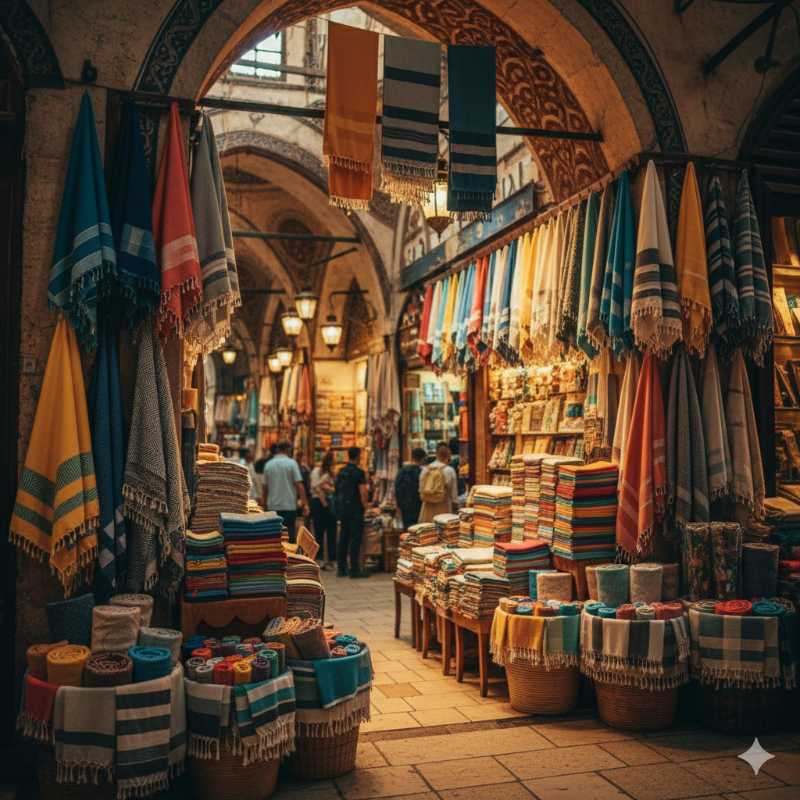
7. Peshtemal towel

A Turkish hammam is a traditional public bathhouse originating from the Ottoman Empire. And people in these hammams wear a peshtemal, or a Turkish towel. The towel is lightweight, highly absorbent, and famously quick-drying. Whereas they were originally used to maintain modesty in the public baths, today they are used around the world for scarves, throws, sarongs, etc.

You will find them in many places throughout the Grand Bazaar and most are fairly affordable, especially after a good bargaining with the vendor. Look for the hand-tied fringes at the ends which is a sign of traditional craftsmanship. And be sure to feel it carefully as a pure cotton or linen one should feel airy and slightly textured, and will fold down easily in your travel bags.
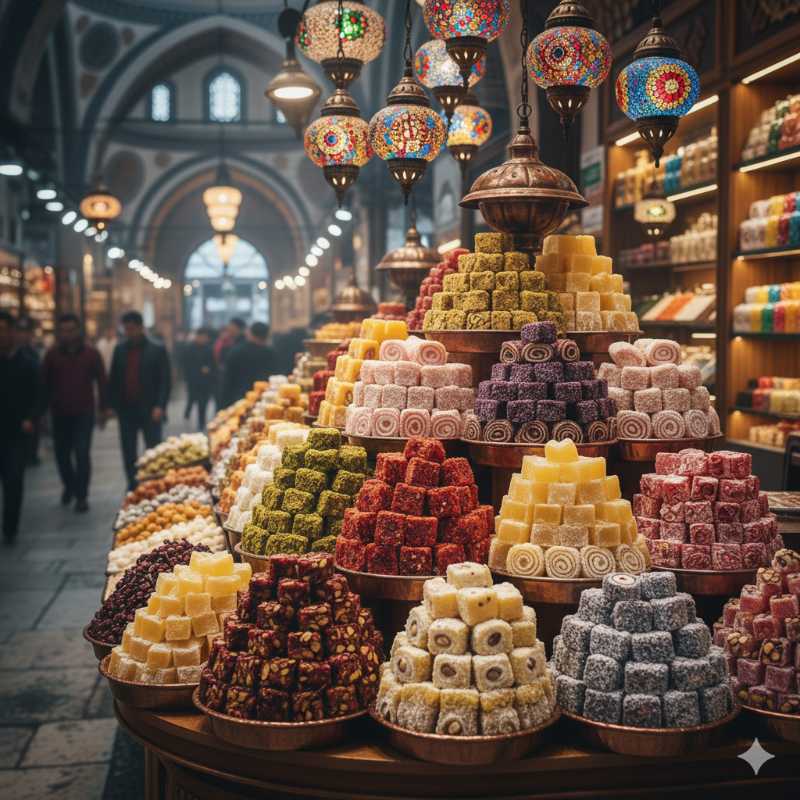
8. Turkish Delight

Originally developed in the late 18th century to satisfy the sweet tooth of the Ottoman Sultans, Turkish Delight is a delicate gel made from starch and sugar that is cut into cubes. Whereas it used to be made primarily with rosewater flavoring, today the treats are flavored with everything from sour pomegranate to creamy honey to spicy saffron. Turkish Delight is created as the traditional small, powdered cubes and also as more modern sausage shapes which are sliced into discs to show the interior.

You will absolutely experience "try before you buy" as you shop for these at the Bazaar. Vendors will approach you as you come near their stall and cut off a sample of their goods for you to try. The dessert should yield gently to your touch and have a fresh aroma. Because the sweet treat is susceptible to drying out easily, the vendor will vacuum pack your selections before placing them in an adorned cardboard, wood, or tin container.
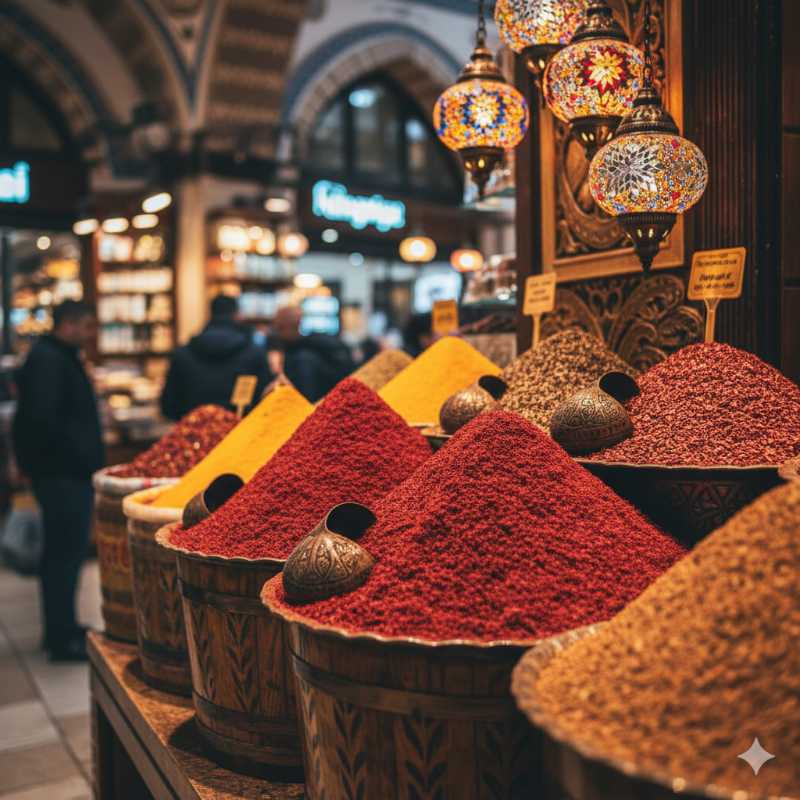
9. Crimson sumac

Crimson sumac is a spice made from the dried and ground berries of a shrub which grows wild in the Turkish highlands. It is known for its strong tangy and fruit taste and is often compared to lemon zest or tart dried cranberries. It is used throughout Turkey as an element in kebabs, salads (especially raw onion salad), and hummus.

As you shop in the spice areas of the Grand Bazaar you will see crimson sumac in large, open sacks or decorative glass jars. Vendors will encourage you to taste a small pinch and you should first catch the citrus notes then a salty aftertaste. Once you get your crimson sumac home, store it in a dark cupboard rather than out on the counter or in a rack on the wall, as light will eventually dim its bright color.
10. Tavla set

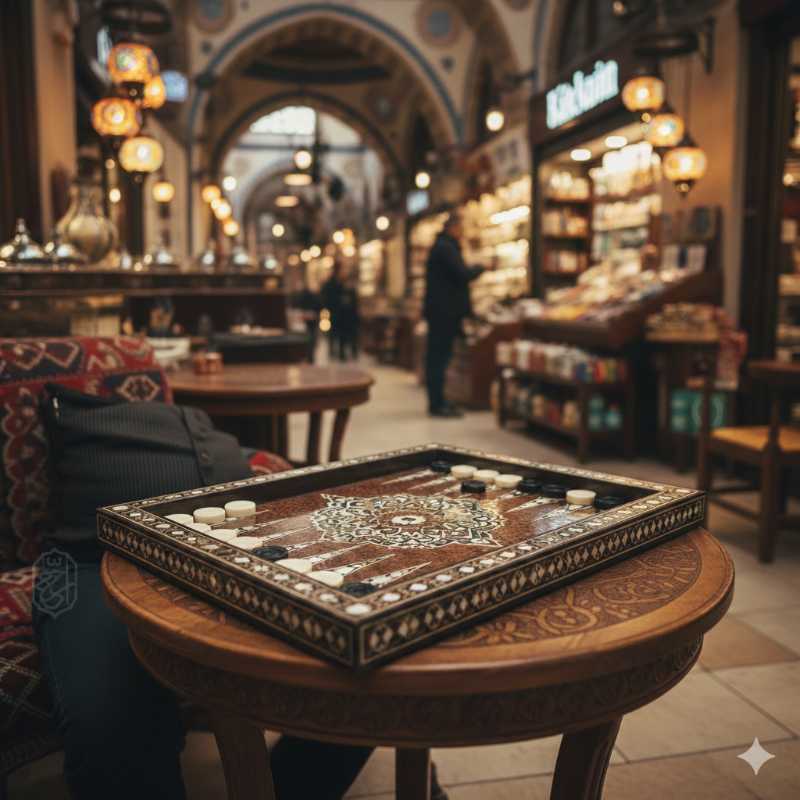
A tavla set is a backgammon game which contains the folding board, the thirty circular checkers, and two dice. A tavla is often a masterpiece of woodworking skills. Wood is interlocked with mother-of-pearl and tinted bone in gorgeous patterns. The checkers are traditionally created from boxwood or olive wood and give a nice weight to the game. Many sets also include a pair of tiny, handmade bone dice.

As you shop for one at the Bazaar, you will probably be invited to a game, either as a challenge or as a tutorial lesson. The vendor will verbally share with you all the bonuses of the hand-crafted set and let you get a feel for the play of the game. If you happen to win the contest you may close the board with a flourish and if you lose you will carry the board under your arm. Either way you will end up with a fun and beautiful souvenir of Turkish games.
Source: Author stephgm67

This quiz was reviewed by FunTrivia editor stedman before going online.
Any errors found in FunTrivia content are routinely corrected through our feedback system.
2/2/2026, Copyright 2026 FunTrivia, Inc. - Report an Error / Contact Us