FREE! Click here to Join FunTrivia. Thousands of games, quizzes, and lots more!
Quiz about Its The Law

It's The Law Trivia Quiz


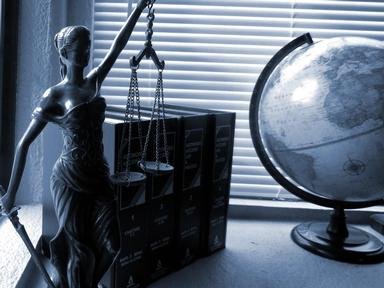
This is a brief tour around a few countries where there are or were some unusual laws in place. These were all in force relatively recently.

A multiple-choice quiz by suomy. Estimated time: 3 mins.
  1. Home
  2. »
  3. Quizzes
  4. »
  5. World Trivia
  6. »
  7. The Law
  8. »
  9. Unusual Laws

Author
suomy
Time
3 mins
Type
Multiple Choice
Quiz #
423,594
Updated
Apr 01 26
# Qns
10
Difficulty
New Game
Avg Score
9 / 10
Plays
20
Last 3 plays: bernie73 (7/10), Strike121 (8/10), xchasbox (9/10).
- -
Question 1 of 10
1. On which island nation was the sale of chewing gum banned in 1992? Hint


Question 2 of 10
2. Section 22 of the Marketing of Potatoes Act 1946 banned the possession of more than 50 kg of the tuber without permit. Perhaps an inter-state trade protection measure, where was this? Hint


Question 3 of 10
3. Why were goldfish bowls banned in some Italian cities? Hint


Question 4 of 10
4. Which items were banned from ancient Greek monuments due to the potential for damage? Hint


Question 5 of 10
5. Strange as it may seem, there have been places in France where death has been banned. How can this be? Hint


Question 6 of 10
6. Following the Malpasset Dam disaster of 1959, which country permitted posthumous marriages of civilians? Hint


Question 7 of 10
7. Where did a 1986 law make 'handling salmon in suspicious circumstances' a criminal offence? Hint


Question 8 of 10
8. In which country was there a limit to how many coins (including loonies and toonies) that could be used in any one transaction? Hint


Question 9 of 10
9. Which country made it an offence to run out of fuel on autobahns?
Hint


Question 10 of 10
10. In which Pacific country would you be living where yearly waistline measurements were required under the 'Metabo Law'? Hint


(Optional) Create a Free FunTrivia ID to save the points you are about to earn:

arrow Select a User ID:
arrow Choose a Password:
arrow Your Email:


Most Recent Scores
Today : bernie73: 7/10
Today : Strike121: 8/10
Today : xchasbox: 9/10
Today : Ampelos: 8/10
Today : Guest 174: 10/10
Today : Guest 79: 0/10
Today : Guest 84: 8/10
Today : Guest 31: 8/10
Today : mjhnz: 3/10

Quiz Answer Key and Fun Facts
1. On which island nation was the sale of chewing gum banned in 1992?

Answer: Singapore

The ban was at the instigation of the then Minister for National Development trying to deal with the costs associated with spent gum deposited in public areas, in particular on public transport. For example, gum placed on door sensors was causing doors to fail to operate on the Mass Rapid Transport trains.

It was not made illegal to chew gum; however, tourists bringing in their own supply could be fined for inappropriate disposal. Since 2004, an exception was made for gum used for therapeutic purposes. Such gum could be bought from certain doctors and pharmacists.
2. Section 22 of the Marketing of Potatoes Act 1946 banned the possession of more than 50 kg of the tuber without permit. Perhaps an inter-state trade protection measure, where was this?

Answer: Australia

An exception was where the potato 'rustler' happened to be a member of the Potato Corporation or an authorised agent. Western Australia was the last Australian State to repeal the 1946 Act through the Marketing of Potatoes Amendment and Repeal Act 2016 with its five-year transition period.
3. Why were goldfish bowls banned in some Italian cities?

Answer: Animal welfare reasons

The Italian city of Monza banned the round fish bowl in 2004. Rome followed with a ban in 2005 as well as banning the giving-away of goldfish (and other animals) as carnival prizes. It was also a legal requirement in Rome to walk dogs daily. These were all for animal welfare reasons. Back to goldfish, such bowls generally lack filtration systems and proper oxidation.

The goldfish's three-second memory is a myth and fish bowls fail to provide a stimulating environment for such social animals.
4. Which items were banned from ancient Greek monuments due to the potential for damage?

Answer: High-heeled shoes

This regulation was in place in 2009 to protect ancient Greek monuments from damage. High-heeled shoes typically have small areas of contact with the ground resulting in high localised forces. Such concentrated forces can cause damage leading to increased erosion or cracking of millennia-old surfaces. Picking out the wrong fashion item for your visit could attract a fine running to hundreds of Euros.

Other things prohibited from such sites include food and drink, removing stones, intoxication and disruptive behaviour (such as flash dancing).
5. Strange as it may seem, there have been places in France where death has been banned. How can this be?

Answer: Lack of cemetery space

Cemeteries fill up and strict French laws about land use can lead to problems having new land approved for cemeteries. Several communities took the unusual action of banning residents from dying unless they already had a burial space allocated. The village of Cugnaux in France was one such place.

The 2007 mayoral decree was soon declared illegal; however, Cugnaux got their new cemetery approved.
6. Following the Malpasset Dam disaster of 1959, which country permitted posthumous marriages of civilians?

Answer: France

Completed in 1954, the Malpasset Dam was built on the Reyran River in the French Riviera. It collapsed in 1959 killing 423 people. A posthumous marriage was first done to permit a pregnant fiancé to marry her partner who died in the disaster.

A French posthumous marriage did not create matrimonial property nor did it give the surviving spouse any inheritance rights to the deceased's estate. As many as 50 applications might be made per year with perhaps half being permitted. Prior to the disaster, the occasional marriage by use of proxy was permitted where a soldier had died.
7. Where did a 1986 law make 'handling salmon in suspicious circumstances' a criminal offence?

Answer: United Kingdom

The act in question was the 1986 Salmon Act and these particular provisions were aimed at poachers and those in the black-market salmon trade. The fish species covered were extended in 2009 to take in trout, eels, lampreys and smelt amongst others, and the provision title changed to 'handling fish in suspicious circumstances'. So make sure that you get the necessary permit if you plan on doing some freshwater fishing in the UK.
8. In which country was there a limit to how many coins (including loonies and toonies) that could be used in any one transaction?

Answer: Canada

This was probably more about avoiding people making a statement by paying fines in small change. Section 8(2) of the Currency Act of 1985 set limits on maximum number of certain coins that could be used per transaction, failing which the offered money could be refused.

For example, a maximum of $25 was allowed if paying in $1 coins (or loonies). So if you have accumulated a heap of coins during a visit, you may need to find a charity box.
9. Which country made it an offence to run out of fuel on autobahns?

Answer: Germany

One of the unusual things about German autobahns (or motorways) was that there were sections with no speed limit. Vehicles often exceeded 200 km/h (125 mph) and so avoiding traffic congestion on these roads became a priority. Unnecessary halts were forbidden by the Straßenverkehrs-Ordnung (StVO), the German Road Traffic Regulations. Running out of fuel on an autobahn was considered preventable and therefore negligent if it arose, with fines payable under Section 23 of the StVO.

In serious cases, it could be regarded as gross negligence, leading to criminal charges.
10. In which Pacific country would you be living where yearly waistline measurements were required under the 'Metabo Law'?

Answer: Japan

Concerned with the increasing health costs, Japan introduced the Metabolic Syndrome Countermeasures Promotion Law in 2008 to encourage Japanese organisations to support the health of employees. This included a yearly waistline measurement between the ages of 40 and 74.

It did not make obesity illegal but did treat it as a health condition. As such it required certain organisations to provide their employees with the resources to help them reduce their weight. The employee faced no tax or fine, however the organisation could be fined for failing to provide adequate resources.
Source: Author suomy

This quiz was reviewed by FunTrivia editor trident before going online.
Any errors found in FunTrivia content are routinely corrected through our feedback system.
4/1/2026, Copyright 2026 FunTrivia, Inc. - Report an Error / Contact Us