FREE! Click here to Join FunTrivia. Thousands of games, quizzes, and lots more!
Rest In Peace, Mr. President Trivia Quiz
In American history class it seemed that the focus on most U.S. presidents was their accomplishments while in office. Very little was ever taught about their deaths or interments, unless they happened while still in office.
A classification quiz
by ponycargirl.
Estimated time: 3 mins.
Last 3 plays: Guest 170 (8/15), pellstate (13/15), lunamoth54 (13/15).
Your task is to sort the names of the presidents of the United States according to the state in which they were laid to rest. In some cases it may help to know the state where they were born; however, that isn't the correct answer for all of them!
Virginia
New York
Ohio
James MadisonJohn F. KennedyThomas JeffersonTheodore RooseveltWarren HardingWilliam Henry HarrisonChester ArthurMillard FillmoreUlysses S. Grant George WashingtonFranklin D. RooseveltRutherford B. HayesWilliam McKinleyJames GarfieldWilliam Taft
* Drag / drop or click on the choices above to move them to the correct categories.
George Washington (1789-1797), the Father of Our Country, became the first president of the United States and a Founding Father after gaining fame for his military service during both the French and Indian War and the American Revolution.
His death at his beloved Virginia estate, Mt. Vernon, on December 14, 1799, was quite unexpected. While his doctors said quinsy, an infection that forms in the tissue near the tonsils, was the cause of death, modern scientists believe it was due to a severe throat infection called bacterial epiglottitis. Tissue covered his windpipe, and he suffocated to death, after having approximately 80 ounces of blood drawn by his physician during a 12 hour period.
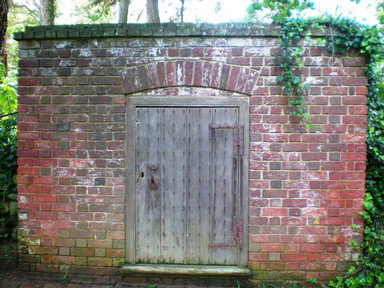
He asked that he be buried no less than three days after his death, and his will specified that he be buried in the family vault at Mt. Vernon, which is seen in the cover picture. The will also asked that a new vault be built, and it was completed in 1831. It contains the bodies of President Washington and his wife, Martha, along with more than twenty family members.
As an interesting aside, there was talk that President Washington should be buried in the U.S. Capitol, but it was still under construction when he passed away. A crypt for his burial, however, was built there, but it has never been used.
2. Thomas Jefferson
Answer: Virginia
Thomas Jefferson (1801-1809) was the third president of the United States, a Founding Father, and the main writer of the Declaration of Independence. During his terms in office, he was known for making the Louisiana Purchase and sending Lewis and Clark to map and explore the western part of the country. When his second term was complete in 1809, he retired to his Virginia estate, Monticello.
It appears that the accomplishments for which he was most proud were writing the Declaration of Independence (1776) and The Virginia Statute for Religious Freedom (1786), along with being the Father of the University of Virginia (1819); he left explicit handwritten instructions that those notations would be put on his grave stone. He died on July 4, 1826, on the fiftieth anniversary of the adoption of the Declaration of Independence.
In poor health for quite a while, his causes of death were listed as old age, severe diarrhea, urinary tract issues, toxemia, uremia, and pneumonia. When remembering President Jefferson's many talents, it should come as no surprise that he designed a family burial plot at Monticello. He had made a pact with his brother-in-law, Dabney Carr, that they would be buried under a specific oak tree on the property. Carr passed away first, and over time other family members were buried at the site. By the time President Jefferson passed away his wife and some of his children were also interred there.
3. James Madison
Answer: Virginia
James Madison (1809-1817) was a Founding Father and the fourth president of the United States. Known as the Father of the Constitution and Bill of Rights, he was commander in chief during the War of 1812, which is also known as the Second War of Independence.
Madison returned to Virginia and his family estate, Montpelier, after his second term of office ended in 1817, only to find that his plantation had been poorly managed in his absence. Trying to stay out of the political debates surrounding slavery, he helped with the establishment of the University of Virginia, and was a representative to the Virginia Constitutional Convention, which revised the original document.
He died at Montpelier in 1836 of congestive heart failure at the age of eighty-five, and was buried in an unmarked grave next to his parents in the family cemetery on the estate. Although his wife, Dolley, was eventually forced to sell the estate to pay off family debts, subsequent owners tended to the grave site and even added an obelisk marker. Dolley's remains were moved from Washington, D.C. to the site in 1858.
4. William Taft
Answer: Virginia
William Howard Taft (1909-1913), the 27th president of the United States, was the only US president to also serve as chief justice of the Supreme Court. In addition, he was the first of only two who have been buried at Arlington National Cemetery. As president from 1909-1913 he was known for trust busting, supporting the passage of the 16th and 17th Amendments, and his conservation efforts. While serving as chief justice of the Supreme Court from 1921-1930, he helped pass the Judiciary Act of 1925, which gave the Supreme Court greater control over its case dockets, and served as the advocate for the building of a Supreme Court Building in Washington, D.C.
Poor health caused Taft to resign as chief justice just about a month before he died at his home in Washington, D.C. He died from the complications of heart disease, high blood pressure, and inflammation of the liver.
Eligible for burial in Arlington due to his service to the United States as secretary of war, president, and chief justice, he wished to be buried in a prominent D.C. area rather than in his native state of Ohio. His wife chose the plot there, and was eventually buried next to him, making Helen Taft the first First Lady to be buried at Arlington.
5. John F. Kennedy
Answer: Virginia
John F. Kennedy (1961-1963) is known for many defining moments during his short term as president of the United States, including establishing the Peace Corps, proposing Civil Right legislation, pushing forward the space program, and leading the country through the Cuban Missile Crisis. He was assassinated in Dallas, Texas, on November 22, 1963.
The second president buried in Arlington, Kennedy was eligible due to his military service during World War II. Jackie Kennedy chose to bury her husband in an area that was accessible to the public. He had visited Arlington a few months prior to his death, and loved the peaceful setting. A friend had heard him say that it was "so magnificent that I could stay there forever", and passed the information on to the Kennedy family.
President Kennedy was buried in the cemetery at a temporary site in 1963; the permanent location was completed in March 1967. Two of the couple's infant children are buried there, along with Jackie. Kennedy's two brothers, Robert and Edward, are also buried nearby.
6. Theodore Roosevelt
Answer: New York
Teddy Roosevelt (1901-1909), known for his service during the Spanish-American War, trust busting, conservation efforts, and winning the 1906 Nobel Peace Prize, became president of the United States after President McKinley was assassinated. After he left office in 1909 he retired to his family estate, Sagamore Hill, Oyster Bay, New York, but didn't slow down much.
He immediately went on safari in East Africa and toured Europe before deciding that he would try to run for president again after forming the Bull Moose Party. He lost the election to Woodrow Wilson in 1912. But - he still wasn't finished! He was part of the Amazon River Expedition from 1913-14, during which time he suffered from malaria and sustained a leg injury. He even asked President Wilson if he could lead a volunteer army regiment in Europe during WWI!
His son's death during WWI, along with lingering tropical diseases and inflammatory rheumatism, led to a serious decline in his death. He died in his sleep of a pulmonary embolism on January 6, 1919. President Roosevelt did not want to have an elaborate funeral, nor did he wish to be buried in Washington, D.C. He loved Oyster Bay and wanted to be buried within its community. His family chose Youngs Memorial Cemetery, about 1.5 miles from Sagamore Hill, as his final resting place.
7. Ulysses S. Grant
Answer: New York
Ulysses S. Grant (1869-1877) made a name for himself as the General-in-Chief of the Armies of the United States during the Civil War. A very popular war hero, he was elected to the presidency in 1869, and oversaw the period in U.S. history known as the Reconstruction. During his terms he supported the passage of the Fifteenth Amendment for Black voting rights. Although he is judged by historians today as an honest man, they also state that he was way too trusting, and his administration was marred by corruption.
After he left office in 1877 he took his family on an extended world tour, and they eventually settled down in New York City. In 1884 a poor financial decision left the Grants in utter poverty; later that year Grant was diagnosed with throat cancer due to his cigar smoking, which caused him a lot of pain and difficulty in speaking and breathing. He struggled to finish his memoirs so that he could leave his wife with some financial support. He died on July 23, 1885, just days after completing his work.
Grant's will indicated that he would like to be buried in Missouri, Illinois, or New York, but insisted that the plot had to be large enough for both he and his wife. When the mayor of New York City offered Mrs. Grant a burial plot in the city, she accepted. His body was placed in a temporary tomb in Riverside Park, and was placed in its final resting spot, a mausoleum built to resemble ancient architecture, on April 27, 1897.
8. Franklin D. Roosevelt
Answer: New York
Franklin Delano Roosevelt (1933-1945) was the 32nd president, and the only four term president in the history of the United States. He is known for his New Deal program, which helped to end the Great Depression and his leadership during World War II. Already suffering from polio, which left him confined to a wheelchair, his service to his country during the Great Depression and throughout WWII adversely affected his health for many years before he died.
He suffered from severe hypertension, coronary artery disease, and atherosclerosis that were exacerbated by years of stress. Although he knew his health was failing, his doctors never revealed the severity of his issues to him. He passed away in Warm Springs, Georgia, at the Little White House, where he had gone for many years after finding that swimming in the warm water improved his physical condition. He suffered a massive cerebral hemorrhage.
According to his own instructions, written on December 26, 1937, FDR wanted to be buried at his family estate in Springwood, New York, where he was born. He specifically asked to be buried "where the sun dial stands in the garden", which meant in the family rose garden.
9. Millard Fillmore
Answer: New York
During the administration of Millard Fillmore (1850-1853), 13th president of the United States, the Compromise of 1850, which allowed California to enter the Union as a free state was passed. The slave trade in Washington, D.C. was also abolished, and Commander Perry was sent to initiation trade relations with Japan. Fillmore was vice-president, and became president when Zachary Taylor passed away.
After leaving office, Fillmore retired to Buffalo, and maintained a busy lifestyle, running again unsuccessfully for president, and serving as the chancellor of the University of Buffalo from 1846-1874. In February 1874 he suffered a stroke, and died in March after a second one.
The native New Yorker had moved to Buffalo as a young man and practiced law there. He was buried in Forest Lawn Cemetery, among many family members and friends.
10. Chester Arthur
Answer: New York
The 21st president of the United States, Chester Arthur (1881-1885), took office after President Garfield was assassinated. Arthur was born in Vermont, but practiced law in New York City. He passed the Pendleton Act to end the spoils system of giving jobs to friends and family, and made a new law for merit based hiring. Also known as the Father of the Steel Navy, he transformed the U.S. Navy into a global force.
Arthur was suffering from Bright's disease, a kidney disorder, but kept it secret during his last three years in office. The disease weakened his heart. After leaving office, he planned to return to his law practice, but was prevented from doing so by his health. He died in November 1886.
He is buried at Albany Rural Cemetery in Menands, New York, next to his wife, Ellen, who had died before he took office. Many other family members, his parents and siblings, were also buried in the family plot.
11. William Henry Harrison
Answer: Ohio
William Henry Harrison (1841), the 9th president of the United States, holds the distinction of only being in office for thirty-two days, and being the first to die in office. The military hero of the Battle of Tippecanoe in 1811 gave a very long inaugural address in frigid weather.
His doctor diagnosed him with pneumonia, probably caused by giving the long speech in freezing weather without being properly clothed. Bleeding was ordered as part of his treatment, which definitely weakened him. Modern historians, after reviewing the doctor's notes, believe he may have died from enteric fever, which would have been caused by contaminated drinking water in Washington, D.C.
A native Virginian, Harrison made North Bend, Ohio, his home after his marriage. He had asked to be buried at a place called Mt. Nebo in North Bend that overlooked the Ohio River. Although he was temporarily buried in D.C.'s Congressional Cemetery, his family later moved his remains to the place he requested.
12. Rutherford B. Hayes
Answer: Ohio
Rutherford B. Hayes (1877-1881) was the 19th president of the United States, and led at the end of the Reconstruction period. He withdrew the last of the federal troops from the South, and instituted a merit-based system, which was aimed at ending political corruption and the spoils system. During his term of office the first typewriter and telephone were installed in the White House.
After having promised that he would not seek a second term in office, Hayes left office in 1881, returning to his home, Spiegel Grove, in Fremont, Ohio. He became an ardent supporter of education for all, prison reform, and veteran care, serving as the National Commander of the Military Order of the Loyal Legion.
He began suffering severe chest pains while on a trip to Ohio State University, and insisted on traveling home where he died of a heart attack. He was first buried at Oakwood Cemetery in Fremont; his son, however, moved his remains to Spiegel Grove while overseeing the building of the Rutherford B. Hayes Presidential Library and Museum there.
13. James Garfield
Answer: Ohio
James Garfield (1881), the 20th U.S. president, only served for two hundred days. Prior to that he served as a major general in the Union Army during the Civil War, and had been a member of the U.S. House of Representatives. As president his plans to remove the taint of political corruption and the spoils system from the office, eventually led to reform bills being passed.
While at a Washington, D.C. train station, planning to board a train for summer vacation at his home in Ohio, he was shot twice by a mentally unstable man named Charles Guiteau. Guiteau believed that Garfield owed him a special office because he had supported his run for the Presidency. He was angry because he hadn't been properly rewarded. Sadly, most historians believe that Garfield might have recovered from his wounds if his doctors had believed in cleaning their hands and medical instruments. He died eighty days later of blood poisoning.
Garfield wished to be buried in his home state of Ohio. During his lifetime he had stated that he wanted to be buried in the Lake View Cemetery in Cleveland, which was very close to his family farm, known as Lawnfield. A memorial was built at the Lake View Cemetery using donations from people across the country.
14. Warren Harding
Answer: Ohio
President Warren Harding (1921-1923) became the president of the United States after World War I, promising a "return to normalcy". His administration, however, was riddled with corruption after his appointment of members of the Ohio Gang to high federal offices; they were friends he had met along the way who engaged in a variety of illegal activities. This was also the time of the famous Teapot Dome Scandal, perpetrated by Harding's Secretary of the Interior.
Harding was on a national tour that included a visit to Alaska when he fell ill with a fever and shortness of breath in San Francisco, California. He died of a heart attack while his wife was reading the newspaper to him.
He had moved to Marion, Ohio, in the 1880s, and bought the town newspaper. The Harding Memorial Association asked that he be buried there instead of Washington, D.C. His funeral monument is a circular building made of marble. It is located in Marion on Vernon Heights Boulevard.
15. William McKinley
Answer: Ohio
William McKinley (1897-1901) was the 25th president of the United States, leading the country through the Spanish-American War after which overseas territories were acquired. He also signed the Gold Standard Act of 1900, which tied U.S. currency to a gold standard, and passed higher tariffs to support U.S. workers and trading goods.
The president was at the Pan-American Exposition World's Fair in Buffalo, New York, greeting people and shaking hands, when Leo Czolgosz shot him twice in the abdomen. Czolgosz believed that the office of president had too much power. After losing his job, he came to see politicians as those who were corrupt and oppressive. McKinley died eight days later of gangrene and sepsis that were caused by the gunshot wounds.
After the Civil War, McKinley moved to Canton, and that was where he practiced law, married his wife, and began his political career. At the West Lawn Cemetery in Canton there was a place that he liked to visit; he had once suggested its use as a military memorial. That site became the McKinley National Memorial.
This quiz was reviewed by FunTrivia editor trident before going online.
Any errors found in FunTrivia content are routinely corrected through our feedback system.