FREE! Click here to Join FunTrivia. Thousands of games, quizzes, and lots more!
Quiz about Symbols of the States  Birds 2

Symbols of the States - Birds [2] Quiz

U.S. State Birds (Illinois-Mississippi)

One thing that U.S. state legislatures have always loved doing is voting to establish symbols that represent their states. Here we take a look at several official state birds, listing the states alphabetically.

by trident. Estimated time: 3 mins.
  1. Home
  2. »
  3. Quizzes
  4. »
  5. World Trivia
  6. »
  7. National Symbols
  8. »
  9. U.S. State Animals

Author
trident
Time
3 mins
Type
Quiz #
425,598
Updated
Sep 19 26
# Qns
12
Difficulty
Very Easy
Avg Score
11 / 12
Plays
34
Last 3 plays: Guest 173 (10/12), BarbaraMcI (10/12), hosertodd (10/12).
Click on the image to get a closer look! Since many U.S. states share the same state bird, I've used the same bird photos to avoid confusion.
Drag-Drop or Click from Right
Options
Brown pelican Western meadowlark Northern cardinal Black-capped chickadee Northern cardinal Chickadee (unspecified) Northern cardinal Northern mockingbird American robin Eastern goldfinch Common loon Baltimore oriole


 View Image Attributions for This Quiz

Most Recent Scores
Today : Guest 173: 10/12
Today : BarbaraMcI: 10/12
Today : hosertodd: 10/12
Today : pommiejase: 12/12
Today : Guest 50: 12/12
Today : MalStone: 12/12
Today : Guest 136: 12/12
Today : Guest 143: 12/12
Today : zurddog01: 10/12

Quiz Answer Key and Fun Facts
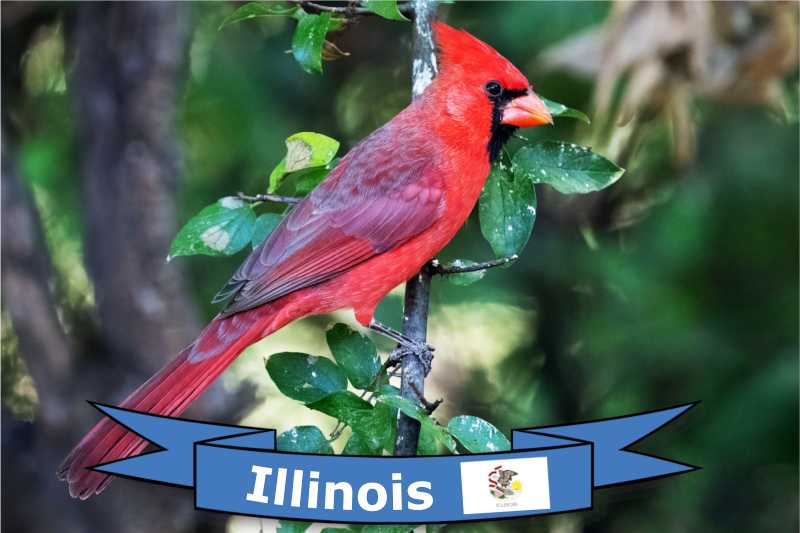
1. Northern cardinal

Illinois schoolchildren voted in 1928 to name the northern cardinal as the state bird, and it was made official the following year. You'll be seeing this bird a lot in these quizzes because it is the state bird of seven states, more than any other species.

The bird's brilliant red color develops in males as they reach maturity; fledglings are generally dullish brown and start to develop red feathers as they mature. Females can also sport reddish coloring, though their main bodies are typically brown.
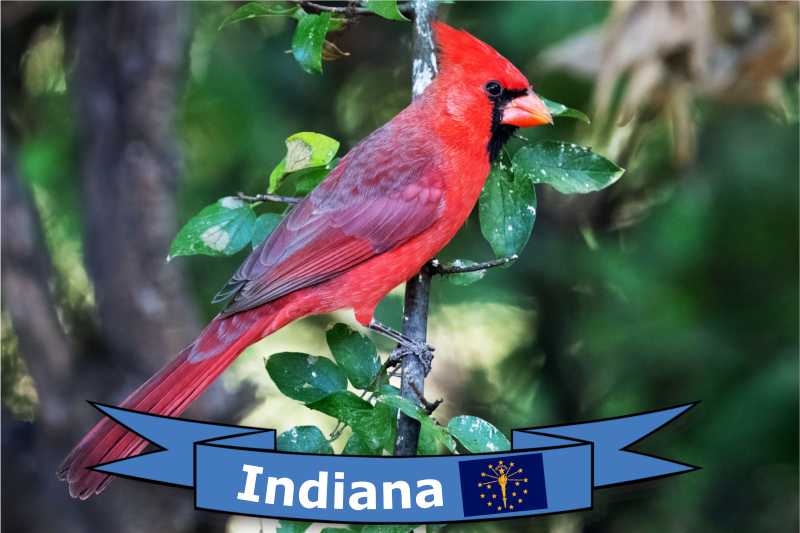
2. Northern cardinal

Indiana chose the cardinal as its state bird a bit later than some other states: in 1933. Cardinals are common sights in the Midwest and parts of the American South year-round, which helps explain why so many of these states chose these bright birds to represent them.

The name "cardinal" is indeed derived from the cardinals of the Roman Catholic Church, known for their bright red robes, and not the other way around. The bird's scientific name has gone through a series of changes since Linnaeus first described it in 1758; he originally placed it in Loxia, the genus that now contains the crossbills.
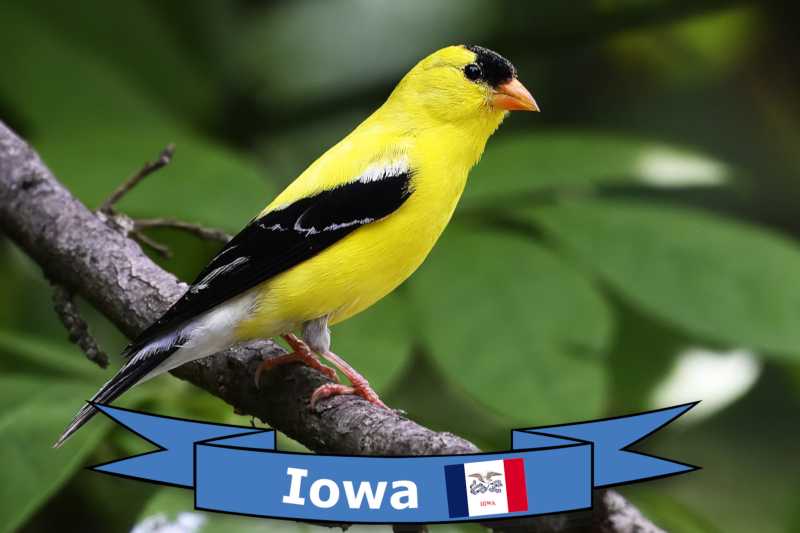
3. Eastern goldfinch

The eastern goldfinch (more commonly called the American goldfinch) became Iowa's state bird in 1933. It is a short-distance migratory bird found in varying parts of North America throughout the year. During breeding season, you'll find it across southern Canada and much of the northern and central U.S. During non-breeding season, its range extends farther south, from the Pacific to the Atlantic and into parts of Mexico.

If you'd like to recognize its distinctive call, ornithologists often describe it as sounding like the words "po-ta-to-chip."
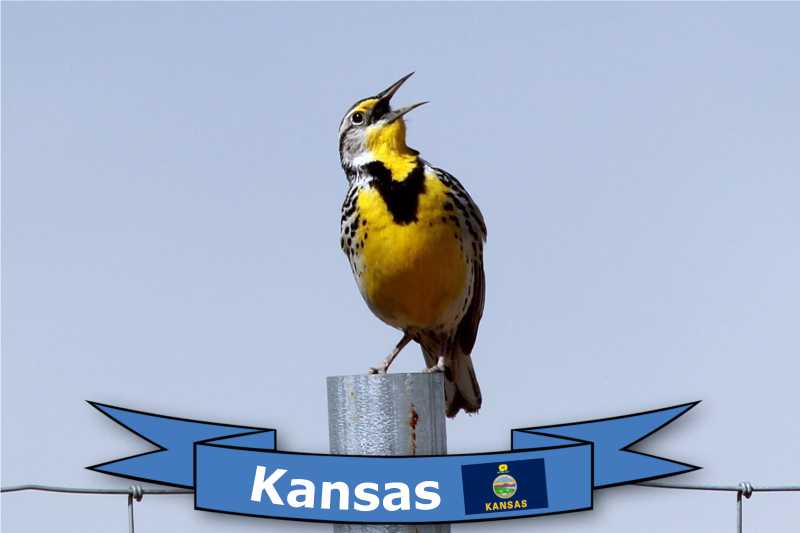
4. Western meadowlark

The western meadowlark is another bird that many U.S. states (six) have decided to choose as their representative. In Kansas, a vote by schoolchildren took place in 1925, but the state legislature didn't officially designate the meadowlark as the state bird until 1937.

One interesting fact about its scientific name (Sturnella neglecta) is that ornithologist John James Audubon chose it because he believed the bird had been overlooked by earlier explorers and settlers. I suppose he didn't know that it would become such an enduring and popular symbol nearly a century later.
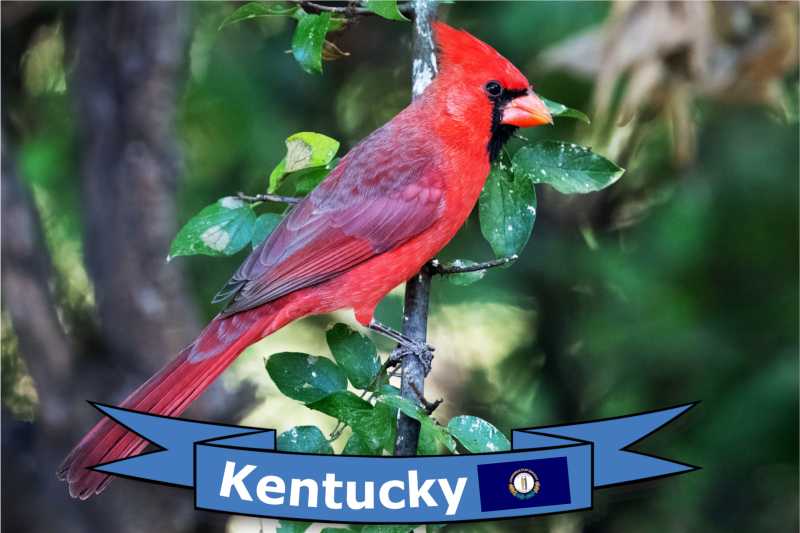
5. Northern cardinal

Kentucky became not only the first U.S. state to choose the cardinal as its state bird, but also the first to officially choose a state bird, period, in 1926. While informal adoptions had taken place previously, Kentucky formalized the process, and several other U.S. states followed shortly after.

As for the cardinal's red color, it doesn't come from eating red foods but from its ability to take carotenoids from yellowish-colored foods and convert them into red pigments. In male cardinals, this process produces the red color across most of their plumage. Rare cardinals with mutations that disrupt this process have been found with yellow plumage.
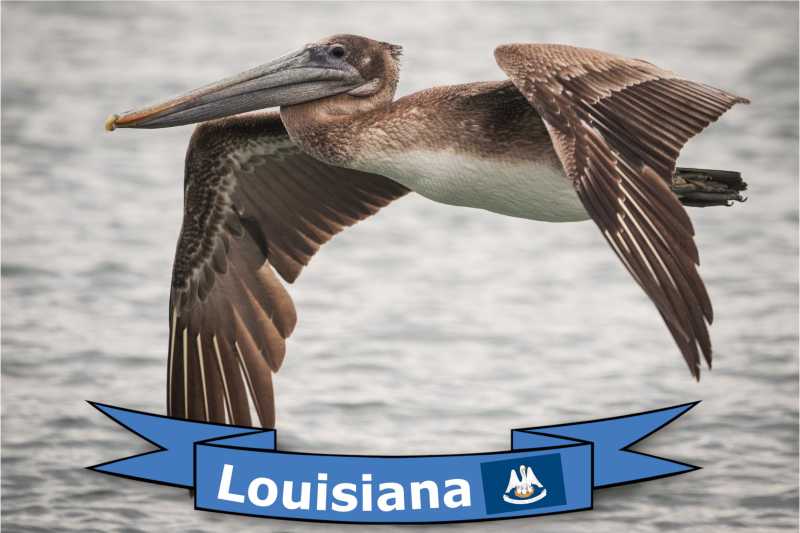
6. Brown pelican

The brown pelican became Louisiana's state bird in 1966, though the designation came during an unfortunate period; the bird had temporarily disappeared from the state due largely to the use of chemical pesticides. The bird has since been reintroduced to the state and is carefully monitored.

The Louisiana state flag contains a pelican; although the flag statute does not specifically identify the species, official state materials associate it with the brown pelican. It is the only U.S. state flag to have a bird other than a bald eagle on it.
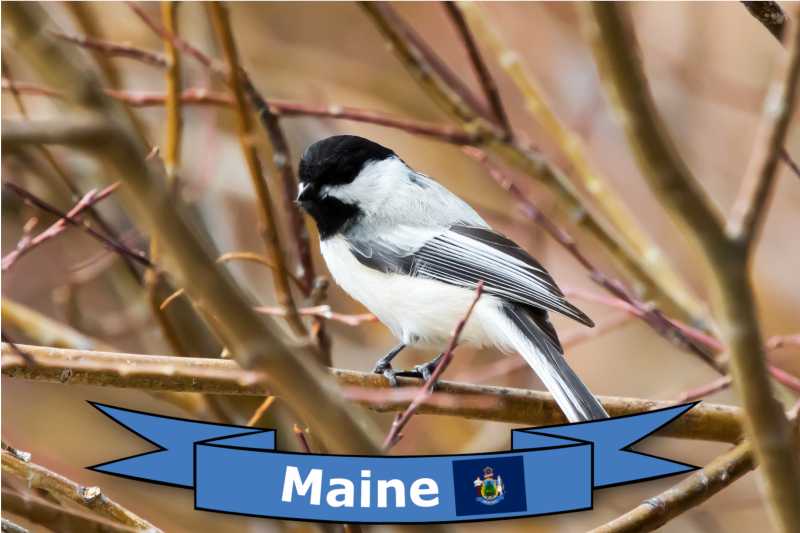
7. Chickadee (unspecified)

The chickadee became the state bird of Maine in 1927, the same year many U.S. states were adopting state birds. However, unlike many other states, the Maine Legislature decided not to choose a specific species. This has led to debates in the state over which chickadee species was meant to be the real state symbol.

In 2019, the Maine Legislature considered settling the debate (largely between the boreal chickadee and the black-capped chickadee) once and for all...by not choosing a species. A legislative committee instead rejected a bill that would have required a specific species to be chosen, leaving the state symbol simply as "chickadee."
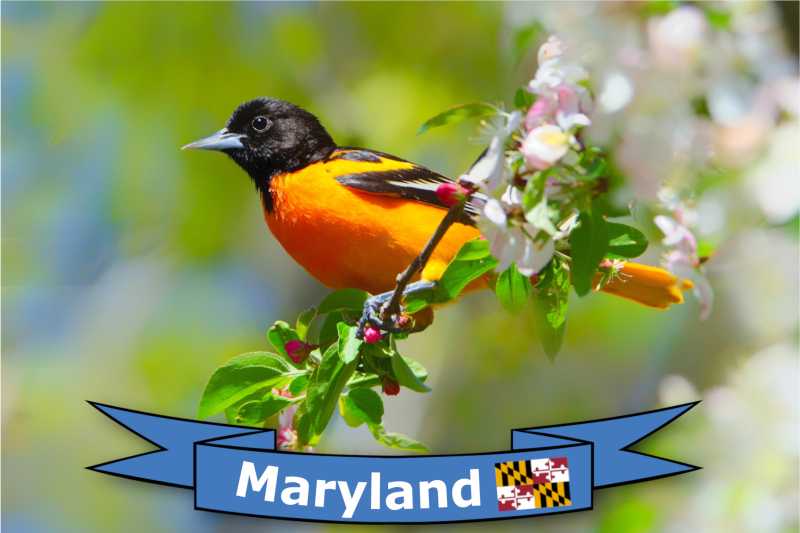
8. Baltimore oriole

In 1947, the Baltimore oriole became Maryland's state bird, though the "Baltimore" part of the bird's name had come earlier, in the late 17th century. The bird, like the city, was named after Lord Baltimore (Cecil Calvert, 2nd Baron Baltimore). The Baltimore oriole was named after him because the bird's colors were said to resemble those of his coat of arms.

Whereas some other birds aren't very picky about the ripeness of the fruit they eat, the Baltimore oriole tends to consume ripe, dark-colored fruit. It also eats insects and drinks nectar as part of its diet.
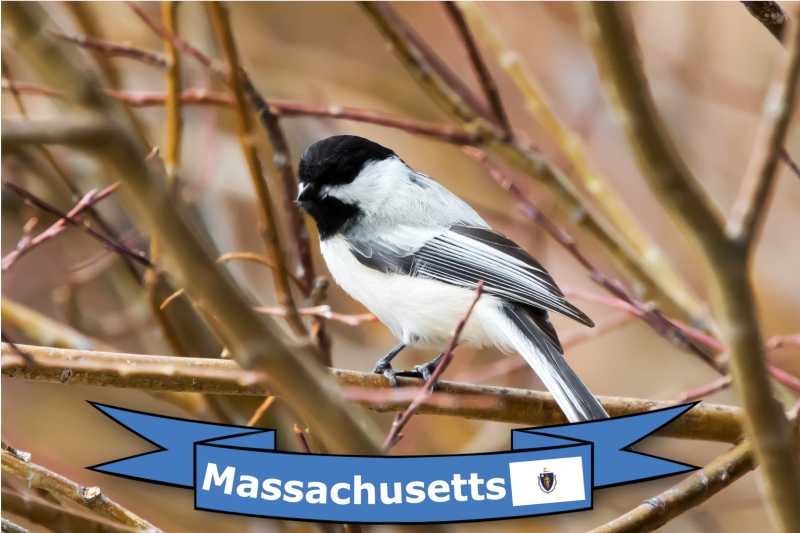
9. Black-capped chickadee

The black-capped chickadee became Massachusetts's state bird in 1941, when the Massachusetts General Court officially adopted it on March 21. Unlike Maine, which chose simply the "chickadee" without specifying a species, Massachusetts's law identified the black-capped chickadee specifically. The bird is a year-round resident throughout Massachusetts and can be found anywhere from forests to suburban yards and city parks.

Black-capped chickadees are also known for their impressive memories. They hide seeds and other food in many different locations for later use and can remember thousands of these hiding places. Their familiar "chick-a-dee-dee-dee" call also gave the chickadee its common name.
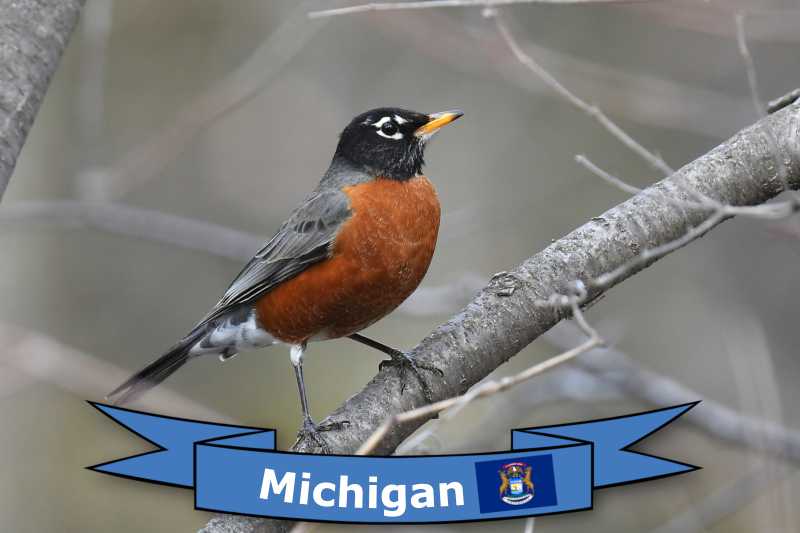
10. American robin

The American robin became Michigan's state bird in 1931 after the Michigan Audubon Society conducted a state-wide election to choose a favorite bird. The Michigan Legislature called it "the best known and best loved of all the birds in the state of Michigan."

One of the robin's most recognizable features is actually found inside its nest: its unmarked eggs are a distinctive sky blue or blue-green. Female robins construct their cup-shaped nests from grasses and twigs, then reinforce them with mud before lining the inside with finer grass. A typical clutch contains three to five eggs.
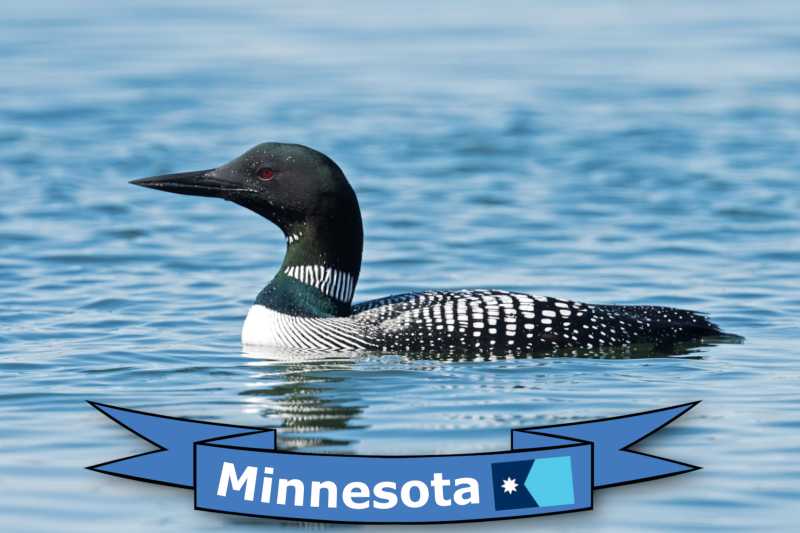
11. Common loon

The common loon became Minnesota's state bird in 1961, after several other species had been proposed for the honor over the years. Minnesota is particularly well suited to its state bird: roughly 12,000 common loons spend the summer there, giving the state more loons than any other except Alaska.

Loons are excellent swimmers but much less graceful on land because their legs are positioned far back on their bodies. Unlike most birds, they also have relatively solid bones, which help them dive underwater in pursuit of fish. That adaptation comes with a drawback: to get airborne, a loon may need to run across hundreds of feet of open water before it can take off.
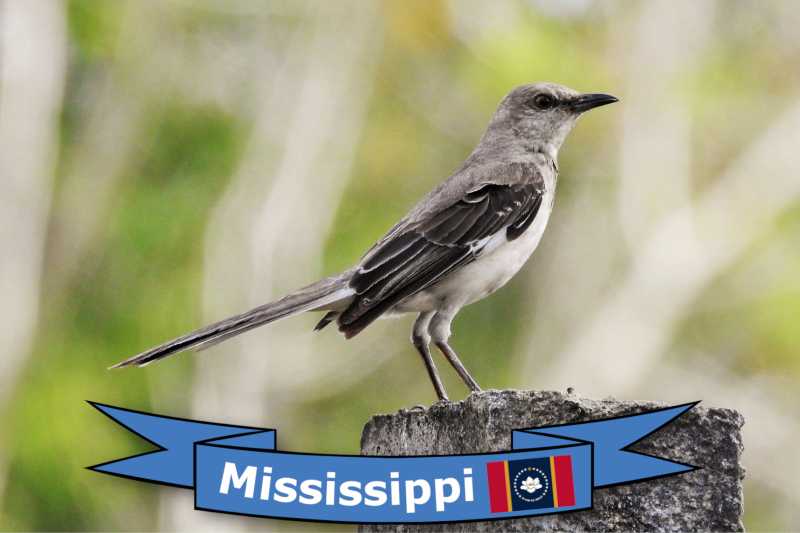
12. Northern mockingbird

The northern mockingbird became Mississippi's state bird in 1944, following a campaign by the Mississippi Federation of Women's Clubs. The organization promoted the bird as a state symbol and successfully lobbied the legislature, which officially adopted it on February 23 of that year.

Mockingbirds can be surprisingly fierce when defending their nests and territories, chasing away other birds, cats, dogs, and even people. They are also capable of remembering individual humans: in one University of Florida study, mockingbirds quickly learned to recognize people who had approached their nests and reacted much more aggressively to those individuals than to unfamiliar people.
Source: Author trident

This quiz was reviewed by FunTrivia editor stedman before going online.
Any errors found in FunTrivia content are routinely corrected through our feedback system.
9/19/2026, Copyright 2026 FunTrivia, Inc. - Report an Error / Contact Us