FREE! Click here to Join FunTrivia. Thousands of games, quizzes, and lots more!
Symbols of the States - Birds [1] Quiz
U.S. State Birds (Alabama-Idaho)
One thing that U.S. state legislatures have always loved doing is voting to establish symbols that represent their states. Here we take a look at several official state birds, listing the states alphabetically.
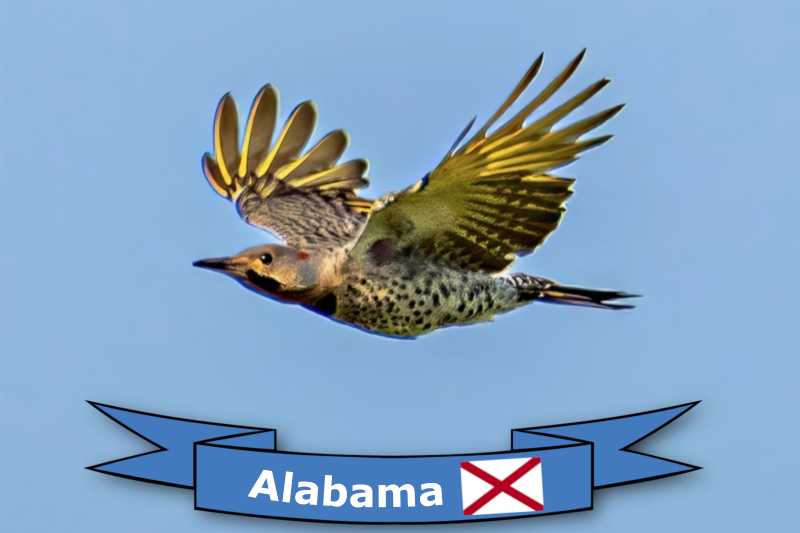
The yellowhammer is more commonly called the northern flicker; however, Alabama officially adopted the state bird as the "yellowhammer" in 1927, a name that harkens back to a nickname given to Confederate soldiers. The northern flicker belongs to the woodpecker family, and it should not be confused with the Eurasian yellowhammer, which is brighter in color and belongs to the bunting family. Interestingly, the bird has over 100 common names ascribed to it.
Subspecies groups include the yellow-shafted and red-shafted flickers, the former inhabiting mostly the eastern and central parts of North America, while the latter is mostly concentrated in western North America. These woodpeckers are unusual in that they frequently feed on the ground, unlike most other woodpeckers, which typically search for food on trees.
2. Willow ptarmigan
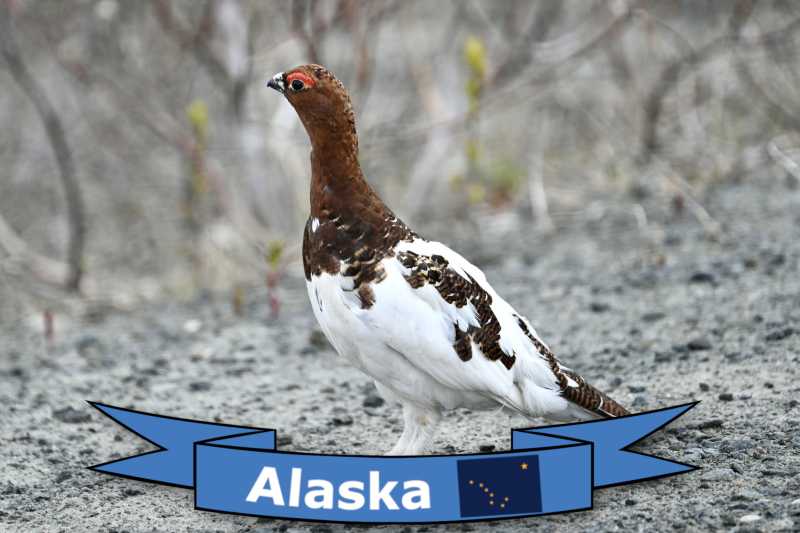
Named the state bird of Alaska in 1955, the willow ptarmigan has plumage that differs greatly based on the season. In summer, it sports dappled brown or tan feathers, and in the winter, these often change to vibrant whites and blacks. These shifts offer the bird camouflage during each season, considering the northern environments the bird inhabits, including Alaska, Canada, and Russia.
The bird is primarily herbivorous, mainly subsisting on the leaves, buds, and seeds of willow shrubs. During the winter season, it relies heavily on willow buds and twigs that protrude above the snow. Willow ptarmigans have adapted well to the cold climates in which they live: they have thick, specialized plumage to prevent heat loss and strong pectoral muscles that assist them in shivering.
3. Cactus wren
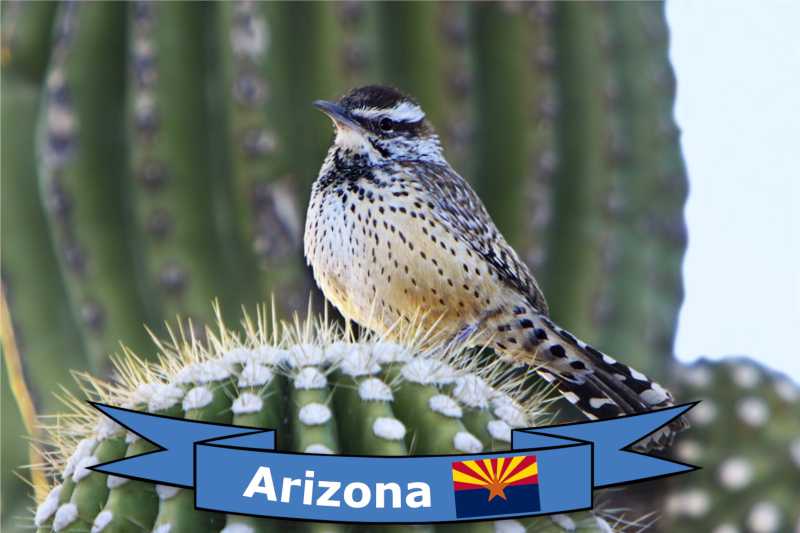
The cactus wren was fittingly named the state bird of Arizona in 1931, as this bird is non-migratory and Arizonans are able to view it year-round. Its name includes the word "cactus" because these plants are among the places where it commonly chooses to make its nests and seek protection from predators.
The range of the cactus wren is a bit limited, mostly situated in the southwestern United States and stretching down into central Mexico. If you are interested in hearing the call of this bird, many researchers will tell you to listen for the sound of a car trying and failing to start up.
4. Northern mockingbird
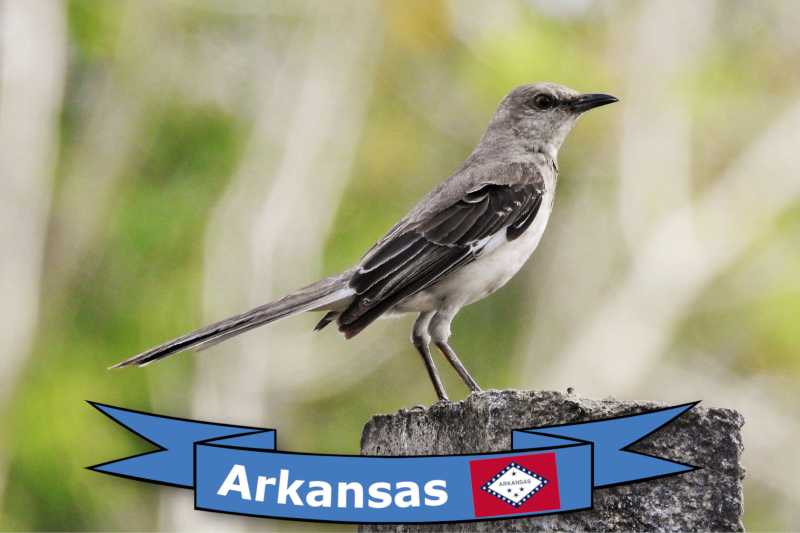
You'll have to go back to 1929 for the year Arkansas named its state bird, the northern mockingbird. It is the state bird of five U.S. states, so you'll get a chance to learn a lot about these birds over the various information sections. Mockingbirds are known to mimic other bird calls and even human-made noises, which is reflected in their scientific name, Mimus polyglottos.
These birds are generally spread across the continental United States, as well as much of Mexico and the Caribbean. The U.S. states that consider it their state bird are heavily concentrated in the U.S. South. It's little surprise, then, that mockingbirds appear in various Southern U.S. stories and literature, including Harper Lee's "To Kill a Mockingbird".
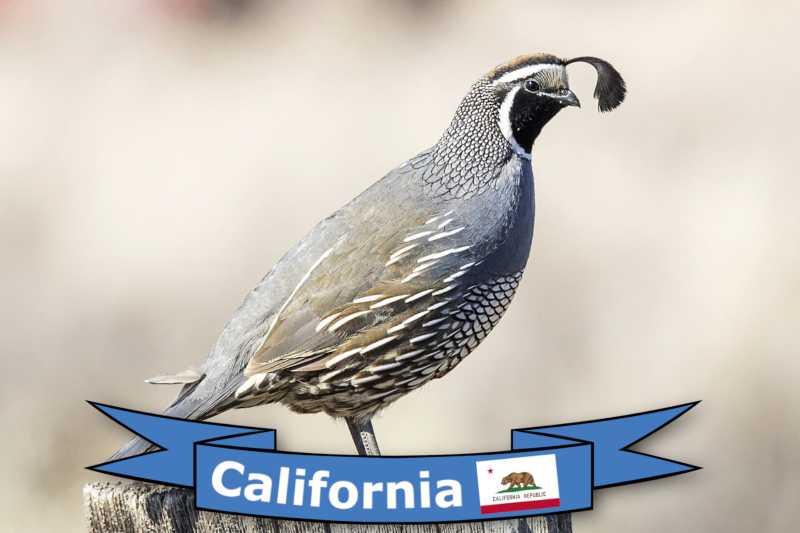
5. California quail
Concentrated mostly in California and Baja California, and introduced farther north into Washington state and western Canada, the California quail has been that state's official state bird since 1931. Though its native range covers only a small portion of the United States, it is not considered an endangered species.
California quail are highly communal and will travel in groups known as "coveys." One of the social activities they commonly engage in is dust bathing, and you may know a population of quail is nearby if you see small circular depressions made in the dirt.
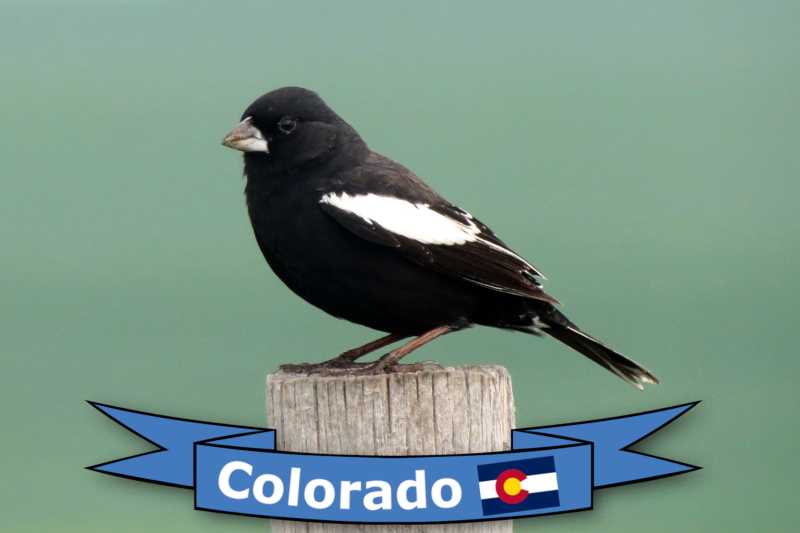
6. Lark bunting
The lark bunting was named Colorado's state bird in 1931. It can be found across much of the Great Plains, stretching down into Texas and northern Mexico when migrating and during the winter. Male lark buntings that are looking to mate are typically black with white wing patches, while females and non-mating males are usually a dull grayish-brown.
One interesting fact about the lark bunting's mating patterns is that females often change which characteristics they prefer in mates from year to year. In some mating seasons, they might prefer more black plumage, while in others they might be looking for a larger beak size. Researchers believe this dramatic annual switch may help maintain genetic variation within the species.
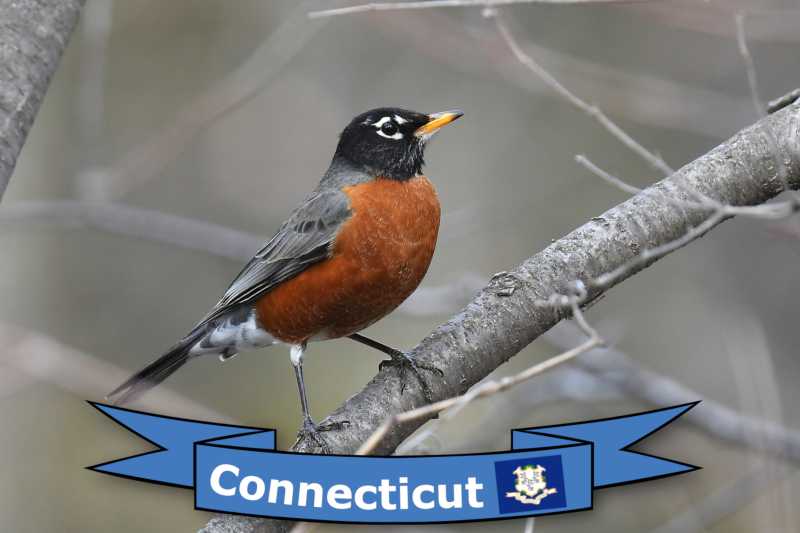
7. American robin
The American robin was named Connecticut's state bird in 1943. It is technically a thrush belonging to the Turdus genus, giving it the rather amusing scientific name of Turdus migratorious. Its name "robin" comes from the orange breast that resembles that of the European robin.
Its range is vast across nearly the entirety of North America, stretching from the northern reaches of Canada all the way down to Mexico and parts of the Caribbean. It has been estimated to be the most abundant land bird in North America. Its habit of foraging on the ground and living near human settlements also makes the American robin particularly vulnerable to domestic cats.
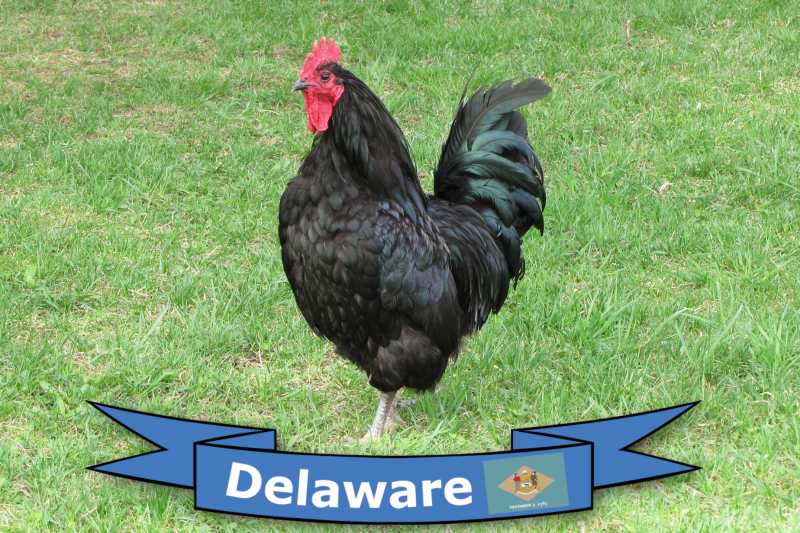
8. Blue Hen Chicken
As formally named in Delaware law, the Blue Hen Chicken was given official state bird status in 1939. It has the alternative name of the Delaware Blue Hen, which is the mascot for many schools and organizations in the state, including the University of Delaware. The name, perhaps unfortunately, is traditionally associated with blue gamecocks used in early American cockfighting. These birds gained a reputation for being particularly ferocious fighters.
Of course, nowadays cockfighting is outlawed across the United States, so the birds are now primarily associated with their relevance as a symbol of Delaware culture.
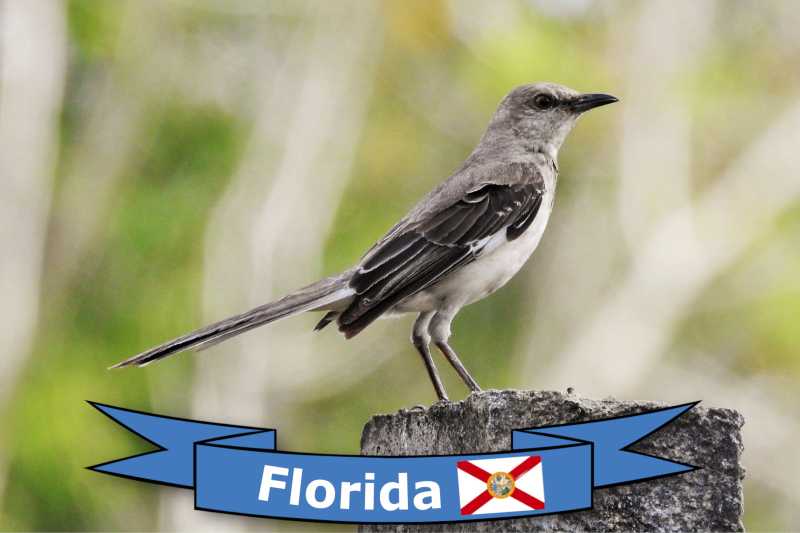
9. Northern mockingbird
Florida adopted the northern mockingbird as its state bird in 1927. In 2026, a proposal to replace it with the American flamingo nearly passed into law, but ultimately failed.
Being omnivorous, these birds have a hugely varied diet, ranging from insects and arachnids to berries, fruits, and seeds. They are also known to feast on crustaceans and even lizards.
Northern mockingbirds have adapted well to living in urban environments, so well, in fact, that they can be more abundant in urban areas than in non-urban areas. Researchers have even discovered that northern mockingbirds living in urban areas have higher apparent survival rates post-migration than those living in non-urban areas.
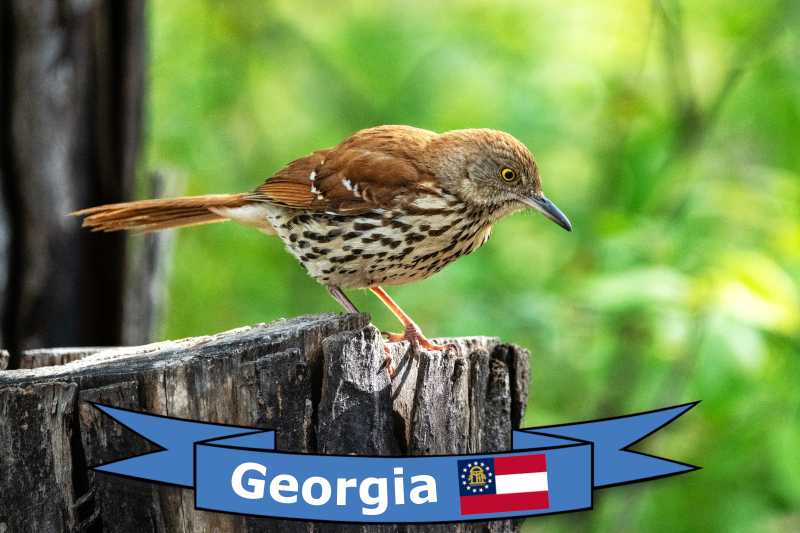
10. Brown thrasher
The brown thrasher was named Georgia's state bird by that state's governor in 1935, though it wasn't officially designated as the state bird by the legislature until 1970. It spends much of its time close to the ground and tends to be evasive in its behavior, attempting to keep its distance from humans and other possible predators...until it becomes threatened. Then, this species of bird can become highly aggressive in its attempts to protect its nest.
One interesting feature of the brown thrasher is that it has a large range of vocal songs. Because of its numerous different possible songs, it is not always easy to identify it based solely on its sound.
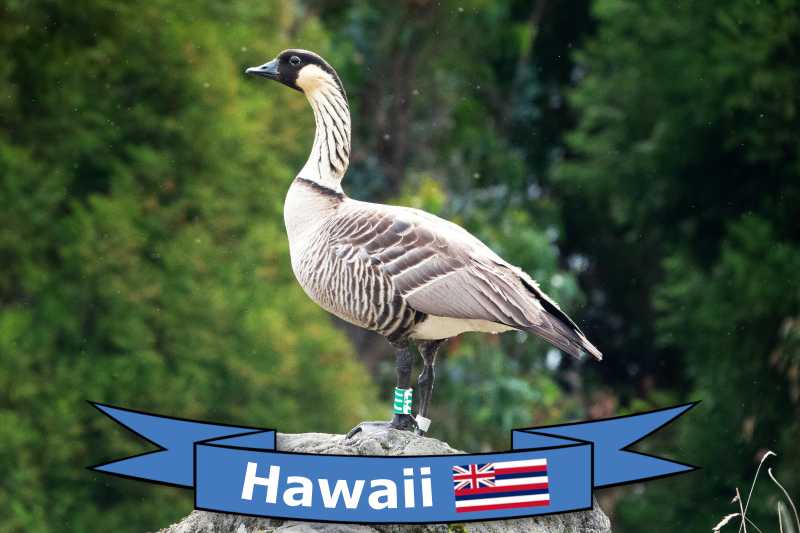
11. Nene
The nene (also called the Hawaiian goose) is found primarily on four islands within the state of Hawaii. It became Hawaii's official bird in 1957, two years before Hawaii became a state. It is believed to have evolved from ancestors of the Canada goose that arrived in Hawaii about 500,000 years ago.
The nene has Near Threatened status, with its 2022 population standing at 3,862, whereas its population was believed to be about 25,000 individuals when Captain James Cook arrived at the islands. However, this number is a bit of a silver lining, as the wild population had fallen to fewer than 50 individuals by 1958, when Congress passed a law establishing a federal program to help conserve and restore the species.
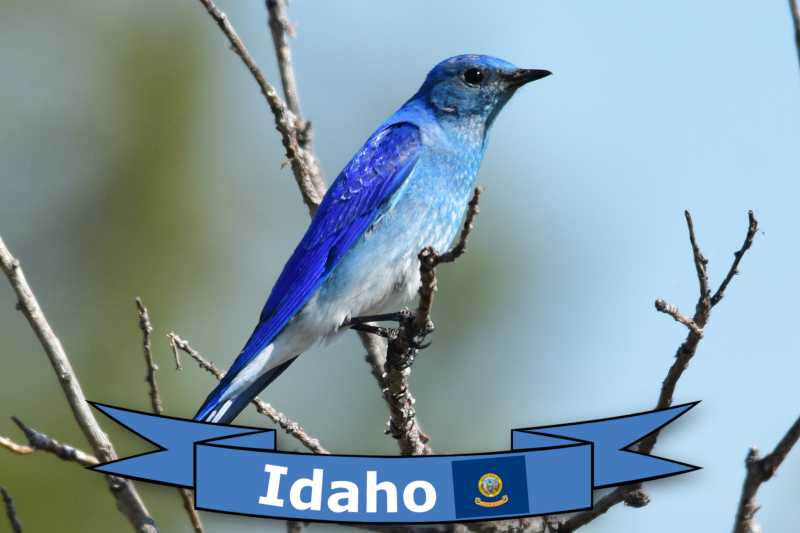
12. Mountain bluebird
The mountain bluebird was named Idaho's state bird in 1931. A member of the thrush family, it is known for the brilliant sky-blue plumage of the male, while females are a more subdued gray-blue. Mountain bluebirds favor open country such as grasslands and mountain meadows, where they nest in natural cavities or nesting boxes.
Unlike many other thrushes, mountain bluebirds often hunt by hovering above the ground before dropping down to catch insects and other small prey. Their diet also includes worms, snails, slugs, and some fruit. The species is widespread across western North America, breeding from Alaska and western Canada south through the Rocky Mountain states and migrating farther south for the winter.
This quiz was reviewed by FunTrivia editor stedman before going online.
Any errors found in FunTrivia content are routinely corrected through our feedback system.