FREE! Click here to Join FunTrivia. Thousands of games, quizzes, and lots more!
Quiz about Missouri Loves Company

Missouri Loves Company Trivia Quiz

National Historical Landmarks

Welcome to Missouri! Have you ever visited? We love company! It is quite a beautiful state, and there are many interesting places for tourists to enjoy. Let me take you on a short tour!

by ponycargirl. Estimated time: 3 mins.
  1. Home
  2. »
  3. Quizzes
  4. »
  5. History Trivia
  6. »
  7. U.S. States & Cities
  8. »
  9. Missouri

Author
ponycargirl
Time
3 mins
Type
Quiz #
421,730
Updated
Nov 10 25
# Qns
10
Difficulty
Average
Avg Score
8 / 10
Plays
113
Awards
Top 5% quiz!
Last 3 plays: piet (10/10), 2ruse (10/10), xchasbox (8/10).
See if you can match the picture of the National Historic Landmark in Missouri with its name. It may help to enlarge the pictures before you make your choice.
Drag-Drop or Click from Right
Options
Eads Bridge Fort Osage Graham Cave Liberty Memorial Patee House Arrow Rock Anheuser-Busch Brewery White Haven Gateway Arch Westminster College Gymnasium


 View Image Attributions for This Quiz

Most Recent Scores
Dec 16 2025 : piet: 10/10
Dec 12 2025 : 2ruse: 10/10
Dec 07 2025 : xchasbox: 8/10
Dec 06 2025 : borimor: 7/10
Nov 29 2025 : Kabdanis: 10/10
Nov 20 2025 : G-man34: 7/10
Nov 19 2025 : Guest 216: 10/10
Nov 18 2025 : Guest 24: 5/10
Nov 16 2025 : Guest 173: 3/10

Quiz Answer Key and Fun Facts
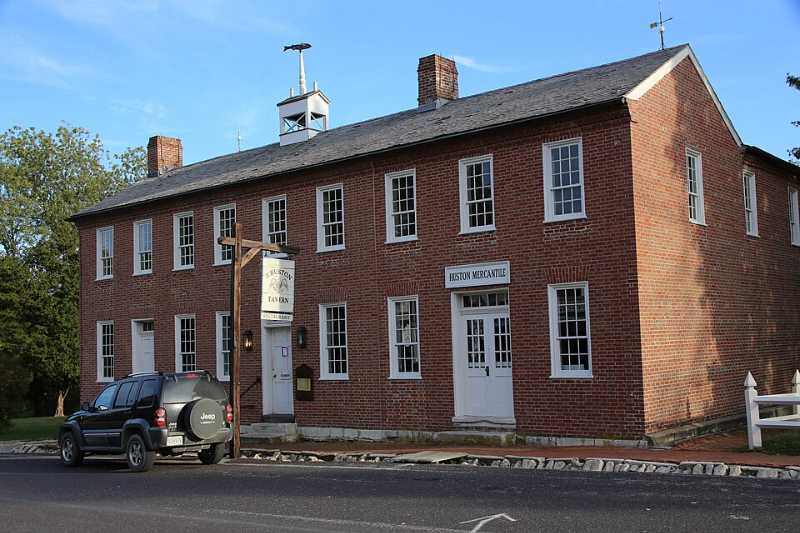
1. Arrow Rock

The first Arrow Rock in the region was a flint cliff that overlooked the Missouri River, as noted on a 1732 French map. Before that, however, it was frequently visited by Native Americans who used resources found in the area for making their arrowheads. It continued to be a landmark used for over a hundred years before becoming a permanent settlement. Lewis and Clark passed by in 1804, and William Clark passed by again in 1808, nothing that he believed it would make a "handsome spot for a town".

There were salt licks nearby where Daniel Boone's sons manufactured salt from 1805-1812. As more settlers began to arrive, a ferry was built to enable easier river crossing; it became a starting point for the Santa Fe Trail. By 1829 the town of Arrow Rock was founded. The J Huston Tavern in the picture was built in 1834, and has been in continuous operation since then. In 1963 the town was designated as a National Historic Landmark.

There are lots of interesting things to see in Arrow Rock, including the Arrow Rock Lyceum Theatre and the George Caleb Bingham House. It is a great place to explore on a beautiful day, perhaps during one of the many festivals held there. I especially enjoyed touring the Arrow Rock State Historic Site Visitors' Center Museum there.
2. Gateway Arch

The Gateway Arch in St. Louis is the world's tallest arch, and, according to some sources, is the tallest man-made monument in the Western Hemisphere. Located at the site where St. Louis was founded in 1764 on the Mississippi River, it symbolizes St. Louis as being the "Gateway to the West".

Construction began on the monument, the design of architect Eero Saarinen, in 1963, and was completed after several failures to meet its completion date in 1967. Measuring 630 feet (192 meters) tall and 630 feet (192 meters) wide, the Arch was constructed of 142 stainless steel sections. Are you worried that the wind in Missouri might cause the Arch to sway? It was built so that it could withstand a 150 mph (241 kph) wind and sway as much as 18 inches (46 cm).

The really cool thing about the Arch is that there is a tram ride available that takes visitors to the top. While the ride only lasts about four minutes, it is a bit choppy, but well worth the effort when it arrives at the top observation deck. On a clear day visitors can see up to thirty miles (48 km) in the distance.
3. Liberty Memorial

After WWI a group of people in Kansas City got together and decided they wanted to create a memorial to honor those who had served in the war. The groundbreaking ceremony for the Liberty Memorial was held in 1921, and was dedicated in 1926 by President Calvin Coolidge. In 2004 the United States Congress designated the Liberty Memorial as the official WWI memorial museum, and the name was changed to the National World War I Museum and Memorial.

The memorial tower measures 217 feet (66 meters) tall. Visitors can ride an elevator to the top to view the Kansas City skyline. The really cool feature is that at night the top of the tower appears to be lit due to the use of steam and colored lights. It is quite impressive.

For the history enthusiast there are 350,000 artifacts relating to the WWI years from 1914-1919 that are part of the museum's collection, which includes a Renault FT tank, a 1917 Harley-Davidson Model J motorcycle, a 1918 Ford Model T ambulance, uniforms, flags, maps, and posters. The displays are very well done, and contain a lot of interesting information.
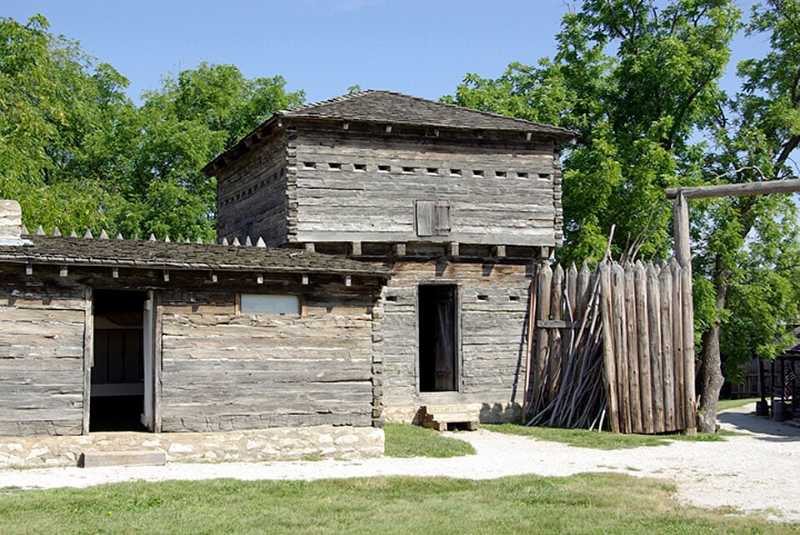
4. Fort Osage

Fort Osage was constructed in accordance with a treaty with the Osage Nation in 1808; it was to serve as a military post to protect the Native Americans and as a trading center. In 1804 when Lewis and Clark made their famous journey, they had camped across the river from the site, and William Clark returned to the site in 1808 to oversee the construction of the fort, which was built to protects the lands of the Louisiana Purchase. Sacagawea and her husband passed by on their way home after the Corps of Discovery expedition, and Daniel Boone even visited the site.

During the War of 1812, the fort was closed because it wasn't near any of the theaters of fighting, and was left unsoldiered until the war was concluded, after which it was reopened for a brief time. Although it was closed in 1822, it continued to be an important stop on the Santa Fe Trail. The wood from the buildings was reused for other structures over time, but the foundations were rediscovered in the 1940s, leading to a careful reconstruction using records left by Clark and others. It became a National Historic Landmark in 1961.

Who doesn't like to visit a soldier fort? The buildings have been meticulously reconstructed and there are guides dressed in historic attire who give demonstrations and talk about life in the early 1800s. It's a great place for history to come alive for kids - and adults as well.
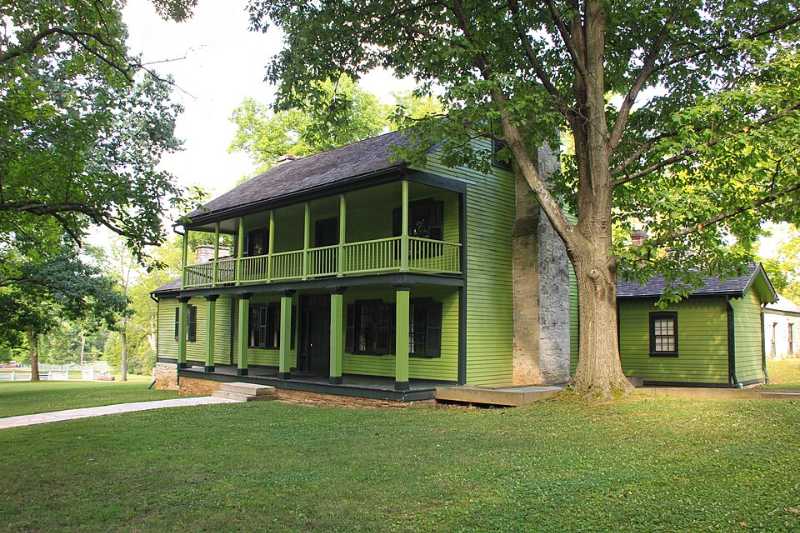
5. White Haven

I know what you're thinking - it's not white! Apparently it was a family tradition for members of Julia Dent's family to name their homes White Haven. When they moved in 1820 to a property near St. Louis, Missouri, they painted the house a cream color, changing it to gray by 1860. By 1874 the family chose to paint the house Paris Green, an extremely popular color during the Victorian Era, which was later found to be wildly toxic. The house was painted white in 1940, but when the National Park Service took it over it was decided to return it to the Paris Green color. It was designated as a National Historic Landmark in 1986.

Anyway, who was Julia Dent? She was the wife of Ulysses S. Grant, the eighteenth President of the USA. It was her childhood home, and the couple lived in the house with their children from 1854-59; Grant ran the 850 acre plantation for Julia's father, supervising the slaves and farming the land. By 1865 the slaves that hadn't already been manumitted were given their freedom by Missouri law. In 1881 the farm was used to play off a debt, and ceased to be owned by the Dent-Grant family.

The large property was been divided into two adjacent attractions in 1913: White Haven and Grant's Farm, which was established by the Busch family. While it is interesting to tour White Haven, it is also fun to take a look at Grant's Farm, which features animal exhibits, tram rides, and a carousel. Don't forget to notice that there is an interesting fence around part of the property. It was made with 2,563 Civil War surplus riffle barrels for the Busch estate after the family purchased the property in the early 1900s, and built as a memorial to those who served.
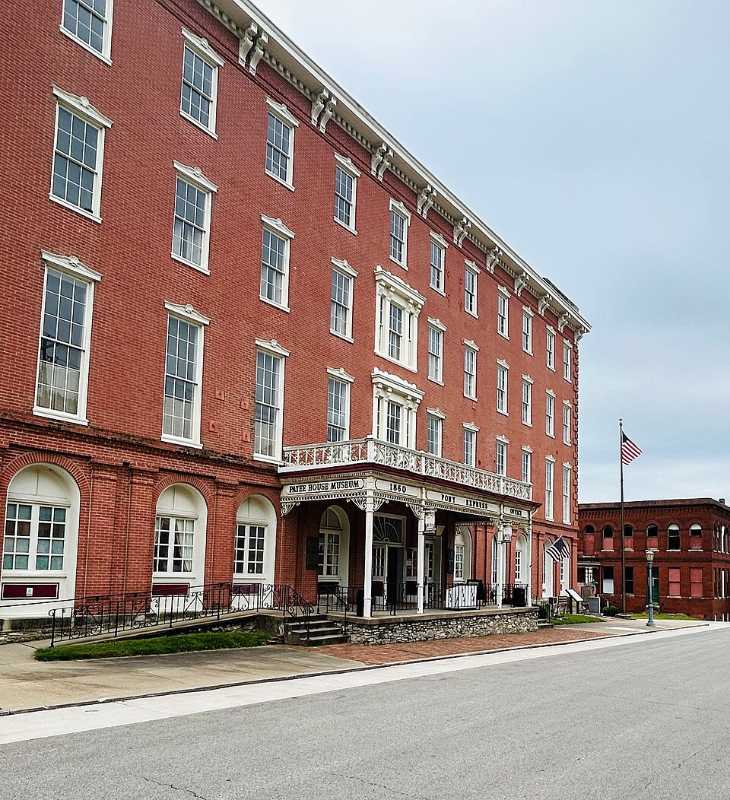
6. Patee House

Located in St. Joseph, Missouri, the Patee House used to be a luxury hotel. Completed in 1858, it also housed the headquarters of the Pony Express at one time and the Union Army Provost Marshal's office during the American Civil War. War trials were held on the second floor, which was originally used as a ballroom.

During the later part of the 1800s the building was used as a Female College; it has also served as a shirt factory. Oscar Wilde was a guest at the hotel in 1882, and Jesse James' family stayed there the same year after he was shot by the coward Bob Ford. It became a National Historic Landmark in 1961, and has been used as a museum since 1963. In 2008 it was chosen as one of the Top Ten Western Museums by "True West Magazine".

It is simply one of the neatest places you may ever visit. Jesse James' home was moved to its back yard in 1977, so there is that to see. There are all sorts of nearby places associated with the Pony Express to visit. But don't walk into the Patee House unless you have a day to spend there. There is so much to see. A 1892 steam locomotive is housed inside the building, along with a 1877 train depot. There are electric model trains and other toys to enjoy, and the best part of the place was the scavenger hunt that was created to keep children busy so their parents could look at all the interesting artifacts. Really - it is one of the most interesting museums I've ever seen in the USA.
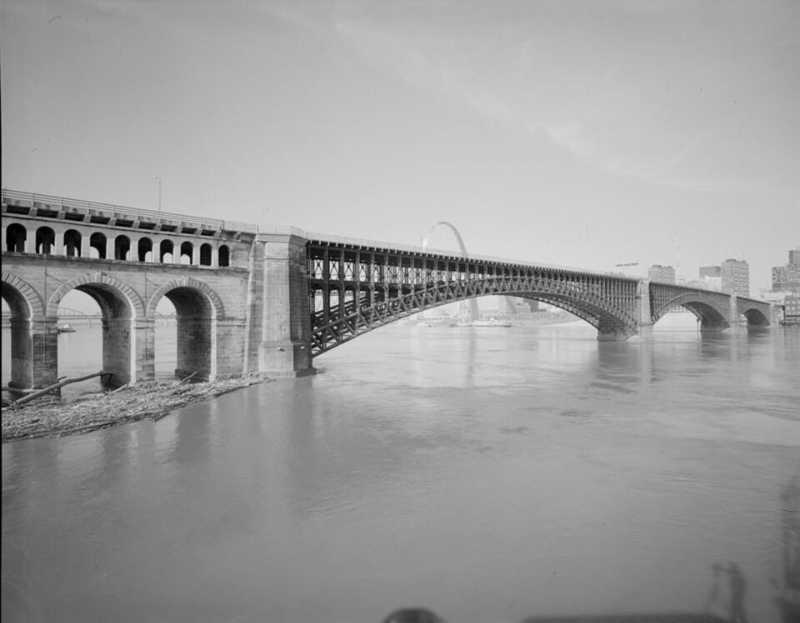
7. Eads Bridge

Built from 1867-1874 to cross the Mississippi River and connect St. Louis, Missouri, with East St. Louis, Illinois, the Eads Bridge was named for its creator, James Eads. An engineering marvel of the time, the bridge was one of the first that used steel rather than wrought iron for its construction. Its foundations that reach more than 100 feet (30 meters) under water were the deepest at the time, and the 520 foot (158 meters) center arch in the middle of the bridge's construction had the longest ridge span.

Although it was closed to motor vehicle traffic in 1991, after a needed renovation it currently is estimated to serve 8100 vehicles a day. Designated as a National Historic Landmark in 1964, the Eads Bridge is the oldest bridge that still stands across the entire Mississippi River.

The Eads Bridge, along with the Gateway Arch, make the St. Louis waterfront an impressive site to visit. I can remember taking a riverboat ride, touring a submarine, and eating at a floating McDonalds in the past, however, these days there are historic homes to visit as well as restaurants. Sometimes live music is planned, and there are still riverboat rides available. But the most impressive thing to do? Don't forget to take the pedestrian walkway across the Eads Bridge!
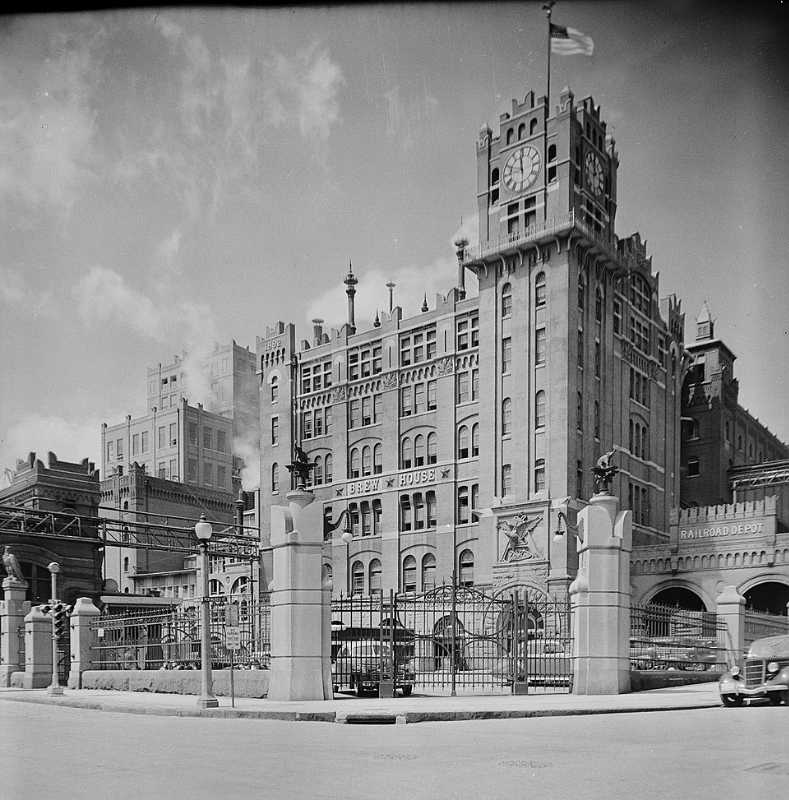
8. Anheuser-Busch Brewery

The exterior of the Anheuser-Busch Brewery, located in St. Louis, is a sight to behold if you appreciate Romanesques architecture. Constructed of red brick, the building is decorated with gargoyles and other embellishments. Opened in 1852 by Adolphus Busch, the complex covers 142 acres and contains 189 buildings. It was designated as a National Historic Landmark in 1966.

The Lyon Schoolhouse Museum, which once served as one of the oldest school buildings in St. Louis is within the complex, along with the stables for the famous Budweiser Clydesdales. The magnificent horses were definitely my favorite, however, I noticed that some people were sure enjoying the free beer given at the end of the brewery tour! There is a neat tradition at the Brewery; it is called Brewery Lights. For the past forty years visitors have been able to walk in designated areas and enjoy more than a million lights during the holiday season.
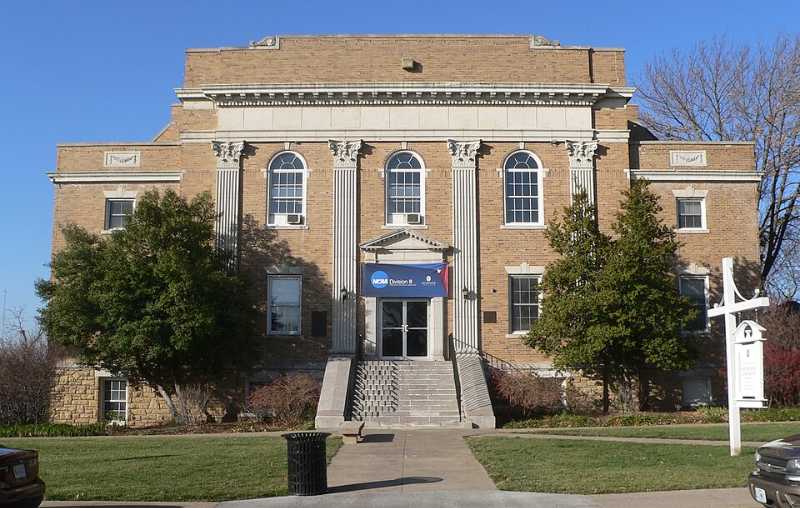
9. Westminster College Gymnasium

Okay! So you think this looks like a gym? Well, that's because it is! Prior to 1946 the athletic building on the campus of Westminster College in Fulton was just a gym. Then the mayor of Fulton, with some help from President Harry Truman - the only President to date from Missouri - invited Winston Churchill to come to town, which he did on March 5, 1946! This was the site of the famous "Sinews of Peace" speech, where Churchill spoke about the Cold War using the term "Iron Curtain". The building became a National Historic Landmark in 1968.

What is neat about the entire area is all of the historically significant places to see. There is the National Churchill Museum, which is partially housed in the Church of St. Mary Aldermanbury. The church was renovated in 1677 by Sir Christopher Wren; then, after it was damaged during WWII, it was dismantled and rebuilt in Fulton, Missouri.

Also on campus is a sculpture created by one of Churchill's granddaughters from eight pieces of the Berlin Wall. On May 6, 1992, Mikhail Gorbachev visited Fulton and, while standing at the same lectern that Churchill had used, gave his "The River of Time and the Imperative of Action" speech, which was considered to be a symbolic close of the Iron Curtain.
10. Graham Cave

While you may be thinking that this looks like a hole in the wall, you couldn't be further from the truth. Located near Mineola, Missouri, it is an archaeological site that dates back to about 10,000 years ago. Visitors are not permitted inside the cave in order to protect its fragile environment, but there are exhibits that explain the history of the area, and there are hiking trails to enjoy. It's a really pretty place, if you get there on the right Missouri weather day!

It is interesting to note that a previous owner used the cave to house his hogs. While in the cave he discovered all sorts of artifacts; over time his son donated his collection to the nearby University of Missouri-Columbia. By 1961 the cave was designated as a National Historic Landmark - the first archaeological site in the United States to receive the recognition.
Source: Author ponycargirl

This quiz was reviewed by FunTrivia editor gtho4 before going online.
Any errors found in FunTrivia content are routinely corrected through our feedback system.
12/29/2025, Copyright 2025 FunTrivia, Inc. - Report an Error / Contact Us