FREE! Click here to Join FunTrivia. Thousands of games, quizzes, and lots more!
Quiz about Who What Where

Who? What? Where? Trivia Quiz


Here are 15 people, places, and things from Japanese history. Place them in the correct categories.

A classification quiz by misdiaslocos. Estimated time: 3 mins.
  1. Home
  2. »
  3. Quizzes
  4. »
  5. History Trivia
  6. »
  7. Asian
  8. »
  9. Japan

Author
misdiaslocos
Time
3 mins
Type
Classify Quiz
Quiz #
424,154
Updated
May 14 26
# Qns
15
Difficulty
New Game
Avg Score
10 / 15
Plays
13
Last 3 plays: bernie73 (8/15), Guest 169 (0/15), Guest 201 (15/15).
Keep in mind a two word phrase doesn't necessarily mean that it is a person, and likewise, a single word doesn't mean it is not. Also, buildings and other permanent structures are considered places not things.
Who
Where
What

Yasakani no Magatama Susquehanna Himeji-jo Fukushima Dai-ichi Ise Jingu Obon Kani Kōsen Chichijima Tokugawa Ieyasu Fuji-san Jimmu Hokusai Saigō Takamori Kamo no Chōmei Dejima

* Drag / drop or click on the choices above to move them to the correct categories.


Most Recent Scores
Today : bernie73: 8/15
Today : Guest 169: 0/15
Today : Guest 201: 15/15
Today : Aph1976: 9/15
Today : BarbaraMcI: 13/15
Today : xchasbox: 5/15
Today : Robert907: 11/15
Today : salami_swami: 13/15
Today : Twotallgnome: 8/15

Quiz Answer Key and Fun Facts
1. Hokusai

Answer: Who

Hokusai was a famous Japanese artist from the Edo period who became known for his woodblock prints and paintings. He created thousands of artworks, but his most famous piece is "The Great Wave off Kanagawa", which shows a huge wave towering over boats with Mount Fuji in the background.

His art helped define the ukiyoe style and later influenced many European artists including Van Gough. Today, he is one of the most recognized Japanese artists in history. If you think of a Japanese ukiyoe (woodblock print) you are probably thinking of this one.
2. Saigō Takamori

Answer: Who

Saigō Takamori was an important samurai leader during the late 1800s and played a major role in helping overthrow the Tokugawa shogunate during the Meiji Restoration. At first, he supported modernizing Japan, but later he became upset that the government was taking power away from the samurai.

In 1877, he led the Satsuma Rebellion against the new government. He lost the war and died in battle, and many people remember him as the "last samurai". His memory is usually paired with Sakamoto Ryoma's, another force for modernization in the early Meji period.
3. Tokugawa Ieyasu

Answer: Who

Tokugawa Ieyasu was a powerful military leader who helped unify Japan after years of civil war. In 1600, he won the Battle of Sekigahara, which gave him control over most of the country. A few years later, he became shogun and started the Tokugawa shogunate, which ruled Japan for over 250 years.

His government brought peace and stability, but it also kept Japan mostly closed off from the rest of the world...a weakness in the system that would bite the Japanese during the forced reopening under Meiji.
4. Jimmu

Answer: Who

Emperor Jimmu is known in Japanese legend (and among the royal court) as the first emperor of Japan and is said to have founded the country in 660 BC. According to traditional stories, he was a descendant of the sun goddess, Amaterasu, and led his people east to establish what became Japan.

Historians believe he is probably an entirely legendary figure rather than a proven historical person, but he has, and still, plays an important role in Japanese mythology and national identity. His story helped support the idea that Japan's emperors had a divine connection.
5. Kamo no Chōmei

Answer: Who

Kamo no Chōmei was a Japanese writer and poet who lived in the late Heian and early Kamakura periods. He is best known for writing "Hōjōki" ("The Ten-Square-Foot Hut"), a short book that describes natural disasters, war, and the temporary nature of life.

After seeing chaos in society, he left public life and lived as a Buddhist hermit in a small hut. His writing reflects the Buddhist idea that everything changes and nothing lasts forever. He is as good, if not better than Bashō.
6. Ise Jingu

Answer: Where

Ise Grand Shrine is one of the most important Shinto shrines in Japan and is dedicated to Amaterasu, who is believed to be the ancestor of Japan's imperial family. It has existed for centuries and is famous for being rebuilt every 20 years as part of a tradition meant to symbolize renewal and continuity.

Many Japanese emperors and leaders have honored the shrine, and it remains an important religious and cultural site today.
7. Dejima

Answer: Where

Dejima was a small artificial island in Nagasaki where the Dutch were allowed to trade with Japan during the Edo period. At a time when Japan had strict rules that limited contact with most foreign countries, Dejima became one of the few places where trade and information from Europe could still enter Japan. Dutch merchants brought goods, books, and scientific knowledge, which helped introduce new ideas to Japan. That said, the men who worked there were effectively prisoners and could not leave this tiny island during their entire tenure.
8. Himeji-jo

Answer: Where

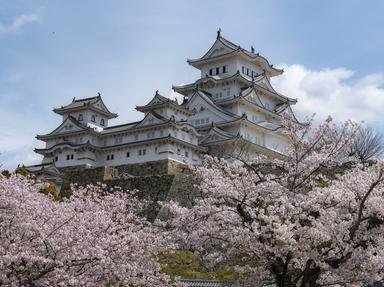
Himeji Castle is one of the most famous and best-preserved castles in Japan, often called the "White Heron Castle" because of its bright white walls and elegant shape. It was originally built in the 1300s and later expanded during the early 1600s under powerful feudal lords.

The castle was designed for defense, with confusing paths, gates, and walls meant to slow down attackers. Even through wars and natural disasters, it survived mostly intact, and today it is a UNESCO World Heritage Site and a major symbol of Japan's feudal history.
9. Fukushima Dai-ichi

Answer: Where

Fukushima Daiichi Nuclear Power Plant is a nuclear power plant in Japan that became famous after a major disaster in 2011. During the 2011 Tōhoku earthquake and tsunami, huge waves hit the plant and caused failures in its cooling systems. This led to meltdowns in several reactors and released radiation into the surrounding area.

The accident forced many people to evacuate and had a big impact on Japan's energy policies and views on nuclear power.
10. Chichijima

Answer: Where

Chichijima is one of the remote islands in the Ogasawara chain, far south of mainland Japan. During World War II, it was used as a Japanese military base and became the site of the "Chichijima Incident" in 1944, when several American airmen were shot down during bombing raids.

The only one of the 9 pilots who escaped capture was George H. W. Bush, who later became the 41st president of the United States. The other captured airmen were all tortured, executed, and in a few cases, cannibalized. Today, the island is known for its remote natural beauty, but its wartime history remains a dark and important part of its past.
11. Yasakani no Magatama

Answer: What

Yasakani no Magatama is one of the three sacred treasures of Japan's Imperial Regalia. It is a curved jewel (magatama) that represents benevolence or virtue, and it is traditionally said to have been passed down from the gods to the first emperors of Japan, especially linked to the myth of Amaterasu. Along with the sword and mirror of the regalia, it symbolizes the emperor's divine power. Even today, it is kept very private and is rarely, if ever, seen by the public, adding to its mystery and importance in Japanese culture and mythology.
12. Kani Kōsen

Answer: What

Kani Kōsen is a Japanese novel about a group of crab cannery workers who are forced to work in extremely harsh and unfair conditions on a ship. The workers are treated badly by managers, underpaid, and pushed to exhaustion while working at sea in dangerous conditions. Over time, they begin to realize how unfair their situation is and start to resist together, making it a pro-communist story about workers standing up against exploitation.

The author, Takiji Kobayashi, was a young left-wing writer who criticized social inequality in Japan. He was arrested by the police and died in custody in 1933. The exact circumstances of his death remain controversial, which has made the novel even more famous as a symbol of political resistance.
13. Fuji-san

Answer: What

Mount Fuji, often called "Fuji-san," is the tallest mountain in Japan and one of its most famous natural landmarks. It is a volcano that last erupted in the early 1700s, and its nearly perfect cone shape has made it a symbol of Japan for centuries. Many artists, including Hokusai, have depicted it in famous works like The Great Wave off Kanagawa, and it has long been considered a sacred site in Shinto and Buddhist traditions. Today, people climb it during the summer, and it remains an important cultural and spiritual symbol of Japan.
14. Obon

Answer: What

Obon is a traditional Japanese festival held in the summer to honor and remember the spirits of ancestors. It comes from Buddhist beliefs and includes the idea that families should welcome their ancestors' spirits back home for a short visit. During Obon, people often clean graves, light lanterns, and take part in dances called Bon Odori.

At the end of the festival, lanterns are sometimes floated on rivers or the sea to guide the spirits back to the other world. In our houses we also put out a cucumber and an eggplant with little chopsticks for legs.

These represent a horse (cucumber) and a cow (eggplant). This is so that the ghosts of our ancestors will come back to visit us from the spirit word on a fleet horse, and only return slowly on a lumbering cow.
15. Susquehanna

Answer: What

USS Susquehanna was a U.S. Navy steam-powered warship used in the mid-1800s and is famous for being the flagship of Commodore Matthew C. Perry during his expedition to Japan. Perry sailed on it when he arrived in Japan in 1853 and again in 1854, using the ship as part of the pressure campaign that led to the opening of Japanese ports to the West.

The ship played a key role in what is often called the "opening of Japan," marking a major turning point in Japanese history and its relationship with the outside world.
Source: Author misdiaslocos

This quiz was reviewed by FunTrivia editor ponycargirl before going online.
Any errors found in FunTrivia content are routinely corrected through our feedback system.
5/14/2026, Copyright 2026 FunTrivia, Inc. - Report an Error / Contact Us