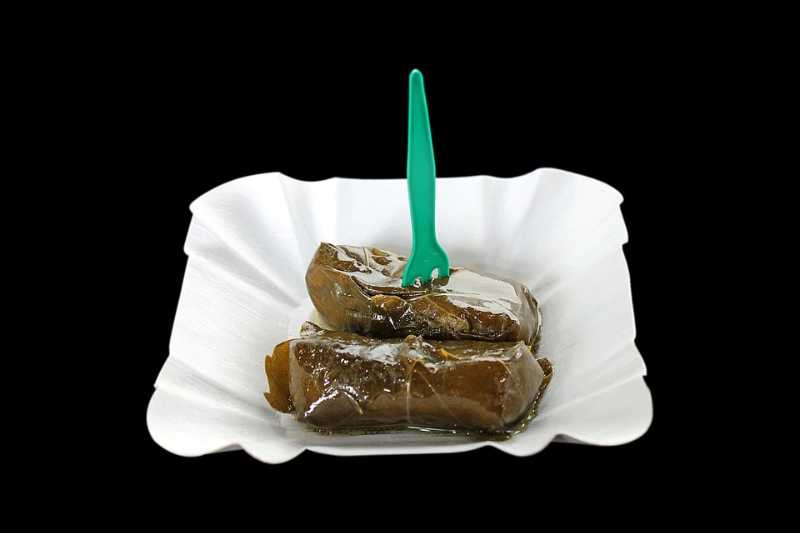
Dolmades, known as sarma in Turkey, are stuffed vine or cabbage leaves. The stuffing is usually made of rice or minced meat, and the dolmades are served hot. The rice can be seasoned with spices, and some variants contain dried fruit. If you go to a Greek restaurant, you'll usually find them served as mezze.
In Ancient Greece, fig leaves were used to wrap the filling, which would contain a grain such as spelt.
2. Greek salad
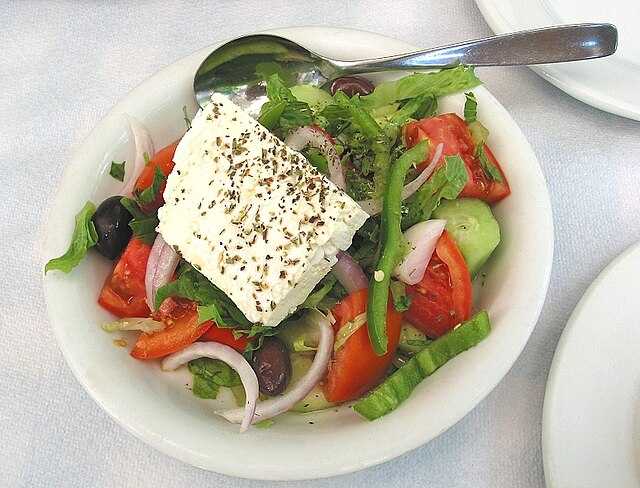
A typical Greek salad, like the one pictured here, features feta cheese, onions, olives (usually Kalamata olives), tomatoes and cucumbers, and is dressed with a mixture of salt, oregano, lemon juice and olive oil. Some variants include bell peppers or capers.
In the US, a Greek salad may contain lettuce and feta cut into cubes, rather than one big block. Regional variants also exist in the US; for example, in Detroit, a Greek salad can contain beetroot.
3. Moussaka
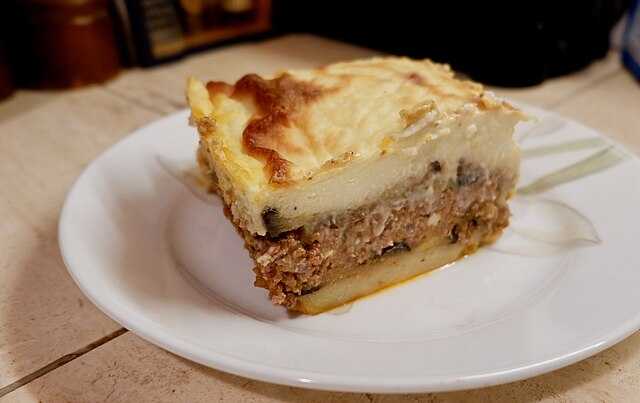
Moussaka is one of the most famous Greek dishes, and consists of vegetables (particularly sliced aubergines) and minced meat (usually lamb) layered together and topped with a savoury egg custard or béchamel sauce layer. The modern version that we know was created by Greek chef and food writer Nikolaos Tselementes in the 1920s; he introduced béchamel sauce to Greece.
In his recipe, the three layers are cooked separately. Vegetarian variants also exist; these can be consumed on Orthodox fast days.
4. Avgolemono
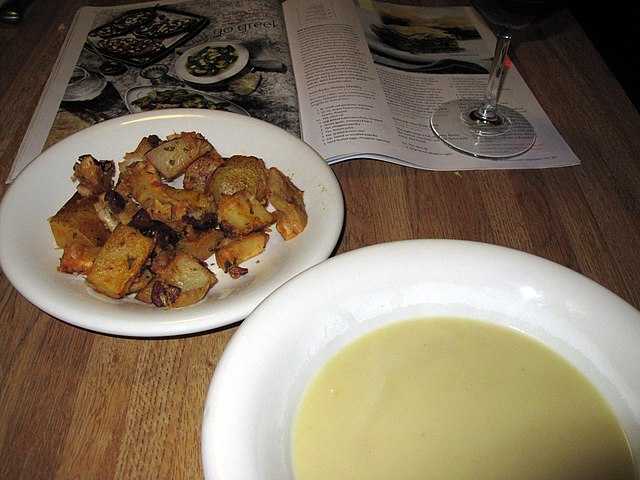
Avgolemono is a type of sauce or soup that contains lemon and eggs. It can be eaten on its own or used as a basis for other soups; for example, magiritsa is an avgolemono that contains lamb and is eaten at the end of the Lenten fast, while yuvarlakia, a meatball soup, can be thickened with avgolemono.
It usually uses chicken broth as a basis, though broth from other meats or vegetable broth can be used. Grains such as rice or a type of tiny pasta called pastina is cooked in the broth before the eggs and lemon are added; avgolemono can be made with whole eggs or just the yolks.
5. Tsoureki
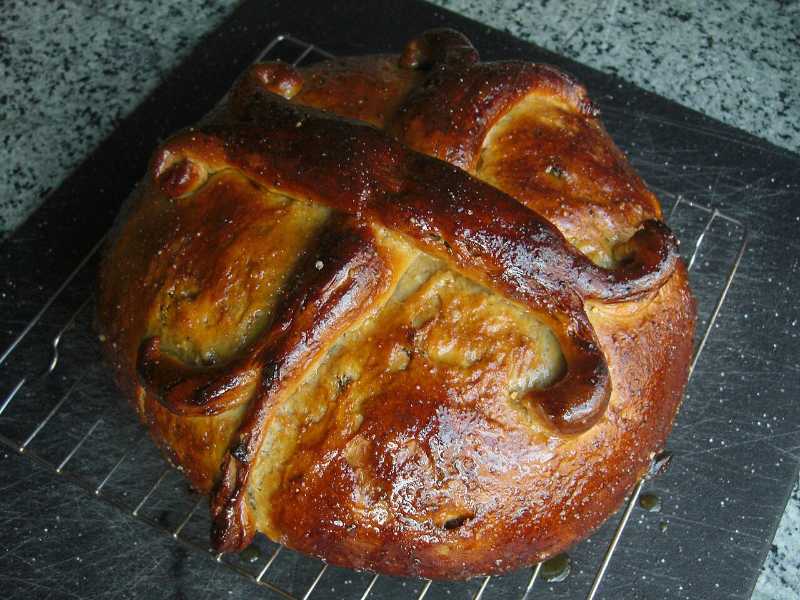
Tsoureki is a type of sweet bread. This version, known as christopsomo, has been made for Christmas - note the cross on top - while another version called lampropsomo is eaten at Easter. It is flavoured with lemon and orange zest, mastic resin or a type of spice called mahleb, which is made from ground Mahleb cherry seed kernels and has a taste similar to almonds. Lampropsomo is made in a braided pattern and has dyed hard-boiled eggs pressed into its dough.
Another type of tsoureki, vasilopita, has a coin hidden inside it for good luck and is eaten on the Feast of St Basil (New Year's Day).
6. Fasolada
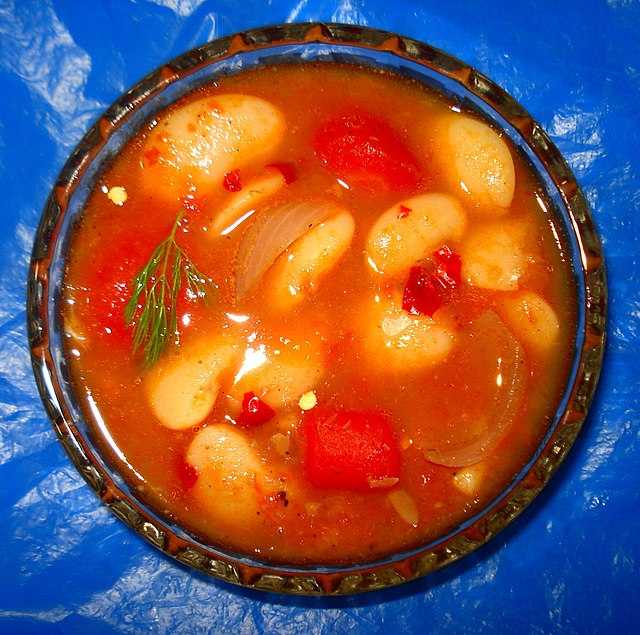
Fasolada, or fasoulia, is bean soup and if you play the Authors' Kitchen minigame, you'll have heard of it. The beans used are dry white beans, although lima beans can also be used, and it is made by simmering the beans with tomatoes and other vegetables such as onions or carrots, and a mixture of herbs such as thyme or parsley.
Although bean soup has its roots in Ancient Greece, tomatoes were not added until much later when they were introduced to Europe. Because it does not contain meat or dairy, it is consumed by Orthodox Christians during Lent.
7. Ouzo
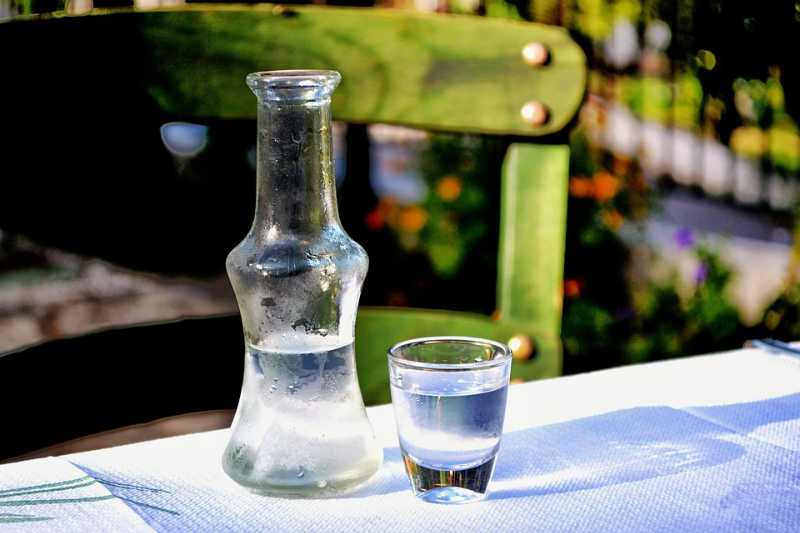
Ouzo is a clear, aniseed-flavoured spirit similar to the French pastis and the Italian sambuca; other herbs, such as cinnamon or coriander, can also be used as flavourings. Southern Greek variations also contain sugar. It is descended from a type of brandy called tsipouro that was flavoured with anise. Ouzo rose in popularity when Greece became independent; today, it is distilled in copper stills, with some versions being distilled twice.
It turns cloudy and white, sometimes with a bluish tinge, if water is added.
8. Tzatziki
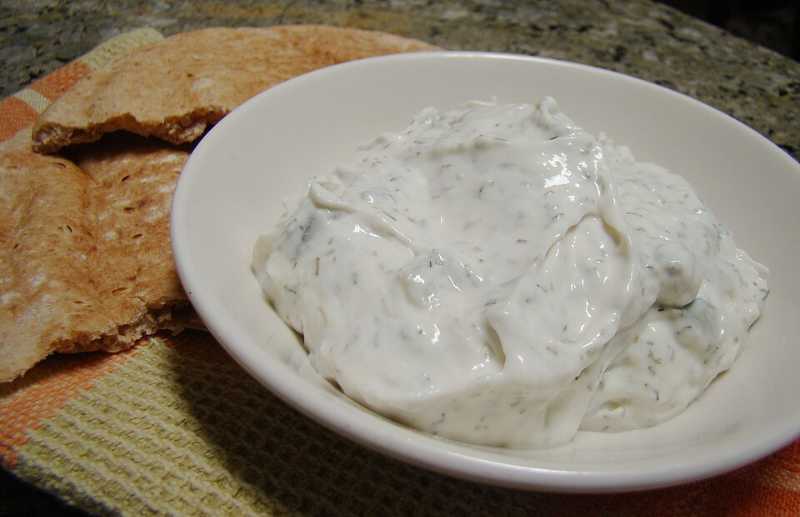
Tzatziki is a creamy yogurt dip made with cucumbers, similar to the Indian raita, although it is thicker. It is flavoured with garlic, olive oil, red wine vinegar, herbs such as dill, and sometimes lemon juice. It is often served as a dip on mezze plates and as an accompaniment to souvlaki or gyros. Yogurt was introduced to Greece during the age of the Ottoman Empire and the version used for tzatziki is usually made from sheep or goat milk.
Some variants contain purslane or crushed nuts.
9. Souvlaki
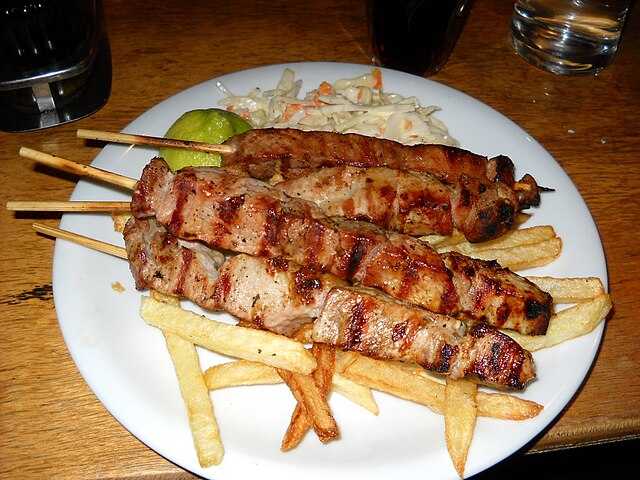
If you're a fan of the shoegaze band Slowdive, you'll have heard of souvlaki, as one of their albums is named after the dish. Like shish kebabs, souvlaki are pieces of grilled meat on a skewer, usually pork, though other meats can be used as well. They can be served with pitta, chips and salad on the side, or rolled up in pitta. Kalamaki is the Athenian equivalent.
This is another dish that dates back to ancient times; skewers have been used in Greek cooking since the Bronze Age, and cooking supports for holding the skewers have been discovered by archaeologists.
10. Loukoumades
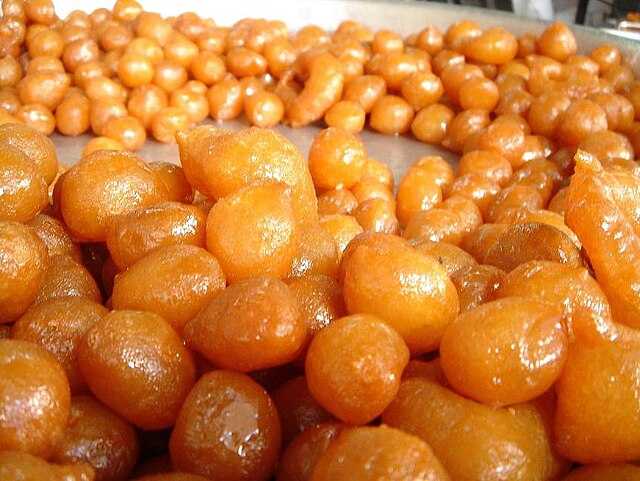
Loukoumades, known as lokma in Turkey, are deep-fried dough balls and the Greek equivalent of doughnuts. They are soaked in syrup and honey and sometimes flavoured with cinnamon or rosewater. Some variants are shaped like ring doughnuts. In the Byzantine era, they were eaten during Lent as they did not contain meat or dairy.
A similar pudding is touloumba, which is also fried in syrup but is shaped more like churros (I've eaten them and they're delicious but heavy - a little goes a long way!)
This quiz was reviewed by FunTrivia editor agony before going online.
Any errors found in FunTrivia content are routinely corrected through our feedback system.