FREE! Click here to Join FunTrivia. Thousands of games, quizzes, and lots more!
Quiz about A Basic Introduction to Entropy

A Basic Introduction to Entropy Quiz


We hear the word "entropy" thrown around a lot, but do we really know what it is and how it works? This quiz covers some of the basics.

A multiple-choice quiz by EggyTheHead. Estimated time: 3 mins.
  1. Home
  2. »
  3. Quizzes
  4. »
  5. Science Trivia
  6. »
  7. Physics
  8. »
  9. Energy and Thermodynamics

Author
EggyTheHead
Time
3 mins
Type
Multiple Choice
Quiz #
424,296
Updated
May 25 26
# Qns
10
Difficulty
New Game
Plays
5
Last 3 plays: thomas1975 (10/10), WesleyCrusher (10/10), JOHNCzee (9/10).
- -
Question 1 of 10
1. In everyday language, increasing entropy is associated with what general trend? Hint


Question 2 of 10
2. Which law of thermodynamics states that entropy in an isolated system tends to increase? Hint


Question 3 of 10
3. Cream spreading through a cup of coffee on its own is an example of entropy.


Question 4 of 10
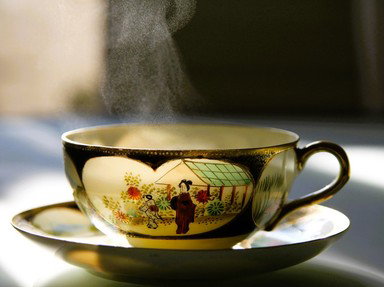
4. Why does a hot cup of tea left on a table eventually cool down? Hint


Question 5 of 10
5. Why is it impossible to turn all heat from a car engine into useful motion? Hint


Question 6 of 10
6. What usually happens to the entropy of an ice cube when it melts into liquid water? Hint


Question 7 of 10
7. Which of the following everyday appliances achieves its purpose by continually removing heat from inside it to the surrounding room? Hint


Question 8 of 10
8. When a cold metal spoon is placed in a cup of hot soup, what happens naturally over time? Hint


Question 9 of 10
9. Why do living organisms need a constant input of energy from food or sunlight? Hint


Question 10 of 10
10. Why does a heat source no longer increase a room's temperature once the heat and the room are the same temperature? Hint


(Optional) Create a Free FunTrivia ID to save the points you are about to earn:

arrow Select a User ID:
arrow Choose a Password:
arrow Your Email:


Most Recent Scores
Today : thomas1975: 10/10
Today : WesleyCrusher: 10/10
Today : JOHNCzee: 9/10
Today : jonnowales: 10/10
Today : pennie1478: 5/10

Quiz Answer Key and Fun Facts
1. In everyday language, increasing entropy is associated with what general trend?

Answer: Growing disorder

Oh, no! You've dropped an egg on the floor! What a mess!

If you follow your gut instinct and just walk away, that mess you've made tends to become even messier as all the bits and liquid continue to spread out. While it would be nice, the egg will never reassemble itself, no matter how many of the king's horses and the king's men intervene on your behalf.

That everyday idea of things becoming less organized is why entropy is often described as a measure of disorder. Physicists use the term in a much more precise mathematical way, but the loose "messiness increases over time" explanation works well for daily life. Ice melts into water. Broken eggs don't reassemble themselves. Dirty socks build up on your bedroom floor for mysterious reasons. And the odds of all the molecules of oxygen in your living room suddenly moving to one corner of the room are next to nil.
2. Which law of thermodynamics states that entropy in an isolated system tends to increase?

Answer: Second law of thermodynamics

If a tidy home is your cup of tea, the second law of thermodynamics is your worst enemy. It says that in an isolated system, entropy tends to increase over time. Heat flows from hot objects to cold ones. Your hot chocolate becomes cold chocolate over time. Ice cubes melt in lemonade. Humpty Dumpty can never be put together again.

The law does not say order can never appear locally, only that the overall graph of entropy trends upward. Your refrigerator creates a chilly compartment inside. But it does so by dumping even more heat into the kitchen. That's right. As your La Croix gets colder, your kitchen gets warmer. Then that heat spreads out through your whole house, heating everything in it. No, it's not enough heat to notice. But that's entropy.

This idea became one of the unbreakable rules of modern physics during the 1800s, at a time when scientists and engineers were trying to understand steam engines and energy transfer. Rudolf Clausius and Lord Kelvin formalized the law in the mid 1800s.
3. Cream spreading through a cup of coffee on its own is an example of entropy.

Answer: True

When you pour cream into coffee, entropy gets to work. The creamy ribbons twist and curl through your morning elixir until everything settles into a more or less smooth tan color. Molecules naturally move from areas of higher concentration to lower concentration. Once the liquids are mixed, there are vastly more ways for them to stay mixed than to separate themselves back into tidy layers. Statistically, it's a landslide win for entropy.

Scientists use mixing examples like this to explain entropy because they're so familiar to us. The same principle explains why perfume drifts across a room and why smoke spreads through the air.
4. Why does a hot cup of tea left on a table eventually cool down?

Answer: Thermal energy spreads into the surroundings

Hot things warm cold things, never the other way around. Hot molecules have more energy. They move faster. These fast-moving molecules in the tea bump into cooler air molecules, the mug itself, and even the tabletop beneath it. Each time that happens, thermal energy is being passed along bit by bit. Given enough time, the temperature difference shrinks and shrinks until the tea and its surroundings reach roughly the same temperature.

Heat naturally spreads out because there are enormously more ways for energy to be dispersed than concentrated in one place. Disorder. The reverse process would be bizarre if you think about it. Imagine a room suddenly donating all its heat back into a cup of tea until it became piping hot again. While physically possible in the most nitpicky sense, the odds aren't good. Astronomically not good.
5. Why is it impossible to turn all heat from a car engine into useful motion?

Answer: Some energy is always lost as waste heat

When your car engine is on, it's an explosive affair. Tiny controlled bursts inside the cylinders push pistons around and eventually make the wheels turn. But not all of the energy is going to the work of moving you from Point A to Point B.

Some of the energy escapes as hot exhaust, some causes the engine block to heat up, and some leaks away through friction and vibration. Entropy guarantees that energy spreads out instead of remaining perfectly concentrated for what we're doing.

That leftover energy is why radiators exist and why perpetual motion machines will never be a thing.
6. What usually happens to the entropy of an ice cube when it melts into liquid water?

Answer: It increases

An ice cube's molecules are locked into a nice orderly crystalline structure, vibrating in place. As the ice melts, stealing heat from its surroundings, that neat arrangement begins to collapse into the freer, sloshier world of liquid water. The molecules move around much more randomly. That's entropy increasing. In thermodynamics, liquids generally have higher entropy than solids. This is because there are far more possible molecular arrangements available to a liquid.

The process of melting absorbs heat from the surroundings, which is why ice is useful for cooling drinks in the first place. Remember, entropy tends to rise in a closed system. It took your freezer a lot of energy to keep that ice cube an ice cube.
7. Which of the following everyday appliances achieves its purpose by continually removing heat from inside it to the surrounding room?

Answer: Refrigerator

We all think that a refrigerator makes things cold. However, what's actually happening is much more interesting. The heat is being removed from your food.

Inside the coils and compressor, a refrigerant cycles through various stages that pull thermal energy out of the food compartment and dump it into the room behind or beneath the appliance. That is why the outside of your fridge (especially the bottom or back) often feels so warm. The cold interior is not created from nothing. Heat is simply being shooed away from your beverages and into your kitchen.

It works because energy can be moved using external work. Heat naturally prefers to spread out. However, the compressor uses electricity to force the refrigerant through the cycle, overcoming that natural flow of heat from warmer areas to cooler ones.
8. When a cold metal spoon is placed in a cup of hot soup, what happens naturally over time?

Answer: Heat flows from the soup into the spoon

Metal spoons are cheerful little heat messengers. Drop one into hot soup and the faster-moving molecules in the soup begin transferring energy into the cooler spoon. Before long, the spoon handle starts feeling warm too. Heat naturally moves from warmer objects to cooler ones until both reach the same temperature, a state called thermal equilibrium.

People often talk about "cold" moving around, but in physics, heat transfer is really about energy flowing outward from hotter areas. When you touch something that feels cold, it's because that something is stealing the heat from your hand. The spoon is not injecting coldness into the soup. Instead, the soup is sharing its thermal energy with the world.
9. Why do living organisms need a constant input of energy from food or sunlight?

Answer: Maintaining order requires energy

Living things are little pockets of order fighting a constant battle against entropy. Cells build proteins, repair damage, move nutrients around, and more. Maintaining this internal balance would be impossible without a steady supply of energy. Your refrigerator needs energy to keep your food from succumbing to entropy. So does life. Plants pull in sunlight, while animals find other living things for fuel. Without that energy input, order unravels. Structures break down. Metabolism stalls out.

Life doesn't "defeat" entropy. Quite the opposite. Organisms maintain their internal order by increasing entropy in their surroundings. For instance, we humans consume concentrated energy in food and release heat and waste back into the environment.
10. Why does a heat source no longer increase a room's temperature once the heat and the room are the same temperature?

Answer: There is no temperature difference left to drive heat flow

Heat only travels if there is somewhere colder to travel to. A heat source warms a room because energy flows from the hotter source into the cooler air, walls, furniture, and anything else it touches with a cooler temperature. As those temperatures rise and begin matching the heat source's temperature, that driving force fades away. That's thermal equilibrium, people. Once it's reached, there is no net flow of heat from one place to another.

The molecules in the room are still happily jiggling around even after equilibrium is reached. In fact, molecular motion only fully stops at absolute zero, the theoretical lower limit of temperature, that nothing can quite reach.

Of course, no room is a perfectly isolated system. The heat will eventually leak into the outside world, cooling the room, and giving the heat source a purpose once again.
Source: Author EggyTheHead

This quiz was reviewed by FunTrivia editor rossian before going online.
Any errors found in FunTrivia content are routinely corrected through our feedback system.
5/25/2026, Copyright 2026 FunTrivia, Inc. - Report an Error / Contact Us