FREE! Click here to Join FunTrivia. Thousands of games, quizzes, and lots more!
Quiz about The Plant Doctor

The Plant Doctor Trivia Quiz

Match the Plant Families

As a plant doctor, one must know what family to which each of these wonderful plants belong. Can you help the doctor match each plant to its correct family? (Click the images for a closer look!)

by trident. Estimated time: 3 mins.
  1. Home
  2. »
  3. Quizzes
  4. »
  5. Science Trivia
  6. »
  7. Botany

Author
trident
Time
3 mins
Type
Quiz #
417,867
Updated
May 14 26
# Qns
12
Difficulty
Very Easy
Avg Score
12 / 12
Plays
490
Awards
Top 5% quiz!
Last 3 plays: Guest 47 (12/12), kellyharrison (6/12), Guest 172 (12/12).
Drag-Drop or Click from Right
Options
Cactaceae Brassicaceae Brassicaceae Asteraceae Pinaceae Cactaceae Asteraceae Pinaceae Pinaceae Cactaceae Brassicaceae Asteraceae


 View Image Attributions for This Quiz

Most Recent Scores
Jun 09 2026 : Guest 47: 12/12
Jun 08 2026 : kellyharrison: 6/12
Jun 05 2026 : Guest 172: 12/12
May 26 2026 : PDAZ: 12/12
May 26 2026 : shvdotr: 12/12
May 22 2026 : Guest 108: 12/12
May 18 2026 : Waldkaeuzchen: 12/12
May 12 2026 : cardsfan_027: 12/12
May 06 2026 : Guest 182: 12/12

Quiz Answer Key and Fun Facts
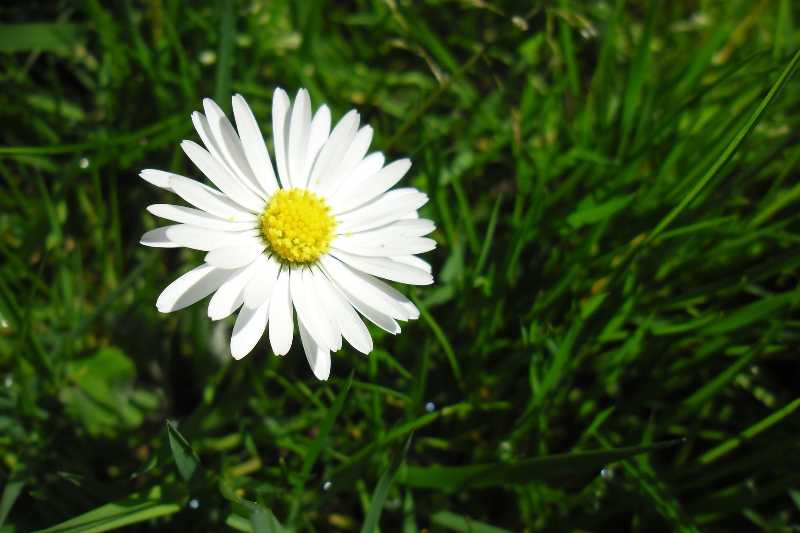
1. Asteraceae

Small but persistent, the common daisy usually grows only 4-6 inches tall (10-15 cm). Its spoon-shaped leaves sit close to the ground, while each flower head has white ray florets around a yellow center; the petal tips may be flushed with pink or red. Daisies handle cool weather well and often appear in lawns, parks, meadows, and grassy paths across Europe and North America.

In popular culture, the flower still carries ideas of innocence, and its petals are famously pulled one by one in the game "he loves me, he loves me not."
2. Cactaceae

The saguaro cactus, a giant of the Sonoran Desert, can reach 40-60 feet tall (12-18 meters) and live for more than 150 years. Its thick skin helps limit water loss, while its ribs expand after rain and contract during dry periods, resembling something like an accordion.

In spring, its white flowers open at night and attract pollinators such as bats, moths, and birds. By summer, the cactus produces red edible fruits. The saguaro grows so slowly that its first arms may not appear for decades.
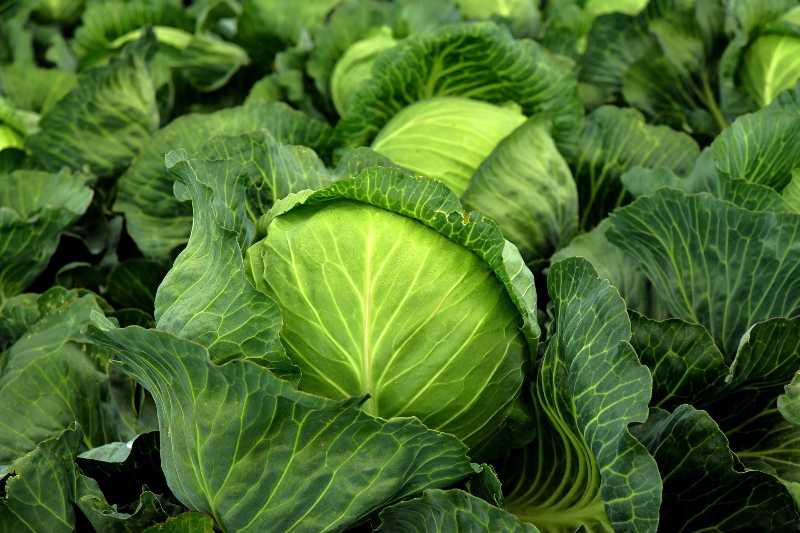
3. Brassicaceae

Cabbage grows as a tight, rounded head of layered leaves, which may be green, white, or purple depending on the variety. A cool-season crop, it grows best in moist temperate regions. Its firmness makes it useful for fresh salads, soups, stews, and for pickling. People also preserve cabbage through fermentation, most famously in German sauerkraut and Korean kimchi.
4. Asteraceae

With its rough stem and large yellow flower head, the common sunflower can reach 6-10 feet tall (1.8-3 meters). The "flower" is actually a dense head made of many small florets: showy yellow ray florets around the edge and seed-producing disk florets in the dark center. Sunflowers are grown for their edible seeds and oil in addition to being decorative.

They are strongly associated with Vincent van Gogh, who painted several sunflower still lifes in Arles in 1888 and 1889, using the flowers to experiment with intense yellows and thick brushwork.
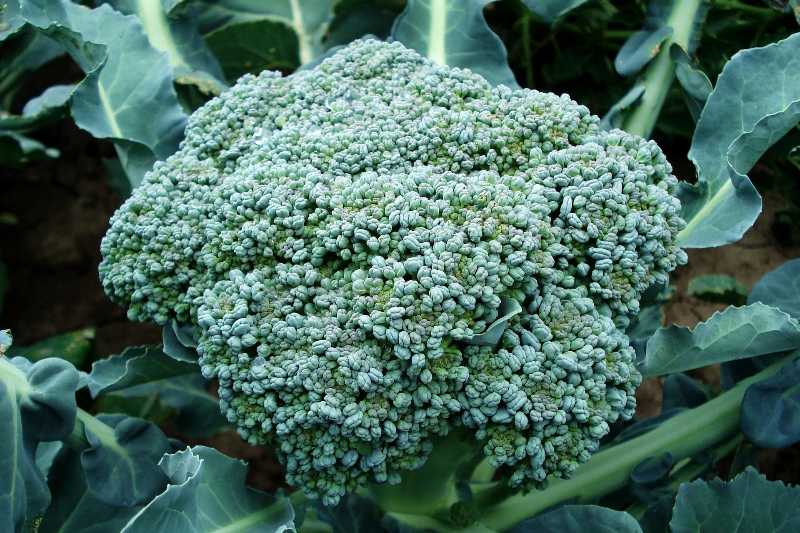
5. Brassicaceae

Broccoli belongs to the cabbage family, but people usually eat its flower buds rather than its leaves. The dark green head grows on a thick stalk, which can reach about 3 feet tall (0.9 meters). It does well in temperate regions such as Europe and North America, especially in cool growing seasons. Broccoli contains plenty of vitamins C and K, as well as fiber.
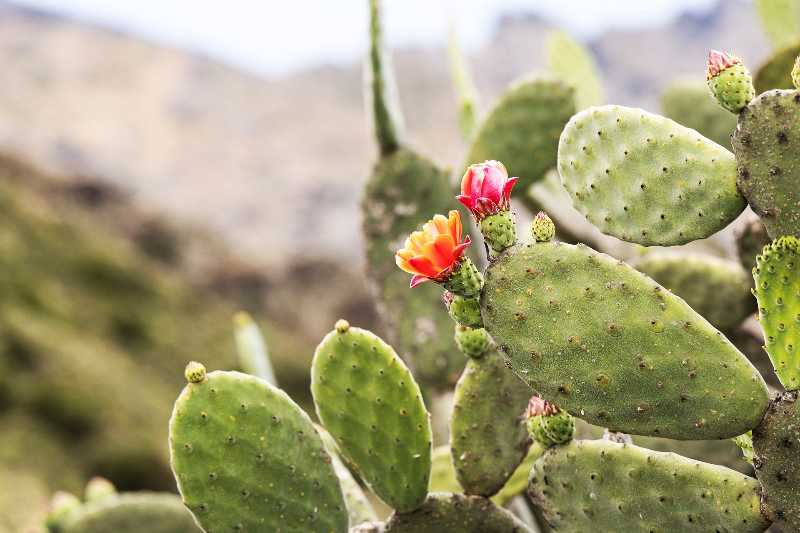
6. Cactaceae

Instead of upright columns, the prickly pear cactus grows in flat, paddle-shaped segments called cladodes. These pads carry both larger spines and tiny detachable glochids, which can irritate the skin. In spring, the plant produces yellow, orange, or red flowers, followed by edible pear-shaped fruits called "tunas" in Spanish. Common in arid and semi-arid regions of the Americas, prickly pear is an important symbol in Mexico, where "nopal" is eaten as food and appears on the national flag.
7. Pinaceae

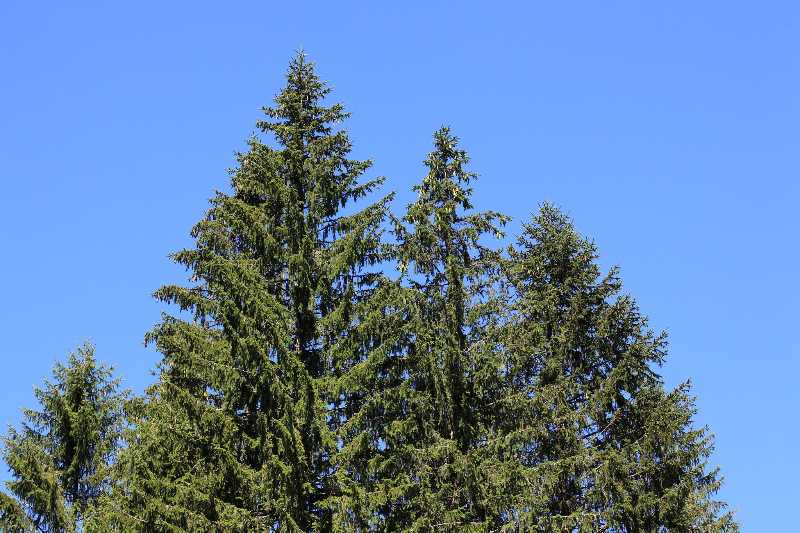
The Douglas fir is not a true fir, despite its common name. This massive evergreen can grow up to 250 feet tall (76 meters) and live for hundreds of years. It has deeply ridged bark and dark green needles. It thrives in coastal and mountain forests and is native to North America.

Its timber is one of the strongest among trees and is used in construction, while younger, well-shaped Douglas firs can be sold as Christmas trees.
8. Pinaceae

Norway spruce has a conical shape, dark green pointed needles, and long cylindrical cones that may reach 6 inches (15 cm). Mature trees can grow up to about 180 feet tall (55 meters), with branches that often droop downward in a layered pattern. It is native to northern and central Europe, so it is often found in forests and mountainous areas.

They are also used during Christmas; a Norway spruce is traditionally the species of tree chosen for the Christmas tree at Rockefeller Center in New York City.
9. Asteraceae

Common marigolds produce bright orange and yellow flowers that appear in gardens and in festival decorations. Depending on the variety, they may grow from about 6 inches to 3 feet tall (15 cm to 0.9 meters), with bushy green leaves that have a strong scent.

They were originally native to Mexico and Central America but are now planted around the world due to their hardiness. In Mexico, they are closely tied to Día de Muertos, where their color and scent are used to guide and honor the dead.
10. Pinaceae

White pine, a tall evergreen from eastern North America, can reach about 150 feet (46 meters). Its slender needles grow in bundles of five, a useful clue for identifying the species. Because the wood is strong andlightweight, white pine was historically prized for ship masts, especially in the 18th century.

The tree also stands as a symbol of unity for the Haudenosaunee, or Iroquois Confederacy.
11. Brassicaceae

Kale has loose leaves that grow from a central stem instead of forming a tight head like cabbage. Its leaves may be curly, flat, or wrinkled depending on the variety. It is a cold-tolerant crop that is usually grown in fall and winter; a light frost can even make its flavor sweeter by changing some of the plant's starches into sugars.

Its recent popularity as a "superfood" comes from its high levels of vitamins A, C, and K.
12. Cactaceae

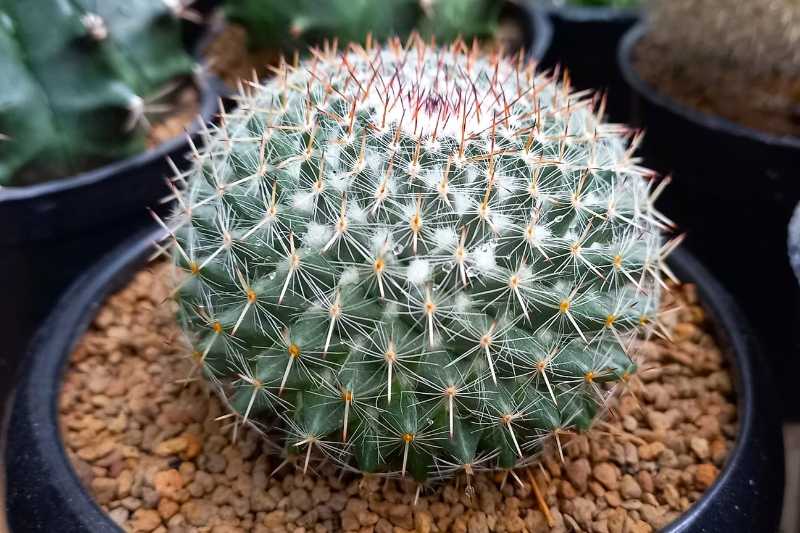
The spiny pincushion cactus stays small, usually about 6-12 inches tall (15-30 cm), with a rounded or short cylindrical body. Its dense white or reddish-brown spines create the pincushion-like appearance that gives the cactus its common name. Instead of producing large showy flowers along tall stems, it forms small pink or red flowers in a ring near the top of the plant.
Source: Author trident

This quiz was reviewed by FunTrivia editor rossian before going online.
Any errors found in FunTrivia content are routinely corrected through our feedback system.
6/13/2026, Copyright 2026 FunTrivia, Inc. - Report an Error / Contact Us