FREE! Click here to Join FunTrivia. Thousands of games, quizzes, and lots more!
Quiz about National Birds Across The World

National Birds Across The World Quiz


Many countries have officially adopted a wild bird native to that area as a national symbol. Match the photo of the bird to the country it represents.

by pusdoc. Estimated time: 3 mins.
  1. Home
  2. »
  3. Quizzes
  4. »
  5. World Trivia
  6. »
  7. Flags and Symbols
  8. »
  9. National Symbols

Author
pusdoc
Time
3 mins
Type
Quiz #
422,321
Updated
Jan 02 26
# Qns
10
Difficulty
Average
Avg Score
7 / 10
Plays
18
Last 3 plays: Rizeeve (10/10), FlicksBuff (10/10), Flukey (6/10).
Drag-Drop or Click from Right
Options
India, showy male Bhutan, clever corvid St. Kitts and Nevis, graceful diver Botswana, weighty bird Denmark, famous story South Africa, stately strider Uruguay, grassland bird United States, not the turkey Estonia, sign of spring Kenya, agile flyer


 View Image Attributions for This Quiz

Most Recent Scores
Today : Rizeeve: 10/10
Today : FlicksBuff: 10/10
Today : Flukey: 6/10
Today : GoodVibe: 5/10
Today : Steelflower75: 6/10
Today : dinipie: 3/10
Today : cov1: 5/10
Today : bernie73: 5/10
Today : Upstart3: 8/10

Quiz Answer Key and Fun Facts
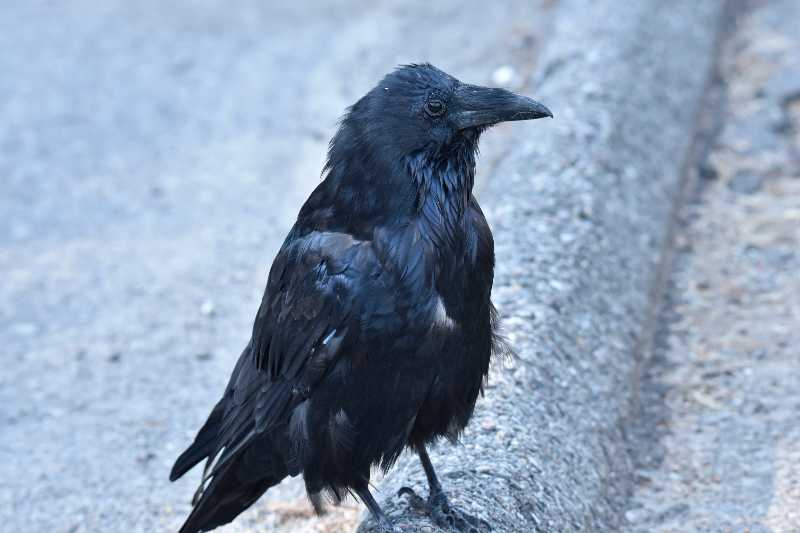
1. Bhutan, clever corvid

The common raven, Corvus corax, has a subspecies "tibetanus" which is found in the Himalayas. (Note that the word "common" in bird names means that it is found across continents, not that it is necessarily commonly found). In Bhutanese culture, the raven represents a guardian deity, and the crown worn by the king of Bhutan includes the head of a raven. In Bhutanese tradition, the raven guided the founder of the country, Shabdrung Ngawang Namgyal, to victory in a battle against invaders from Tibet.

All species of ravens have plumage that is mostly black; the common raven is completely black. Although related to crows, ravens tend to be larger - the common raven has a wedge-shaped tail in contrast to the fan-shaped tail of crows. In Bhutan, ravens are revered for their intelligence; the birds are known for their facility for problem-solving.
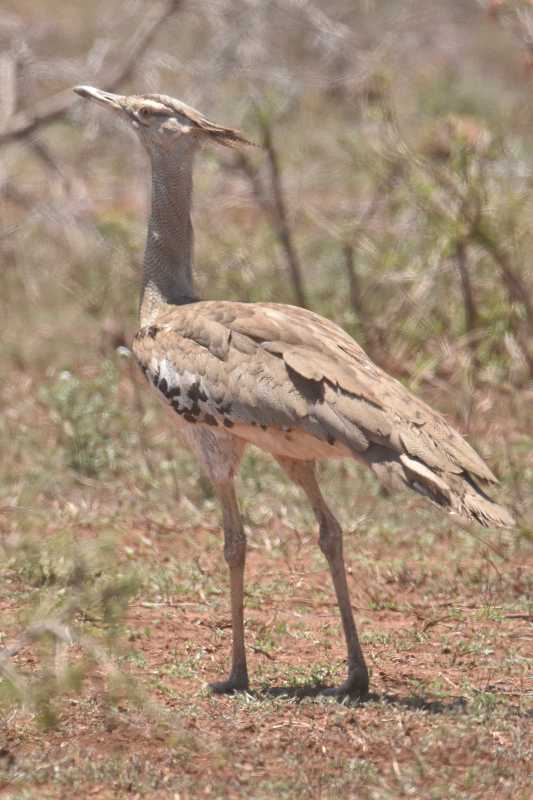
2. Botswana, weighty bird

The Kori bustard is the heaviest flying bird, weighing in at up to 40 pounds (18 kg). In Botswana, the bird symbolizes strength and resilience. The Kori bustard ranges across much of southern Africa, but its name comes from the Setswana name for the bird.
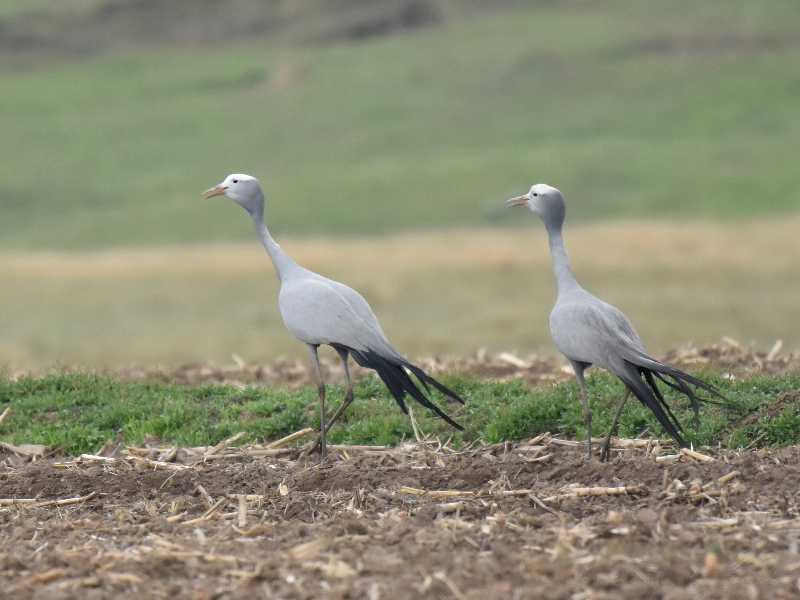
3. South Africa, stately strider

The blue crane (Anthropoides paradisia) was selected as the national bird of South Africa when the country held its first democratic elections in the 1990s. The bird represents unity and bravery - significantly, the Xhosa and Zulu peoples used blue crane feathers as honors for bravery.

The bird is nearly completely restricted to South Africa, and has one of the most restricted range of any of the 15 crane species. It has a bulbous head and long, trailing tail feathers. A ground feeder, it is seen striding across agricultural lands where it feeds on grasses and small invertebrates.
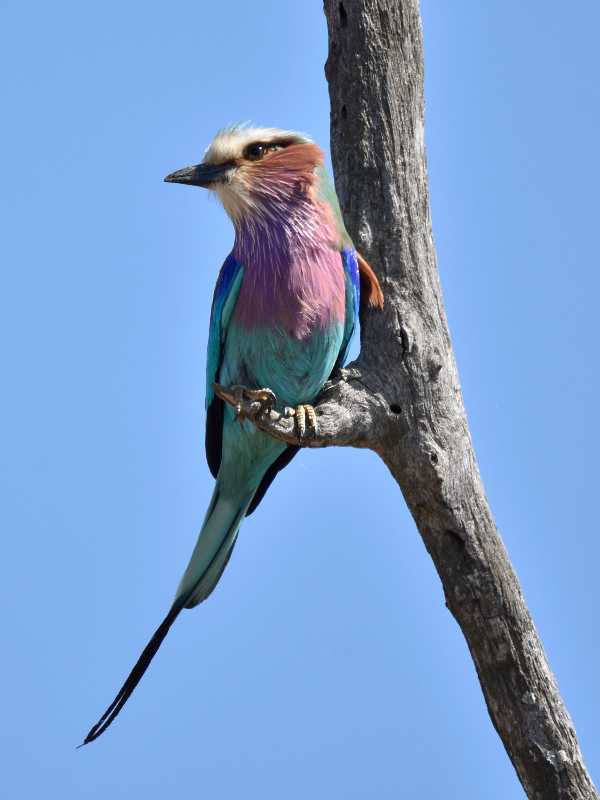
4. Kenya, agile flyer

The lilac-breasted roller, Coracias caudatus, is widely distributed in Africa. It lives up to its name, wearing brilliantly colored adornments of lilac, white, green, turquoise, cobalt and cinnamon feathers. This diversity of colors contributed to its selection as national bird of Kenya, representing the diversity of Kenya's tribes.

The name "roller" comes from its swooping flight, especially during the breeding display. Their diet is usually insects and small vertebrates - they perch atop branches and trees to have the best vantage point to find a meal.

The bird has not been legislatively enshrined as the national bird of Kenya, but it is a widely used symbol of the country.
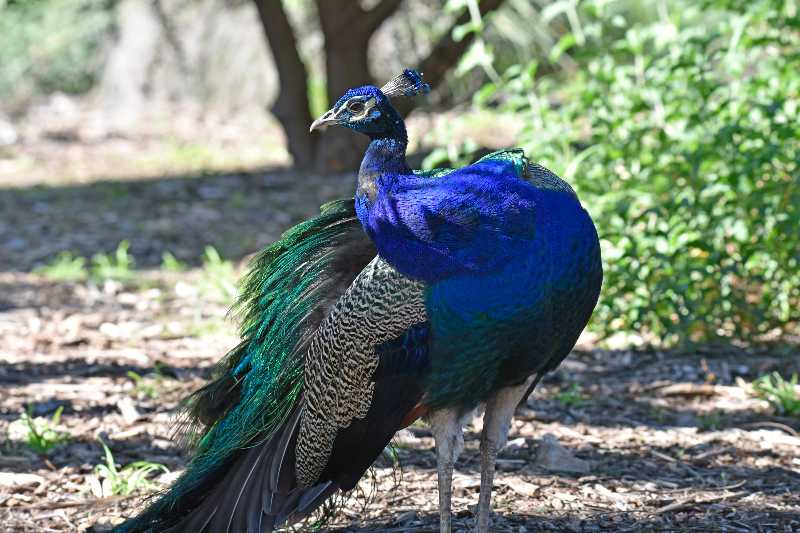
5. India, showy male

The Indian peacock (Pavo cristatus) is the male of the species; peafowl is the collective term. It was declared the national bird of India in 1963, and was protected by law in 1972. The bird is associated with Lord Krishna, as there are stories where Krishna played his flute and peacocks danced to the lovely tune, gifting him with a brilliant feather - a peacock feather adorns his crown. The legendary Peacock Throne was constructed by Shah Jahan (of Taj Mahal fame). Inlaid peacocks and precious stones and gold symbolized the wealth and power of the Mughal empire; it was stolen by Persian invaders in 1739.

The Indian peafowl is native to the Indian subcontinent but domestic escapees have colonized all continents except Antarctica. The brilliant plumage, with "eyes" on the trailing tail feathers, make peacocks a popular addition to formal gardens.
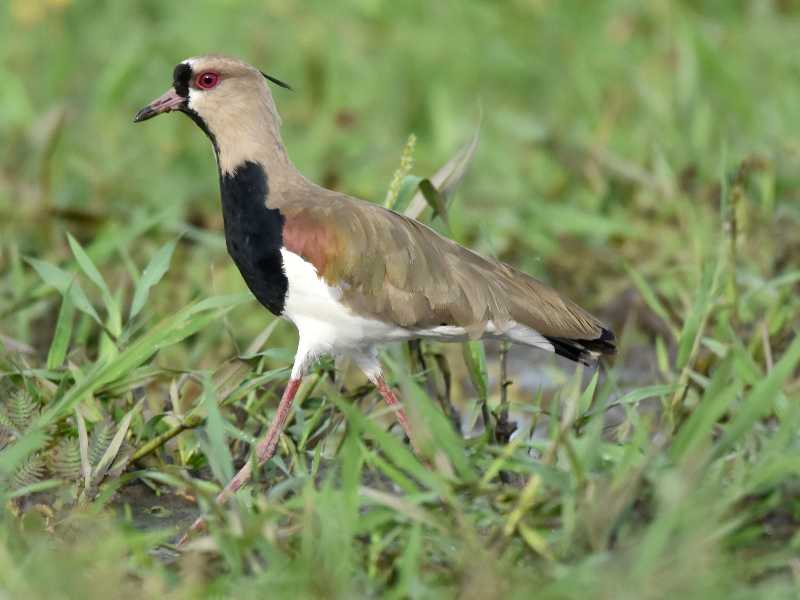
6. Uruguay, grassland bird

The southern lapwing (Vanellus chilensis) is found throughout South America and the southern portion of Central America. A symbol of tenacity, the bird strides across grasslands - including soccer fields - and aggressively defends its nest. Given Uruguay's famous win of the first ever soccer World Cup, selection of a bird associated with soccer fields seems natural.

The bird is the symbol for the Uruguayan national rugby team, Los Teros. (Tero is the local moniker for the lapwing, a transliteration of its raucous call.) The bird is a familiar symbol of Uruguay, but has not been enacted into law as the official national bird.
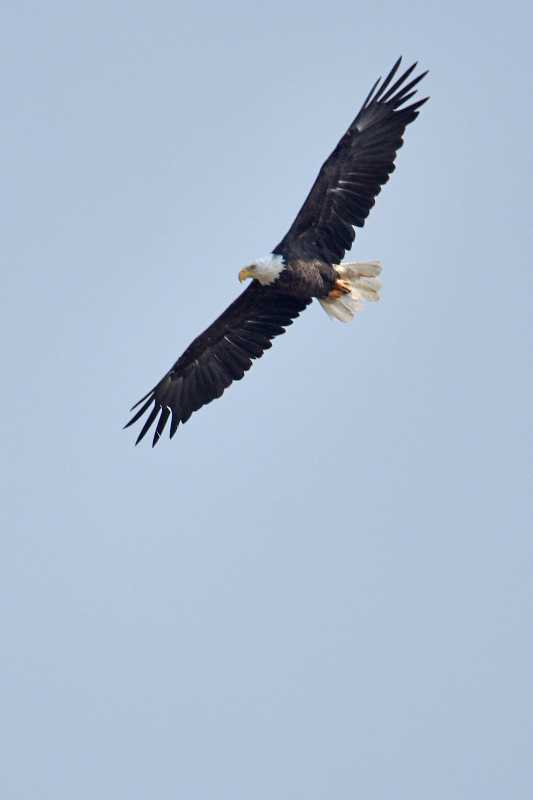
7. United States, not the turkey

Apocryphally, Benjamin Franklin wanted to choose the wild turkey rather than the bald eagle, but the aquiline contender won out. It was adopted in 1782 but not codified in law until 2024! The bald eagle (Haliaeetus leucocephalus) is native to the US and symbolizes strength and freedom. Once nearly eradicated from the lower 48 by the ravages of DDT, habitat loss and guns, the eagle has resurged in population and was removed from the endangered species list in 2007.

It is an equal opportunity consumer, and is just as happy picking over discarded fish carcasses as it is hunting its own food.
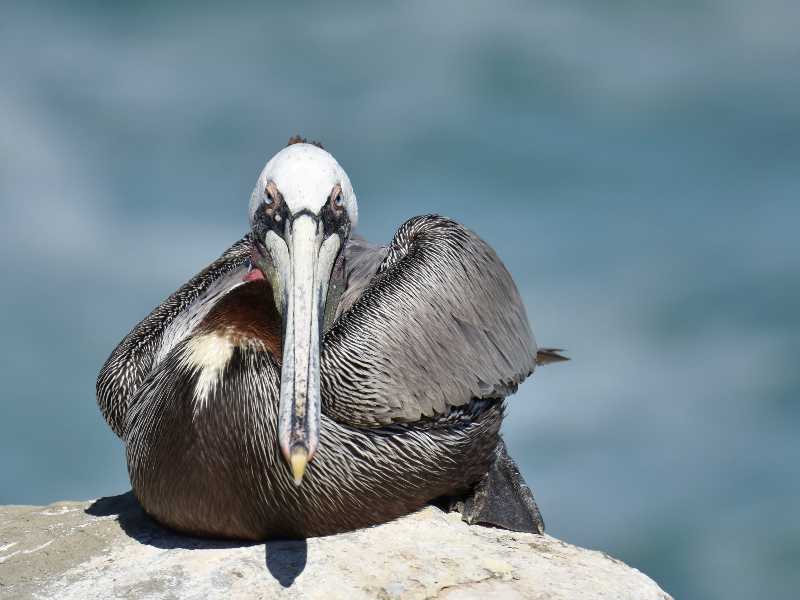
8. St. Kitts and Nevis, graceful diver

The brown pelican, Pelecanus occidentalis, is found along the coasts of the US in North America, the Gulf of Mexico, the Caribbean and the northern portions of South America. In addition to St. Kitts and Nevis, it is also the national bird of Saint Martin, Barbados and the Turks and Caicos. Louisiana claims it as the state bird in the US.

As with many fish eating birds, its numbers plummeted following widespread application of DDT pesticide but the population has returned. As a national bird, its spectacular dives to catch fish make it a natural symbol of strength and grace.

The precise date the pelican was adopted as a national symbol of St. Kitts and Nevis is unclear. Locally, it is referred to as a "booby."
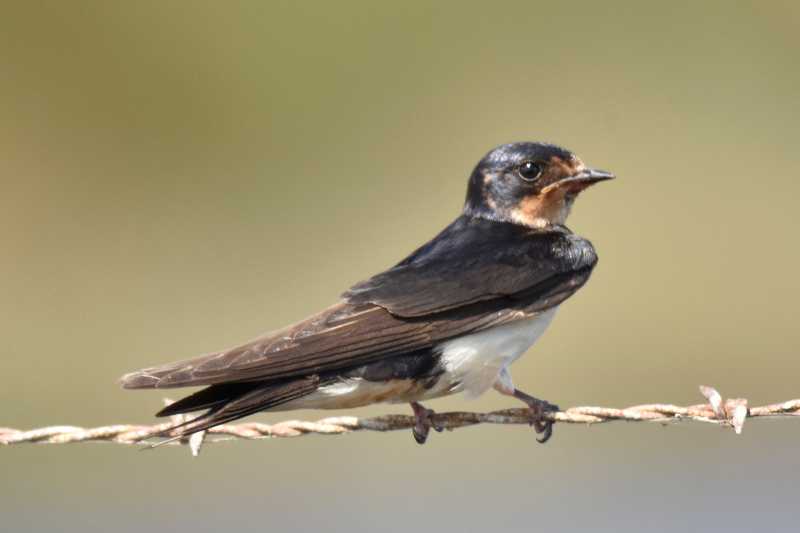
9. Estonia, sign of spring

The barn swallow, Hirundo rustica, occurs on all continents. In addition to Estonia, it is the national bird of Austria. It represents good fortune, and is a sign of the return of warmer weather. It is closely associated with human habitations, known to nest in barns and other structures.

The barn swallow was designated as Estonia's national bird in 1962. Its forked tail, blue-black back and rufous throat are recognizable worldwide.
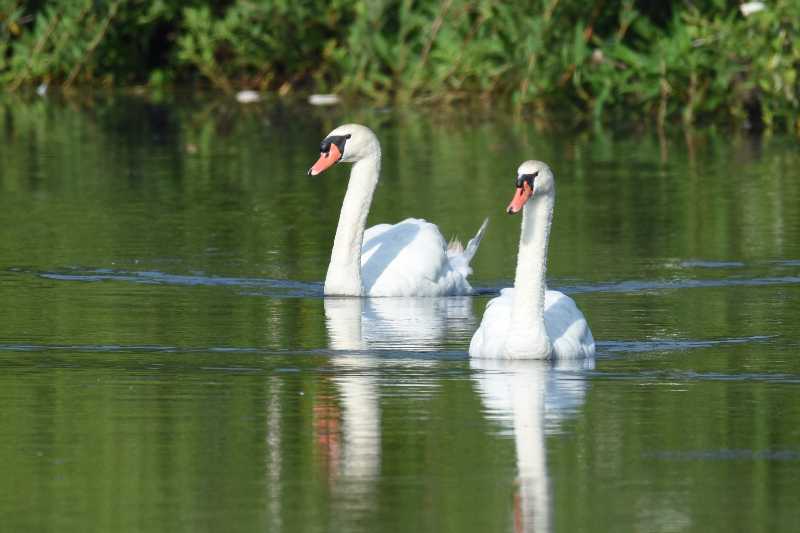
10. Denmark, famous story

The mute swan, Cygnus olor, is native to Europe and parts of Asia. Introduced populations live in North American, Australia and South Africa. There are only 7 species of swan (some count an eighth, the Coscoroba swan), but it is undoubtedly the mute swan Hans Christian Andersen had in mind when he wrote "The Ugly Duckling." It was selected as the national bird of Denmark in 1984 after a popular vote, as a nod to native son Andersen.

The bird symbolizes beauty and transformation.
Source: Author pusdoc

This quiz was reviewed by FunTrivia editor trident before going online.
Any errors found in FunTrivia content are routinely corrected through our feedback system.

1/2/2026, Copyright 2026 FunTrivia, Inc. - Report an Error / Contact Us