FREE! Click here to Join FunTrivia. Thousands of games, quizzes, and lots more!
Quiz about Tell Me Quenda Quenda Quenda

Tell Me Quenda, Quenda, Quenda Quiz


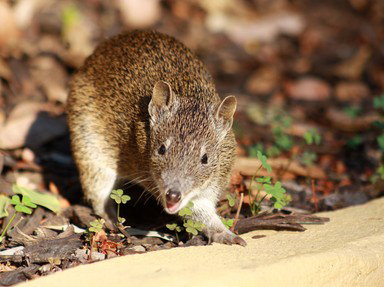
This is a quiz about the small mammal called a quenda (with apologies to Alberto Testa for pinching the title from his song, "Quando, Quando, Quando").

A multiple-choice quiz by MotherGoose. Estimated time: 2 mins.
  1. Home
  2. »
  3. Quizzes
  4. »
  5. Animal Trivia
  6. »
  7. Animals by Region
  8. »
  9. Australia

Author
MotherGoose
Time
2 mins
Type
Multiple Choice
Quiz #
425,538
Updated
Sep 10 26
# Qns
10
Difficulty
New Game
Avg Score
7 / 10
Plays
17
Last 3 plays: Guest 174 (5/10), Guest 90 (6/10), WaggaWagga2010 (5/10).
- -
Question 1 of 10
1. The quenda is native to which continent? Hint


Question 2 of 10
2. What is another name for the quenda? Hint


Question 3 of 10
3. What is the conservation status of the quenda in the 2020s? Hint


Question 4 of 10
4. When are quendas the *most* active? Hint


Question 5 of 10
5. Quendas are marsupials, which means they are mammals possessing a pouch. Why is it a backward-facing pouch? Hint


Question 6 of 10
6. What is the best way to describe a quenda's social group? Hint


Question 7 of 10
7. What do quendas eat? Hint


Question 8 of 10
8. How long is the quenda's gestation period? Hint


Question 9 of 10
9. What is the ideal habitat for a quenda? Hint


Question 10 of 10
10. What is the characteristic shape of the holes that quendas leave in the soil? Hint


(Optional) Create a Free FunTrivia ID to save the points you are about to earn:

arrow Select a User ID:
arrow Choose a Password:
arrow Your Email:


Most Recent Scores
Today : Guest 174: 5/10
Today : Guest 90: 6/10
Today : WaggaWagga2010: 5/10
Today : Guest 216: 5/10
Today : Stoaty: 6/10
Today : Alcoholic63: 6/10
Today : amarie94903: 9/10
Today : neon000: 5/10
Today : gracemercy1: 10/10

Quiz Answer Key and Fun Facts
1. The quenda is native to which continent?

Answer: Australia

Quenda are native to the continent of Australia; specifically, they are found only in the south-west corner of Western Australia, ranging from Guilderton (north of Perth) down to Esperance (on the southern coast), and inland to Hyden (east of Perth).

Quendas are one of the few marsupials that can still be seen in the suburbs of Perth (capital city of Western Australia), mostly in areas near bushland. I was lucky enough to see one in my garden once but they are not really a common sight. Quendas are marsupials about the size of a rabbit. People sometimes mistake quendas for large rats.
2. What is another name for the quenda?

Answer: south-western or western bandicoot

The quenda is a type of bandicoot, specifically the south-western or western bandicoot. Its scientific name is Isoodon fusciventer. Isoodon is derived from the Greek "iso" (same) and "odon" (tooth) because their teeth are all the same size. Their teeth are small, sharp, pointed, and evenly spaced along the jaw. The species name fusciventer is derived from the Latin "fuscus" (dusky, dark-coloured) and "venter" (belly, paunch), because they have darker coloured bellies than other bandicoot species.

The name quenda comes from the Noongar language, the Aboriginal language group native to the south-west of Western Australia.
3. What is the conservation status of the quenda in the 2020s?

Answer: rare, near threatened

In Western Australia, the Department of Biodiversity, Conservation and Attractions (DBCA) is a state government department that administers the state's Priority Flora and Fauna Lists which rank the conservation status of plants and animals as Priority 1 to 4. The quenda is designated Priority 4: "Rare, Near Threatened and other species in need of monitoring".

The main threats to the quenda are destruction of their habitat by land clearing, bushfires, predation by introduced species such as foxes, dogs and cats (both feral and domestic), and competition for food resources from introduced pests such as rabbits and black rats.
4. When are quendas the *most* active?

Answer: at night

Quendas are the most active at night because they are predominantly nocturnal creatures who sleep during the day. They do most of their foraging and digging in the dark. However, to a lesser extent, they are also active around dawn and dusk, and occasionally they can be active during the day if it is winter, or on cool and cloudy days.
5. Quendas are marsupials, which means they are mammals possessing a pouch. Why is it a backward-facing pouch?

Answer: To keep dirt out of the pouch while burrowing

Most marsupials have forward-facing pouches. However, quendas have backward-facing pouches to stop dirt, debris and twigs from entering the pouch while the mother digs for food. This is a common adaptation for marsupials that dig and burrow, such as wombats, marsupial moles, Tasmanian devils and other bandicoots, as well as some climbers such as koalas and quolls.
6. What is the best way to describe a quenda's social group?

Answer: they are solitary animals

Quendas live largely independent solitary lives, interacting primarily just for courtship, mating or fighting. Because of this there is no collective noun that applies to them (i.e. terms like flock, school, colony, herd and pack are not relevant). In fact, quendas actively avoid contact with other quendas. Adult quendas, particularly males, are highly territorial and very aggressive if they cross paths.

Immature quendas are called joeys. If you see a group of quendas, it is most likely a mother with her joeys.
7. What do quendas eat?

Answer: insects, fungi, and plant roots

Quendas are omnivores so they eat a wide variety of things including both plants and animals. A large part of their diet includes the underground parts of plants, such as roots, tubers and bulbs, as well as underground fungi. They will eat seeds and fallen fruit. They also eat small invertebrates such as insects and their larvae, beetles, spiders, ants, and earthworms. Occasionally they will eat small lizards or frogs. In urban areas, quendas have been known to eat grain and pet food, but these food sources can have negative effects on their health.

Quendas spread fungal spores in their droppings which is of benefit to their ecosystem. The spores colonize plant and tree roots to form a network called mycorrhizae, a symbiotic (mutually beneficial) relationship. The fungus helps the tree absorb water and mineral nutrients; the tree provides the fungus with the sugars it makes during photosynthesis.
8. How long is the quenda's gestation period?

Answer: 11-15 days

Quendas have one of the shortest gestation periods of any mammal at 11-15 days. (The mammal with the shortest pregnancy is the stripe-faced dunnart, a type of marsupial mouse, with a gestation period of 10.5 to 11.5 days).

Although the mother quenda has 8 teats in her pouch, she usually gives birth to 1 to 6 young (typically 2 to 4). The young are called joeys. Typically a healthy female can rear 2 or 3 litters per year but if food is abundant, she can breed all year round, peaking during the spring.
9. What is the ideal habitat for a quenda?

Answer: where there is dense ground cover

The ideal habitat for a quenda is bushland that has a lot of trees or thick shrubs and grasses, providing dense ground cover. They prefer living near swamps, creeks, wetlands, and damp environments. This type of habitat will provide protection from predators, a good food source, and materials to build their nests.
10. What is the characteristic shape of the holes that quendas leave in the soil?

Answer: Conical

A distinctive feature of the quenda is its long, pointed muzzle or snout, which it uses to forage for food. They have a very keen sense of smell. The quenda pokes its snout straight into the topsoil and leaf litter to sniff out food, leaving a distinctive conical hole. Once they have located food, they use their strong front legs to dig out the soil.

If you live in in the south-western corner of Western Australia, you can identify what has been digging in your garden by examining the shape of the holes left behind, the presence or absence of dirt mounds, and the types of tracks or droppings left behind. Quendas leave conical holes with no dirt mounds surrounding them. Rabbits and rodents make round, clean-edged entry holes leading into underground burrows with dirt mounds surrounding them. Echidnas leave large, deep, irregular holes with messy edges and claw marks. Very small, perfectly round holes indicate native bees, wasps, crickets, or trapdoor spiders.
Source: Author MotherGoose

This quiz was reviewed by FunTrivia editor rossian before going online.
Any errors found in FunTrivia content are routinely corrected through our feedback system.
9/10/2026, Copyright 2026 FunTrivia, Inc. - Report an Error / Contact Us