FREE! Click here to Join FunTrivia. Thousands of games, quizzes, and lots more!
Historical Sites For Eighth Graders Quiz
Attention Students! You have been studying world cultures all year, so these sites should be recognizable to you. Identify these structures by location, and give information concerning their construction and use!
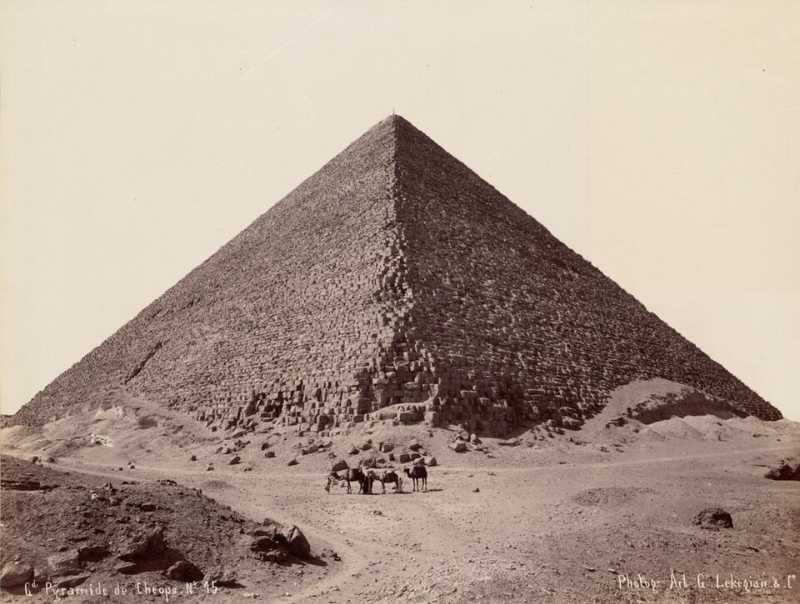
The Great Pyramid of Giza is not only the oldest of the Seven Wonders of the Ancient World, but it is also the only one that is still standing. Built for Khufu, or Cheops, the second pharaoh of the Fourth Dynasty, the pyramid was constructed between 2600-2500 BC.
It took workers about twenty years to complete the pyramid, using approximately 2.3 million stone blocks. Originally it was encased in white limestone, which must have been an awe-inspiring sight in the bright sunlight. At 481 feet high (147 m) it was the tallest building in the world for centuries.
The reason for its construction is still open for discussion. Was it really a burial for the pharaoh? If so, there is scant evidence to prove it. I'm going with it being an unemployment relief project to give farmers a way to earn a living during flood season. Or maybe Khufu just wanted to show off!
2. England
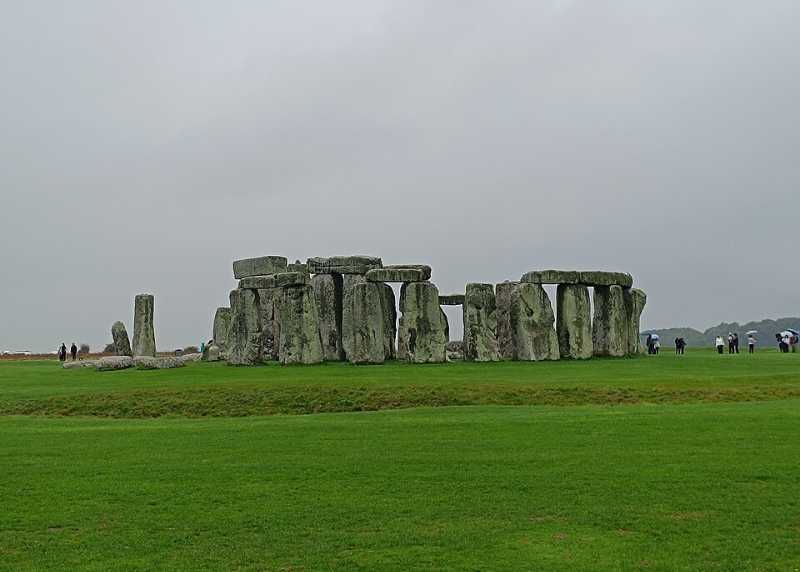
A megalithic structure located in Wiltshire, England, on the Salisbury Plain, construction began on Stonehenge even before the Great Pyramid! Building began in 3,000 BC, and Stonehenge was completed in stages over the next 1,500 years.
The sarsen stones, the largest boulders made of sandstone, were quarried about twenty miles from the site and weighed about twenty-five tons (23 mt) each. Smaller stones called blue stones were quarried in Wales about 140 miles (225 km) away. They weighed about 4 tons (3.6 mt) each.
Over the centuries some very interesting theories about the use of Stonehenge have been discussed. Was it a temple? A burial ground? The stone do align with the movements of the sun, so many believe it was used as a calendar.
3. Greece
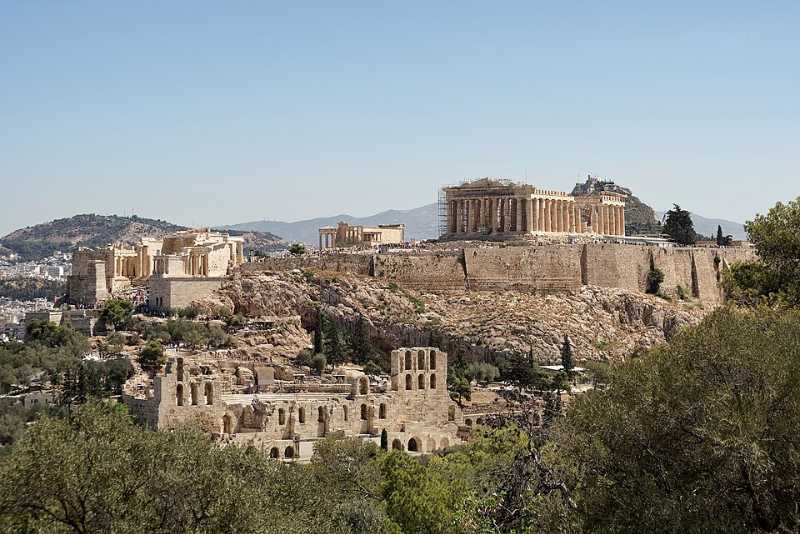
Overlooking the city of Athens, the Acropolis was the perfect fortified hill. There was water and a flat plateau on which to build. It was used for the defense of the city; if attacked, the people needed a safe haven, which the Acropolis provided. They also, however, needed a place to pray to their gods for help, so it was the site of many ancient temples.
Mostly constructed in the 5th century BC, the buildings on the Acropolis were largely part of the building program initiated by Pericles after the Persians destroyed much of the area during the Persian Wars. The Parthenon and the Temple of Athena Nike, erected to honor Athena, and the Erechtheion, which honored many gods, were just three of the many structures there. Many were made of Pentelic marble, which was quarried nearby.
The Athenians viewed the monuments on the Acropolis as a symbol of their power and intelligence. They believed that worship of their patron deity, Athena, made them the smartest of all the Greeks.
4. Iraq
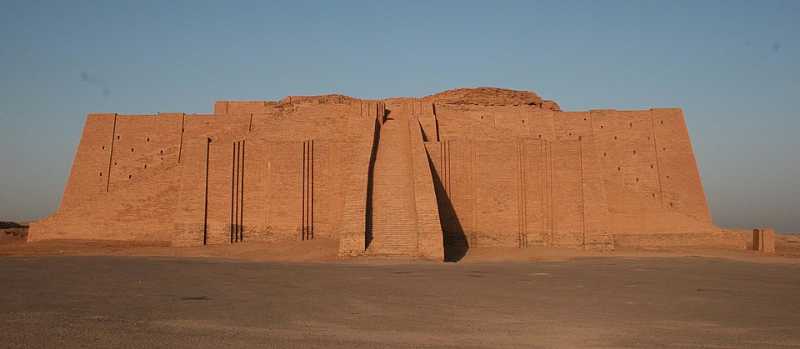
Built in Mesopotamia in honor of the moon goddess, Nanna, construction of the Great Ziggurat began in approximately 2100 BC. Ur-Nammu, a king of the Third Dynasty of Ur, began building the zigguart, and it was completed by his son Shulgi.
It was 98 feet (30 meters) tall, with a base that measured 210 feet (64 m) x 150 feet (46 m). Historians estimate that it took an amazing 720,000 mud bricks just to make the first terrace of the building. There were two other levels completed as well. The structure not only contained a temple on the top level, but there were also rooms for business meetings and grain storage.
The exterior mud bricks were very durable because they had been fired in a kiln. A restoration was carried out in ancient times, but the mortar that was used that did not withstand the test of time very well. More recently the ziggurat was restored by Saddam Hussein in the 1980s.
5. China
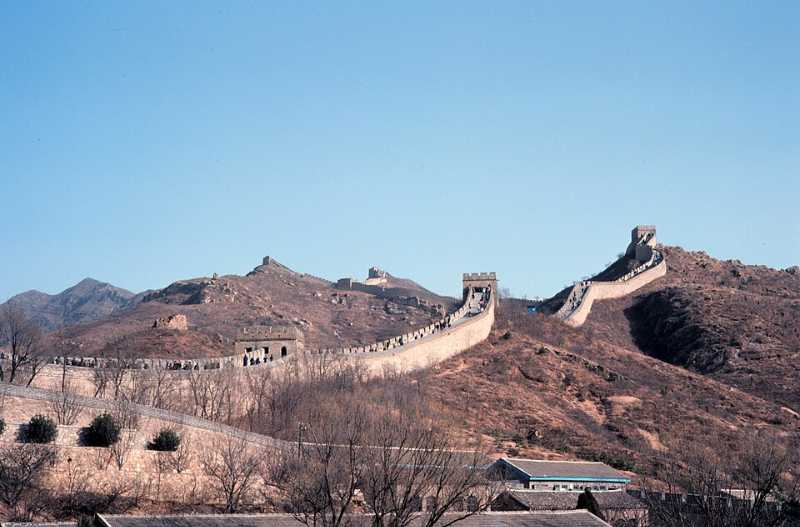
Contrary to what people may think, the Great Wall of China is not one long continuous wall. Construction began in the 7th century BC, and was continued by a number of rulers for over 2,000 years.
It does cover an area of 13,000 miles (21,196 km), and although it cannot be seen from space, it is the longest man made structure ever built. It was a series of fortifications that include walls, watch towers, and fortresses that were constructed with the building materials that were found at each section's particular location.
Protection from invaders was not the only concern in China; the emperor also wanted to be able to control trade and who came in and out of his empire. How did they manage communication along this long route? Smoke and fire signals were used.
6. Jordan
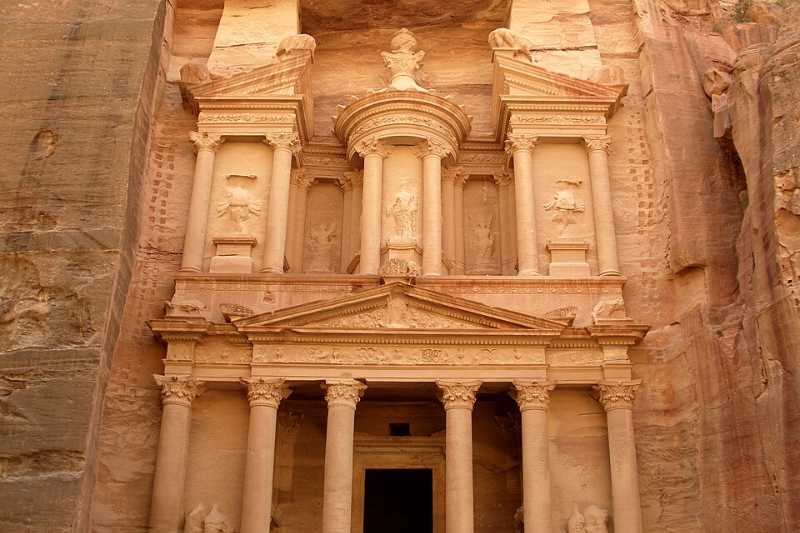
Carved in a sandstone cliff in Jordan by Nabataeans, Petra was constructed during the 300s BC between the Red Sea and the Dead Sea in what is Jordan today. The city was located on the caravan route between Egypt, Arabia, and Syria, and was a major trading center for spices and textiles. Located in the middle of the desert, the city prospered due to its elaborate water system.
Petra became part of the Roman Empire in 106 AD, but was largely forgotten after trade routes changed. It was damaged by an earthquake in 363 AD. It was not rediscovered until the early 1800s by Johann Ludwig Burckhardt.
It is believed that 1,000 tombs are located in Petra, and four of them have been discovered that are believed to have been built for royalty. Only an estimated 15% of the city has been explored, with much of the remaining 85% thought to be located underground.
7. Italy
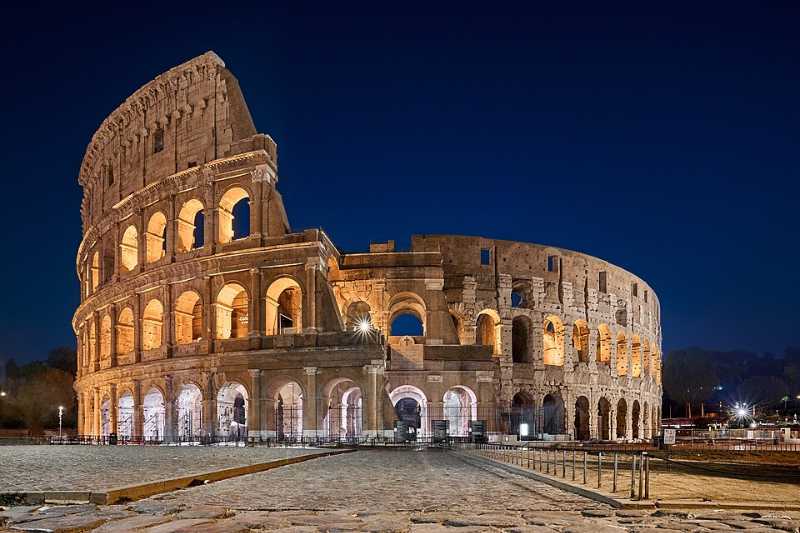
The largest amphitheater in the world, the Colosseum was constructed from 72-80 AD. Emperor Vespasian had decided to tear down the palace of the unpopular Nero, and instead he built a stadium that could hold 50,000-85,000 spectators in its place. Roman citizens could attend events at the Colosseum free.
And there was certainly a wide variety of spectacles at the Colosseum for them to see - from gladiator fights, mock naval battles, theatrical productions, and animal fights, the contests were endless. The first games, hosted by Vespasian's son, Titus, lasted for one hundred days; an estimated 9,000 animals were killed during this time.
The Colosseum was built using concrete and travertine limestone. It reached a height of 157 feet (48 m) tall and covered six acres (2.4 ha) While it has been severely damaged by earthquakes over time, and some of the stones were removed and used in other buildings, it remains an architectural marvel.
8. Easter Island
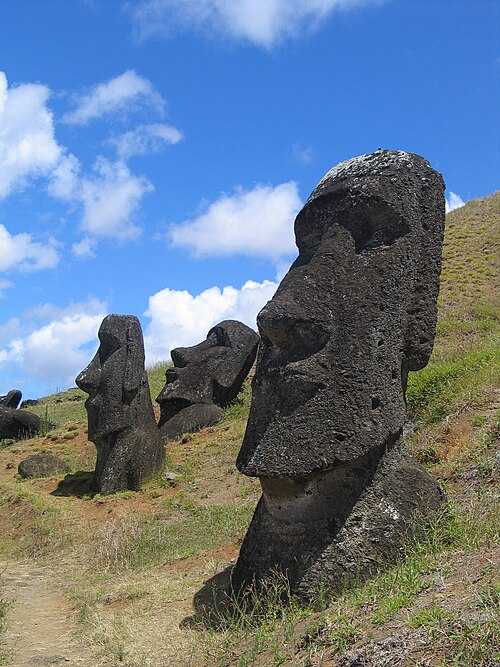
The monoliths located on Easter Island are called moais. They were carved from volcanic rock by the Rapa Nui between 1250-1500 AD. Why? They are believed to represent ancestors, spiritual protectors who are watching over the people.
Each statue is approximately 13 feet (4m) tall and weighs about 14 tons (12.7 mt). Historians believe that they were moved by using ropes to rock them side to side. It has been estimated that this method would have taken about an hour to move it from the quarry to its final resting place.
About one thousand moais have been found on the island; four hundred of them were found unfinished in the quarry. Although they look like they only have heads, many of the moais have bodies that are buried under ground.
9. Peru
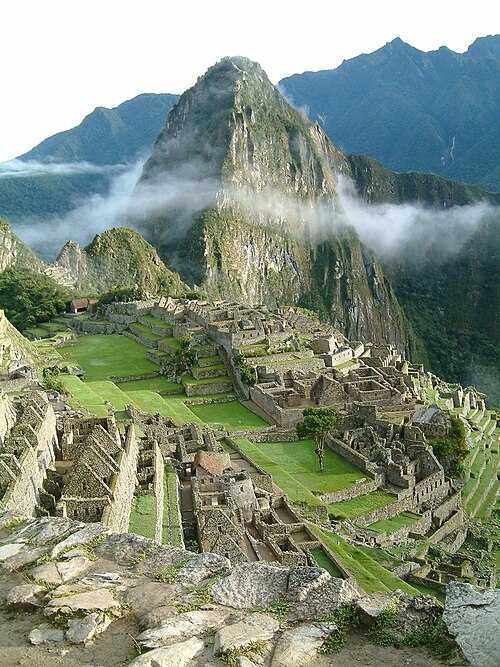
Located high in the Andes Mountains of Peru, Machu Picchu was inhabited by the Incas from 1420-1530. For some unknown reason, the city was abandoned shortly after the Spanish arrived, but that didn't mean that people in the area ceased to know about it. When found by Hiram Bingham in 1911, there were still a few people living there.
The technique for quarrying the stones for the building is called ashlar. They were so precisely cut that mortar wasn't even needed to hold them today. Even today it is not possible to slide a piece of paper between them. Because Machu Picchu is located near two fault lines, the ashlar technique has proven very useful in making the buildings resistant to earthquakes.
Although it is difficult to substantiate, historians believe that the fortress was built for either the emperor and his family or as a place for worship. The site has a temple area, as well as places for homes and agriculture. There is also evidence that the site was used as an observatory, as buildings are aligned with events in the sky.
10. Cambodia
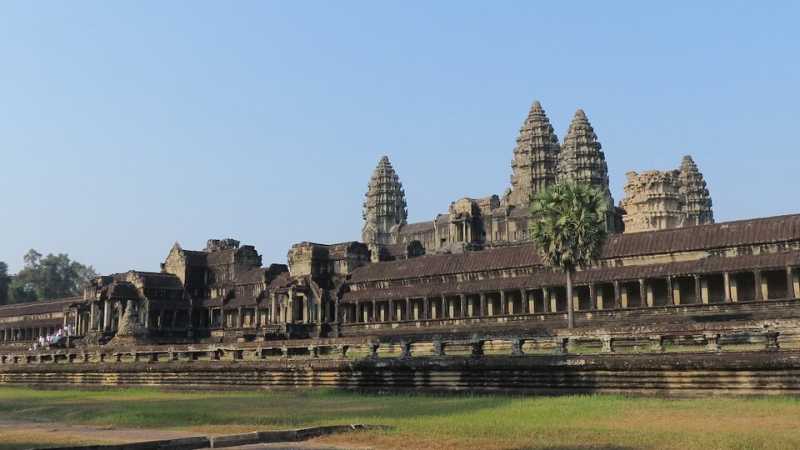
Angkor Wat, which means Temple City, was built during the 12th century in Cambodia. Considered to be the largest religious monument in the world, it covers 400 acres (162 ha). While it was originally used as a Hindu temple complex to worship the god Vishnu, over time it was converted to serve as a Buddhist temple, with Buddhist statues being added. The building became a popular Buddhist pilgrimage site shortly after completion.
It took millions of sandstone blocks, with some of them weighing 1.5 tons (1.36 mt) each, to build the structure; the stone was quarried nearby and transported to the site using a system of canals. Construction was completed in thirty years, using 300,000 workers and 6,000 elephants.
There are many bas-reliefs carved into the sandstone walls with scenes from Hindu epics. The structure was supposed to remind worshipers of Mount Meru, the mythical home of the Hindu gods.
This quiz was reviewed by FunTrivia editor agony before going online.
Any errors found in FunTrivia content are routinely corrected through our feedback system.