FREE! Click here to Join FunTrivia. Thousands of games, quizzes, and lots more!
Quiz about Dutch Colonialism

Dutch Colonialism Trivia Quiz

A High-Level Overview

This multiple choice quiz is all about Dutch colonialism. Questions about from the East Indies to the West Indies, from sugar and spice to everything nice... and a few not-so-nice things. Enjoy!

A multiple-choice quiz by JJHorner. Estimated time: 3 mins.
  1. Home
  2. »
  3. Quizzes
  4. »
  5. History Trivia
  6. »
  7. European
  8. »
  9. Dutch

Author
JJHorner
Time
3 mins
Type
Multiple Choice
Quiz #
423,616
Updated
Mar 30 26
# Qns
10
Difficulty
New Game
Avg Score
10 / 10
Plays
23
Last 3 plays: Guest 76 (10/10), bernie73 (10/10), Lindaellen (10/10).
- -
Question 1 of 10
1. Which organization led much of the Dutch Republic's early overseas expansion in Asia? Hint


Question 2 of 10
2. What was the primary goal of Dutch expansion into Southeast Asia during the 17th century? Hint


Question 3 of 10
3. Which African location served as a key Dutch trading post for goods (and slaves)? Hint


Question 4 of 10
4. Which present-day country includes the former Dutch colony known as the Dutch East Indies? Hint


Question 5 of 10
5. What was the name of the Dutch settlement that later became New York City? Hint


Question 6 of 10
6. What crop was heavily produced using enslaved labor in Dutch Caribbean colonies? Hint


Question 7 of 10
7. Which European power did the Dutch frequently compete with for control of trade routes and colonies in Asia? Hint


Question 8 of 10
8. What southern African settlement did the Dutch establish as a resupply station for ships traveling to Asia? Hint


Question 9 of 10
9. Which Dutch company focused primarily on trade and colonization in the Americas and West Africa? Hint


Question 10 of 10
10. Which river colony in South America became a long-lasting Dutch possession and later an independent nation? Hint


(Optional) Create a Free FunTrivia ID to save the points you are about to earn:

arrow Select a User ID:
arrow Choose a Password:
arrow Your Email:


Most Recent Scores
Today : Guest 76: 10/10
Today : bernie73: 10/10
Today : Lindaellen: 10/10
Today : xchasbox: 10/10
Today : MargW: 9/10
Today : Kota06: 9/10
Today : Strike121: 10/10
Today : Guest 174: 9/10
Today : japh: 9/10

Quiz Answer Key and Fun Facts
1. Which organization led much of the Dutch Republic's early overseas expansion in Asia?

Answer: Dutch East India Company

The Dutch East India Company, usually shortened to VOC from its Dutch name, was pretty much the original corporate giant. It was founded in 1602, but it certainly wasn't just a trading company.

It could wage war, sign treaties, mint coins, and set up colonies. And fight in wars it did. The Cambodian-Dutch War was a short but nasty conflict that erupted after King Ramathipadi I decided to massacre the VOC's employees at a local trading post (it was this whole thing). The VOC sent an expedition, but its people were soundly defeated, forcing the company to focus their energy elsewhere in Asia.

And you thought the cola wars of the 1980s were bad.

The company's main focus was Asia, especially the spice trade, and it built a widespread network stretching from Indonesia to Japan. If you like nutmeg, cloves, or cinnamon, you can thank them for making those spices super profitable and, at times, worth fighting over.

And if you're doubting whether those spices were worth dying for, just remember that all three of the spices I just listed are prime ingredients of pumpkin spice.
2. What was the primary goal of Dutch expansion into Southeast Asia during the 17th century?

Answer: Control of the spice trade

You know the Dutch weren't sailing halfway across the world for the fresh air and lovely scenery. Spices had been all the rage in Europe for the previous few centuries, and demand was only growing.

And the Dutch wanted to get spicy.

Frank Herbert wrote, 'He who controls the spice controls the universe' in 'Dune'. This was the prequel. Nutmeg, cloves, mace... these tiny flavor bombs were the gold bars of the 17th century.

The Dutch East India Company zeroed in on Southeast Asia, especially the Indonesian islands, and set up a tight grip on production and trade. They didn't just trade spices, they controlled who could grow them, who could sell them, and at what price. Monopoly, but with ships and cannons.

Now sure, religion tagged along for the ride sometimes, but it wasn't the main event. This wasn't a missionary-first operation. The Dutch were laser-focused on spices, and they were ruthless about it, Terminator-style. If a local population didn't play ball, the VOC wasn't above using force to 'encourage' cooperation. Not a gentle business model, but effective. At least for a while.
3. Which African location served as a key Dutch trading post for goods (and slaves)?

Answer: Gold Coast

The Gold Coast is in what is now Ghana, and it was the hub for Dutch trading activity in West Africa. The Dutch West India Company took control of several forts there, including the Elmina Castle. It became a central location in the trade of gold, ivory, and enslaved people, who probably just wanted to be left alone to live their lives, thank you.

Ships came and went, carrying humans as cargo across the Atlantic as part of the transatlantic slave trade. Not exactly a proud chapter of history, but one that can't be ignored.
4. Which present-day country includes the former Dutch colony known as the Dutch East Indies?

Answer: Indonesia

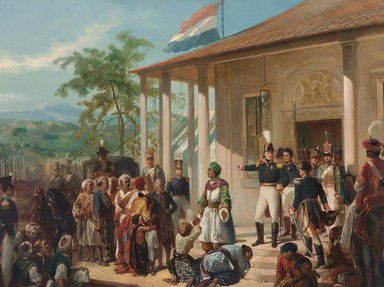
The Dutch East Indies is what the Netherlands called its massive colonial empire in Southeast Asia, and it maps pretty much perfectly onto modern-day Indonesia. Thousands of islands, a whole lot of spices, and a centuries-long Dutch presence that started as a business venture and slowly morphed into colonial rule.

By the time the Dutch government took direct control after the VOC was dissolved in 1799, they were all over places like Java, Sumatra, and the Moluccas.

Indonesia eventually declared independence in 1945 after occupation by the Japanese during World War II. The Dutch didn't exactly shrug that off as a loss. It took a few more years, some international arm-twisting, and some direct conflict before Indonesia's sovereignty was officially recognized in 1949.

So yeah, when you hear 'Dutch East Indies', just think, 'Indonesia before it was Indonesia'.
5. What was the name of the Dutch settlement that later became New York City?

Answer: New Amsterdam

Skyscrapers, yellow cabs, rent that makes people weep softly into their overpriced coffee. That's New York City.

Once upon a time though, it was just a messy outpost called New Amsterdam. The city was originally founded by the Dutch in the early 1600s on the southern tip of Manhattan. It was a scrappy trading post run by the Dutch West India Company.

The place had a little bit of everything: merchants, fur traders, a wildly mixed population, and a certain anything-goes energy that I reckon never really left.

In 1664, the English rolled in, took one look around, and said, 'yeah, we'll take this, thanks'. There was minimal resistance. They renamed it New York in honor of the Duke of York, the future King James II.

But history will always remember it as the little Dutch outpost that could.
6. What crop was heavily produced using enslaved labor in Dutch Caribbean colonies?

Answer: Sugar

Sugar was the crown jewel of Caribbean colonial economies, and the Dutch were all in. Their colonies, especially places like Suriname and a number of Caribbean islands, were packed with plantations growing sugarcane.

Processing it into sugar was labor-intensive, brutal work, so of course they forced enslaved Africans to carry out nearly every step, from cutting cane under a blazing sun to operating the crushing mills. Sweet product at a bitter cost.

Rice and cotton were important crops in other regions, especially in parts of North America, while tobacco had its own booming trade in colonies like Virginia. But in the Dutch Caribbean world, sugar was king. It drove the economy, completely reshaping the landscape and fueling a global appetite that continues to grow.

And while slavery in the Americas began with the Portuguese for sugar production in Brazil, it was the Dutch that brought it to a new level. The European demand for sweetness and the willingness of European countries to sign off on slavery drove centuries of unspeakable cruelty.
7. Which European power did the Dutch frequently compete with for control of trade routes and colonies in Asia?

Answer: Portugal

Portugal was the BMOC the Dutch had to outmaneuver, and eventually they did. In doing so, they grabbed up key spice-producing regions and reshaped the balance of power in the Asian trade.

If you remember your Portuguese history (Prince Henry the Navigator and all that), Portugal had gotten there first, setting up a massive network of forts and trading posts from Africa to India to Southeast Asia. It wouldn't last.

Then those crazy Dutch showed up with better organization, deeper pockets, and a willingness to back it all up with serious naval force. What followed was not a polite competition. It was more of a slow-motion takeover, as the Dutch East India Company chipped away at Portuguese control, one port at a time.
8. What southern African settlement did the Dutch establish as a resupply station for ships traveling to Asia?

Answer: Cape Colony

The Dutch set up a refreshment station at Table Bay in 1652, and that outpost grew into Cape Town and the wider Cape Colony. The whole thing was meant to feed and water ships on the long trip around Africa to the East Indies, as a good reason as any to found a settlement, I guess.

Jan van Riebeeck under the Dutch East India Company was the first Commander of the Cape, and it became a vital stepping stone between Europe and Asia. The VOC wanted fresh supplies for ships on the way to the East Indies, and the Cape served as a maritime halfway house. In other words, it wasn't exactly designed to be glamorous. Just very practical.
9. Which Dutch company focused primarily on trade and colonization in the Americas and West Africa?

Answer: Dutch West India Company

The Dutch West India Company, or WIC, was the primary operator in the Atlantic for the Dutch Republic. It's kind of the bad guy of the story.

It was founded in 1621, and it handled trade and colonization in the Americas and West Africa, which meant everything from Caribbean plantations to North American settlements like New Amsterdam. As such, it played a major role in the transatlantic slave trade.

If the Dutch East India Company was busy chasing spices in Asia, the WIC was working the Atlantic world, juggling sugar, fur, and human lives in a system built on profit above all.

And while the WIC definitely had its moment in the sun, for better or worse, it never quite matched the importance or sheer longevity of its eastern counterpart, despite its dark legacy.
10. Which river colony in South America became a long-lasting Dutch possession and later an independent nation?

Answer: Suriname

Suriname is the one that stuck.

While the Dutch grabbed up as much of the map as they could, this little chunk of the Guiana coast became a lasting foothold. They secured it in 1667 through the Treaty of Breda, effectively swapping it with the English, who kept New Amsterdam (later New York). Pretty good trade for the British, if you're not into tropical plantations.

The Dutch ran Suriname as a plantation colony for centuries, with sugar, coffee, and cocoa driving the economy on the backs of slaves.

It stayed under Dutch control way longer than most of their other colonies, only gaining independence in 1975. Today, it's kind of the shy kid of South America, but its cultural mix is kind of cool. You'll find influences from Africa, India, Indonesia, and the Netherlands all mixed together.

And yes, Dutch is still the official language, which just seems weird on the doorstep of the Amazon.
Source: Author JJHorner

This quiz was reviewed by FunTrivia editor ponycargirl before going online.
Any errors found in FunTrivia content are routinely corrected through our feedback system.
3/30/2026, Copyright 2026 FunTrivia, Inc. - Report an Error / Contact Us