FREE! Click here to Join FunTrivia. Thousands of games, quizzes, and lots more!
Quiz about Dont Resist

Don't Resist! Trivia Quiz


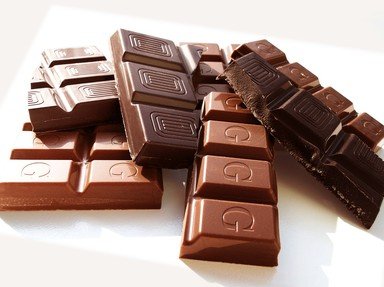
Don't resist the temptation! Twelve chocolate bars await, but their three categories are being kept under wraps. Examine each bar's texture and construction, then decide where it belongs. (Strong Canadian bias)

by reedy. Estimated time: 3 mins.
  1. Home
  2. »
  3. Quizzes
  4. »
  5. Hobbies Trivia
  6. »
  7. Confectionery, Chocolates & Candy
  8. »
  9. Chocolate

Author
reedy
Time
3 mins
Type
Quiz #
426,461
Updated
Nov 15 26
# Qns
12
Difficulty
New Game
Avg Score
10 / 12
Plays
15
Last 3 plays: PurpleComet (8/12), Guest 96 (12/12), Guest 174 (8/12).
Determine the common characteristics that put these chocolate bars into three distinct categories.
???
???
???

Twix Baby Ruth Aero Kit Kat Milky Way Lindt Excellence Coffee Crisp Cadbury Dairy Milk 3 Musketeers Mars Bar Breakaway Mirage

* Drag / drop or click on the choices above to move them to the correct mystery boxes.


Most Recent Scores
Today : PurpleComet: 8/12
Today : Guest 96: 12/12
Today : Guest 174: 8/12
Today : Guest 24: 10/12
Today : mjgrimsey: 7/12
Today : Guest 107: 5/12
Today : Guest 73: 8/12
Today : jddrsi_raven: 7/12
Today : xchasbox: 10/12

Quiz Answer Key and Fun Facts
1. Lindt Excellence

Answer: The Snap

"The Snap" (moulded, snappable chocolate)

Thin squares and clearly marked cocoa percentages distinguish Lindt Excellence from most everyday chocolate bars. Lindt & Sprüngli traces the Excellence name to a dark chocolate introduced in 1899, although the slender format familiar today arrived in 1991. The thinner pieces were intended to release the chocolate's aromas and flavours more readily.

The range includes milk chocolate, flavoured varieties, and dark bars containing as much as 100 percent cocoa. Behind their smooth texture is a much older Lindt innovation: the conching process developed by Rodolphe Lindt in 1879.
2. Cadbury Dairy Milk

Answer: The Snap

"The Snap" (moulded, snappable chocolate)

When Dairy Milk appeared in Britain in 1905, its higher milk content helped Cadbury compete with the Swiss chocolates then gaining popularity. George Cadbury Jr. developed the recipe, and the bar had become the company's best-selling product by 1914.

Cadbury introduced its familiar "glass and a half" slogan in 1928 to draw attention to that milk content. Fruit & Nut and Whole Nut soon joined the growing range, but the plain Dairy Milk bar has remained its starting point.
3. Aero

Answer: The Snap

"The Snap" (moulded, snappable chocolate)

An Aero bar gets its lighter texture from bubbles formed in the chocolate before it sets. Rowntree introduced it in Britain in 1935, offering something noticeably different from the dense solid bars already on the market.

Production stopped during the Second World War and resumed afterward, with peppermint later becoming one of Aero's best-known variations. Now made by Nestlé, the bar remains especially familiar in Britain and Canada.
4. Mirage

Answer: The Snap

"The Snap" (moulded, snappable chocolate)

Thicker than Aero and filled with larger air pockets, Mirage offers a different take on aerated milk chocolate. Rowntree Mackintosh Canada introduced the trapezoid-shaped bar in 1983, making it the newest member of this group.

Mirage passed to Nestlé when the company acquired Rowntree in 1988. While Aero is sold in many countries, Mirage has remained chiefly a Canadian chocolate bar.
5. Baby Ruth

Answer: The Chew

"The Chew" (soft or chewy-centred)

Baby Ruth combines peanuts, caramel, and chocolate-flavoured nougat beneath a chocolate coating. The Curtiss Candy Company created it by reworking an earlier confection called Kandy Kake around 1920, with the Baby Ruth name appearing by the following year.

Many people naturally connected the name with baseball star Babe Ruth. Curtiss, however, claimed that it honoured Ruth Cleveland, daughter of former U.S. president Grover Cleveland. Since the name appeared just as the ballplayer's fame was soaring, that explanation has long been questioned.
6. Milky Way

Answer: The Chew

"The Chew" (soft or chewy-centred)

Despite its astronomical name, Milky Way was inspired by the malted milk drinks served at American soda fountains. Frank Mars introduced the bar in 1923, combining malt-flavoured nougat, caramel, and milk chocolate. Its success helped establish the Mars company.

The name means different things in different markets. An American Milky Way resembles the Mars Bar sold elsewhere, while the international Milky Way has no caramel and is closer to the 3 Musketeers found in Canada and the United States.
7. 3 Musketeers

Answer: The Chew

"The Chew" (soft or chewy-centred)

The first 3 Musketeers package contained three separate pieces, which explains the name. Introduced in 1932, the original trio offered chocolate, vanilla, and strawberry nougat.

Rising costs and wartime restrictions eventually brought an end to the vanilla and strawberry pieces. The surviving chocolate version became the bar known today: whipped nougat covered in milk chocolate.
8. Mars Bar

Answer: The Chew

"The Chew" (soft or chewy-centred)

Forrest Mars Sr. created the Mars Bar after moving from the United States to establish a confectionery business in Britain. Introduced in Slough in 1932, it was based on his father's successful Milky Way but adapted for British tastes.

Nougat, caramel, and milk chocolate make the Mars Bar quite similar to the American Milky Way. Canadian stores sell both, despite the considerable resemblance between them.
9. Kit Kat

Answer: The Crunch

"The Crunch" (wafer or biscuit-based)

Kit Kat's four chocolate-covered wafer fingers have been part of its identity since Rowntree launched the bar in Britain in 1935. It was originally called Rowntree's Chocolate Crisp; the Kit Kat name appeared in 1937 and eventually replaced the original name.

Milk shortages during the Second World War prompted Rowntree to use dark chocolate and change the wrapper from red to blue. The enduring slogan "Have a break, have a Kit Kat" followed in 1958.
10. Coffee Crisp

Answer: The Crunch

"The Crunch" (wafer or biscuit-based)

Layers of vanilla wafer, a foamed coffee-flavoured filling, and a chocolate coating make up a Coffee Crisp. Its ancestor was Rowntree's Wafer Crisp, adapted for Canada under the name Biscrisp. A coffee version followed in the late 1930s, with Canadian production beginning in 1939.

From those British beginnings, Coffee Crisp grew into a distinctly Canadian favourite. It is still made in Canada and remains less widely available abroad than many other Nestlé bars.
11. Twix

Answer: The Crunch

"The Crunch" (wafer or biscuit-based)

Each Twix finger consists of a firm biscuit topped with caramel and covered in milk chocolate. Mars launched the bar in the United Kingdom in 1967, although consumers in parts of continental Europe knew it as Raider. Twix reached the United States in 1979.

Its two-finger format has long shaped the way the bar is packaged and advertised. Later campaigns turned that simple arrangement into a mock rivalry between the makers of "left Twix" and "right Twix."
12. Breakaway

Answer: The Crunch

"The Crunch" (wafer or biscuit-based)

Breakaway layers crisp wafer with milk chocolate, putting it in the same general family as Kit Kat and Coffee Crisp. Its shorter, thicker construction gives each bite a greater proportion of chocolate.

Rowntree Mackintosh introduced Breakaway in Britain in 1970. The name continued the company's established association between chocolate-covered wafers and taking a short break.
Source: Author reedy

This quiz was reviewed by FunTrivia editor Bruyere before going online.
Any errors found in FunTrivia content are routinely corrected through our feedback system.
11/15/2026, Copyright 2026 FunTrivia, Inc. - Report an Error / Contact Us