FREE! Click here to Join FunTrivia. Thousands of games, quizzes, and lots more!
Classical Europe Trivia Quiz
Birthplaces of Classical Composers
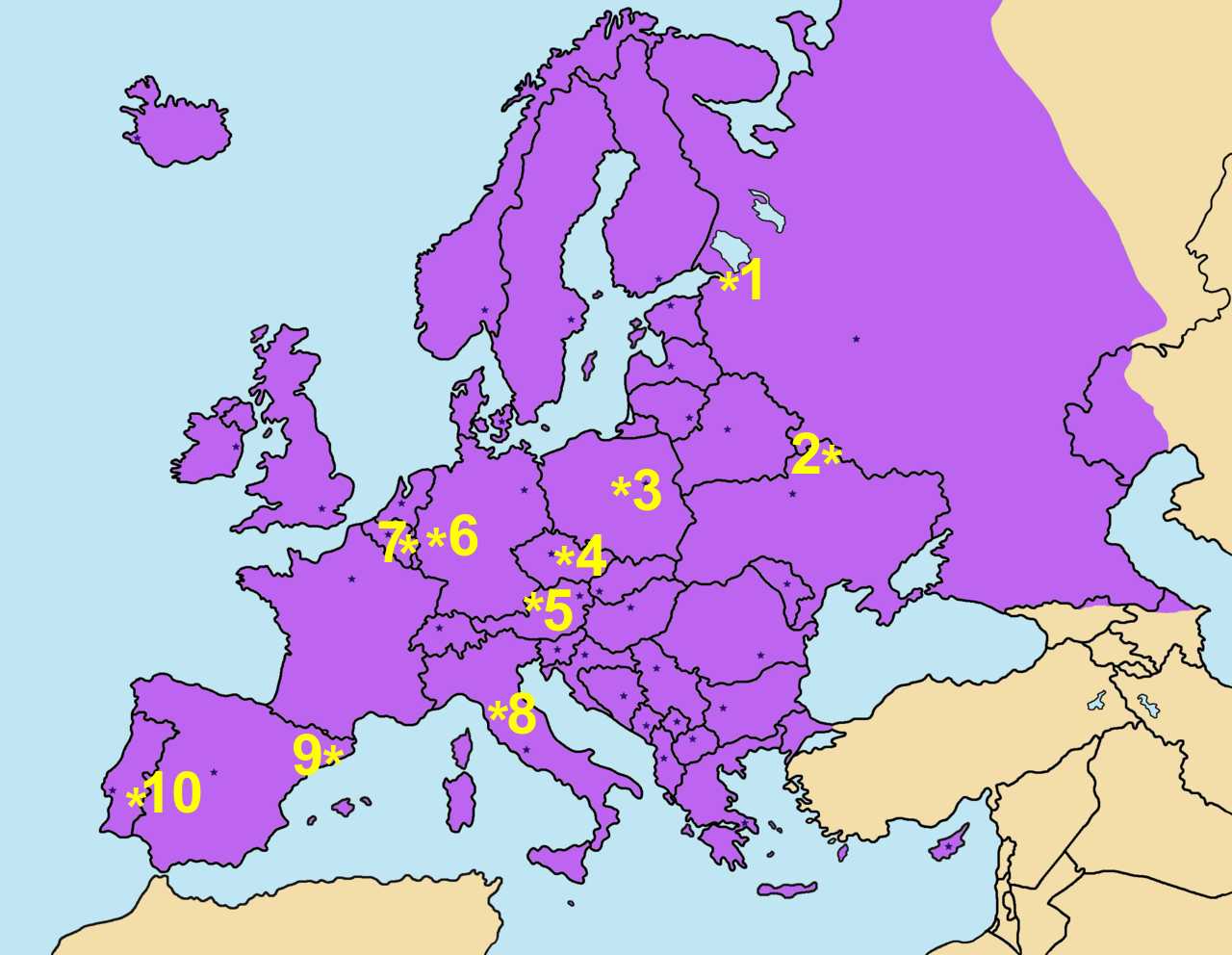
From Portugal to Ukraine and from Belgium to Italy, these composers helped define the Classical style that dominated European music in the late eighteenth century. Can you match them to their birthplaces on the map?
Last 3 plays: MalStone (10/10), Baldfroggie (5/10), jonnowales (10/10).
Click on image to zoom
Yevstigney FominLudwig van BeethovenWolfgang Amadeus MozartJoão de Sousa CarvalhoJan Ladislav DussekDmytro BortnianskyLuigi BoccheriniFernando SorMichał Kleofas OgińskiAndré-Ernest-Modeste Grétry* Drag / drop or click on the choices above to move them to the answer list. View Image Attributions for This Quiz
Yevstigney Fomin (1761-1800) was born in Saint Petersburg, Russia, and is often regarded as one of the most significant Russian composers of the Classical era. At a time when Russian musicians frequently relied on foreign models, Fomin helped adapt Classical forms to Russian subjects and theatrical traditions.
Best known for his operas and incidental music, he demonstrated that Russian stories and audiences could be served by works equal in sophistication to those being produced elsewhere in Europe. Although less well known today than some of his successors, Fomin helped lay the foundations upon which later Russian composers would build.
2. Dmytro Bortniansky
Dmytro Bortniansky (1751-1825) was born in Hlukhiv, now in Ukraine, one of the leading musical centres of Eastern Europe during his lifetime. After receiving advanced training in Italy, he blended Western European Classical techniques with traditions of Eastern Orthodox sacred music.
His choral works became enormously influential throughout Eastern Europe and helped modernize sacred composition in the region. In this way, Bortniansky served as an important bridge between Western Classical practices and local musical traditions.
3. Michał Kleofas Ogiński
Born in Guzów, Poland, Michał Kleofas Ogiński (1765-1833) was both a composer and statesman. While many Classical composers worked in royal courts or churches, Ogiński became known for piano pieces and dances that reflected the culture of his homeland.
His polonaises helped elevate a distinctly Polish dance form into the world of art music. In doing so, he contributed to the growing movement of composers incorporating regional traditions into the broader European Classical style.
4. Jan Ladislav Dussek
Jan Ladislav Dussek (1760-1812) was born in Čáslav, now in the Czech Republic, and became one of Europe's most famous keyboard virtuosos. Unlike many composers who spent their careers in a single country, Dussek worked in several major musical centres, including Paris, London, and Hamburg.
His piano music pushed the technical limits of the instrument and anticipated developments later associated with Romantic composers. At the same time, his emphasis on graceful melody and formal balance firmly rooted his work in the Classical tradition.
5. Wolfgang Amadeus Mozart
No composer is more closely associated with the Classical era than Wolfgang Amadeus Mozart (1756-1791). Born in Salzburg, then an ecclesiastical principality within the Holy Roman Empire and now part of Austria, Mozart displayed extraordinary musical gifts from childhood and spent much of his life travelling between Europe's major cultural centres. His music helped establish the Classical ideals of balance, clarity, and elegance.
Whether writing symphonies, concertos, chamber music, or opera, Mozart combined technical mastery with memorable melodies and expressive depth. Works such as "The Marriage of Figaro" (1786), "Symphony No. 40" (1788), and "The Magic Flute" (1791) remain among the most celebrated creations in Western music.
6. Ludwig van Beethoven
Born in Bonn, Germany, Ludwig van Beethoven (1770-1827) began his career within the Classical tradition established by Haydn and Mozart. His early works reflect the balance and structure characteristic of the era, but he steadily expanded the emotional and dramatic possibilities of the Classical style.
Beethoven's music helped transform the symphony from an elegant entertainment into a powerful artistic statement. Works such as "Piano Sonata No. 14 "Moonlight"" (1801), "Symphony No. 3 "Eroica"" (1804), and "Symphony No. 5" (1808) bridged the Classical and Romantic eras and influenced generations of composers.
7. André-Ernest-Modeste Grétry
Opera enjoyed enormous popularity during the Classical era, and few composers contributed more to its development in the French-speaking world than André Grétry (1741-1813). Born in Liège, now part of Belgium, he achieved fame in Paris with works that emphasized graceful melodies and clear dramatic storytelling.
Grétry's opéras-comiques helped shape French musical theatre at a time when audiences increasingly valued realism, wit, and natural expression. His success ensured that French opera remained an important counterpart to the Italian and German traditions.
8. Luigi Boccherini
Luigi Boccherini (1743-1805) was born in Lucca, Italy and became one of the leading instrumental composers of the Classical period. A virtuoso cellist, he wrote music that showcased both elegance and technical refinement, qualities highly valued by Classical audiences.
Although he spent much of his career in Spain, Boccherini remained deeply connected to Italian musical traditions. His numerous string quintets and chamber works helped expand the possibilities of Classical chamber music, particularly for the cello.
9. Fernando Sor
Often remembered today for his guitar music, Fernando Sor (1778-1839) was born in Barcelona, Spain. During a period when the piano dominated much European musical life, Sor demonstrated that the guitar could support sophisticated Classical compositions.
His studies, sonatas, and variations brought Classical forms and techniques to an instrument more often associated with popular music. As a result, he remains one of the most influential figures in the history of the classical guitar.
10. João de Sousa Carvalho
The most important Portuguese composer of the Classical period, João de Sousa Carvalho (1745-1798) was born in Estremoz, Portugal. After studying in Italy, he brought contemporary Classical styles back to the Portuguese court and church.
Carvalho composed operas, sacred music, and instrumental works that brought the latest Italian Classical influences to Portuguese audiences. His career helped connect Portugal's musical life to the broader artistic developments taking place across the continent.
This quiz was reviewed by FunTrivia editor agony before going online.
Any errors found in FunTrivia content are routinely corrected through our feedback system.