
FREE! Click here to Join FunTrivia. Thousands of games, quizzes, and lots more!
What Should We Do At This Table Setting? Quiz
Note: The American dining style is described
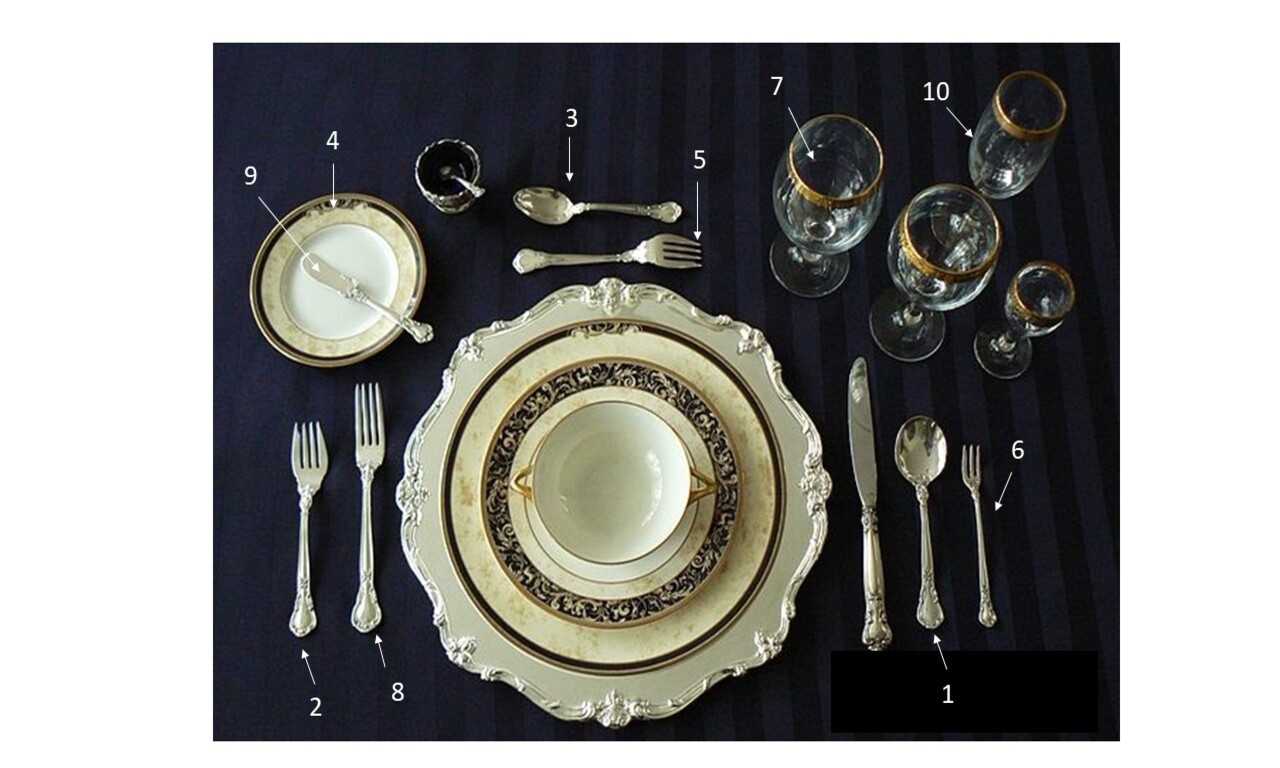
Recently, I went out to a semi-formal dinner. As I stared at the place setting and tried to follow examples, I thought it would be fun to do a quiz as if you were the waiter and your patron was about to eat. Match their food to what item they will use.
A label quiz
by stephgm67.
Estimated time: 3 mins.
OysterWaterSpreading butterDinner saladEntree (e.g. steak)Slice of cakeDinner rollClam ChowderChardonnayIce cream* Drag / drop or click on the choices above to move them to the answer list. View Image Attributions for This Quiz
The patron will use a soup spoon for their clam chowder. It is a larger, oval-shaped spoon placed to the far right of the dinner knife. It is one of the first utensil to be used, following the rule of working from the outside in. It can also be used as a fruit spoon. If soup or fruit is not being served as a course, the spoon should not be included in the place setting.
When eating, the patron should scoop the soup with the spoon in a motion away from them (from the near edge of the bowl to the far edge). This minimizes the chance of drips falling onto their clothing. If the soup is served in a shallow plate (charger) or a large bowl with an accompanying underplate, the spoon should rest entirely on the underplate or in the plate in between sips. It should also be placed there when the patron is finished. If served in a bowl without an underplate, the spoon should remain in the bowl when finished.
2. Dinner salad
The salad fork will be used for their dinner salad. It is positioned on the far left of the plate and is the outermost fork on the left. It is used for the salad course, which is typically served before the main entrée. It is generally a little shorter and sometimes wider than other forks, often with a slightly thicker leftmost tine designed to help cut large pieces of lettuce or other robust salad ingredients without needing a knife.
The patron can use it to cut through most salad items by applying a firm, downward pressure. To indicate a pause during the meal, the patron should rest the fork on the salad plate in an inverted "V" position. When the patron is finished, they should place the fork and any used knife together, parallel on the plate, with the handles at the 4 o'clock position and the tines pointing to 10 o'clock. This signals you to clear the plate.
3. Ice cream
The dessert spoon wil be used by the patron to eat the ice cream. The dessert spoon is found above the top edge of the dinner plate, parallel to the edge of the table. The handle of the spoon points to the right so it can be easily picked up with the right hand when the course arrives. A dessert spoon is generally larger than a teaspoon but smaller than a tablespoon, and typically has an oval-shaped bowl rather than a round one.
When their ice cream is served, the spoon will be moved down to the dessert plate. The patron will eat this soft dessert from the side of the spoon, and not the tip. Once the patron is finished, they will place the spoon diagonally across the dessert plate in the 4 o'clock position (handles at the bottom right, heads at the top left), to signal to you that the course is complete.
4. Dinner roll
The patron will have the dinner roll on the bread plate. This plate is positioned on the upper left of the main dinner plate. A common way to remember its position is using the "BMW" acronym: Bread (left), Meal (middle), Water (right). It is used to hold bread, butter, and other spreads, and serves to keep these items separate from the main meal. It can also be used for small amounts of olive oil for dipping.
Bread is considered an accompaniment to the meal, not an appetizer. It should ideally be eaten once the first course has been served, not before the meal begins. The patron will break off one bite-sized piece of the roll at a time with their fingers. They will butter only that single bite-sized piece of bread using a butter knife, right before they eat it. Hopefully, they will avoid cutting the roll with a knife or buttering the entire piece of bread at once.
5. Slice of cake
The patron will eat their cake with a dessert fork. Most commonly, the dessert fork is placed horizontally above the dinner plate, closer to the plate than the dessert spoon. Its handle points to the left, making it easy to pick up with the left hand when dessert is served. It is typically smaller than the other forks and has three or four tines. These tines might be shaped with a curved or broad shape designed to help eat pastries and other soft desserts.
The dessert fork should be moved down to the dessert plate or bowl just before eating the dessert. If both a dessert fork and spoon are provided, the patron will typically hold the fork in the left hand (tines down) to anchor the food or assist in cutting, while the spoon (in the right hand) is used for scooping or eating. When the patron is finished, they will place the dessert fork (and spoon, if used) parallel to each other on the dessert plate, with the handles pointing towards the 4 o'clock position, to signal you to clear the plate.
6. Oyster
The patron will eat the oyster with the oyster fork which is a specialized fork used for eating oysters on the half shell. The oyster fork is the only fork placed on the right side of the dinner plate. It is positioned to the right of the soup spoon, making it the outermost utensil on the right side. This is because oysters (as appetizers) are typically the first course served and the oyster fork is the first utensil used.
The patron will use their left hand to hold the oyster shell steady while using the fork with their right hand. They will use the tines of the fork to gently loosen the muscle that attaches the oyster to the bottom of the shell. They can then lift the shell to their mouth and slide the meat into their mouth in one clean motion, or use the fork to gently lift the oyster and any sauce. When finished, the patron will turn the empty shell upside down in the plate, along with the oyster fork, as a signal to you that they are done.
7. Water
The patron will drink the water from the water glass which is the primary glass at every meal and always present. The water glass is placed on the right-hand side, positioned just above the tip of the main dinner knife. It is the starting point for the rest of the glassware arrangement, which forms a diagonal line or a small cluster to its right.
You should make sure the water glass remains filled throughout the meal. Even if other alcoholic beverages are served, the water glass remains in its position for every guest to use. The patron, when thirsty, will grasp the water glass by the bowl (if it is a tumbler style) or the stem (if it is a goblet style). They should not use it for any other beverages.
8. Entree (e.g. steak)
The patron will eat the steak with the entree (or dinner) fork. It is the main, and largest, fork at the table and is reserved for the main course of the meal. It is found immediately to the left of the dinner plate. It is the largest because it is designed to handle the main protein and accompanying items of the entree.
The patron will have the fork in their left hand for cutting (along with the knife in the right). After cutting a piece of food, they will place the knife down on the plate, and transfer the fork to the right hand to bring the food to their mouth (tines up). When finished with the main course, the patron will place the entree fork and the dinner knife parallel to each other in the center of the dinner plate, with the handles resting at the 4 o'clock position. This is a clear signal to you that the course is complete and the plate can be cleared.
9. Spreading butter
The patron will spread the butter on the roll with the butter knife. It is a small, blunt knife used exclusively for spreading butter or other spreads onto bread. It is specifically designed not to cut other food items. It is placed horizontally across the top rim of the bread plate with the blade facing inward.
The patron will use it to transfer butter from a communal dish to their own bread plate and then spread it on the roll. Hopefully, they will not use it for other food on the main dinner plate! They will use it to take a portion of butter from the main butter dish and place it on the rim of their bread plate. They will break off a small piece of the roll and butter only that piece before eating it.
10. Chardonnay
The patron will sip the Chardonnay from the white wine glass. It is used for any white wine served during the meal, typically with lighter courses like fish or poultry. Often, the water glass, white wine glass, and red wine glass form a triangle, or are arranged in a diagonal line going down towards the table edge. This is a stemmed glass with a slightly narrower and more upright bowl than a red wine glass, designed to preserve the cooler temperature and specific aromas of white wine like Chardonnay.
The patron will hold the wine glass by the stem to prevent the heat from their hand from warming the wine and changing its intended temperature and flavor profile. They will take small sips, especially during things like a toast. After taking a sip, they should return the glass to its original place setting, maintaining the orderly arrangement of the glasses. As much fun as it sounds, the wine glass should not be overfilled.
This quiz was reviewed by FunTrivia editor gtho4 before going online.
Any errors found in FunTrivia content are routinely corrected through our feedback system.