FREE! Click here to Join FunTrivia. Thousands of games, quizzes, and lots more!
Quiz about Elementally Speaking Krypton

Elementally Speaking: Krypton Trivia Quiz


If you've ever wanted to learn about krypton, or if you're eager to show off your deep knowledge of it, here's the quiz you've been waiting for your whole life. From its symbol to its uses in energy efficiency and lighting, this runs the gamut. Enjoy!

A multiple-choice quiz by JJHorner. Estimated time: 2 mins.
  1. Home
  2. »
  3. Quizzes
  4. »
  5. Science Trivia
  6. »
  7. Chemistry
  8. »
  9. Specific Elements

Author
JJHorner
Time
2 mins
Type
Multiple Choice
Quiz #
424,083
Updated
May 07 26
# Qns
10
Difficulty
New Game
Plays
5
Last 3 plays: emodius (7/10), Catja (9/10), xchasbox (10/10).
-
Question 1 of 10
1. What is the chemical symbol for krypton? Hint


Question 2 of 10
2. How many protons does an atom of krypton have? Hint


Question 3 of 10
3. In the periodic table, to which group does krypton belong? Hint


Question 4 of 10
4. In which physical state does krypton exist at room temperature? Hint


Question 5 of 10
5. Krypton-86 was once used to define which unit of measurement based on its spectral emission lines? Hint


Question 6 of 10
6. When placed under extreme conditions, krypton forms compounds primarily with which highly electronegative element? Hint


Question 7 of 10
7. Which application uses krypton as an insulator for improved energy efficiency? Hint


Question 8 of 10
8. Because Krypton-81 is chemically inert and its decay rate is constant, it is often used for ancient dating.


Question 9 of 10
9. When a high-voltage current is passed through a tube filled with krypton at low pressure, the gas emits a brilliant, smoky white light. This makes it ideal for which of the following applications? Hint


Question 10 of 10
10. Krypton-85 is often monitored in the atmosphere because it can indicate what type of human activity? Hint


(Optional) Create a Free FunTrivia ID to save the points you are about to earn:

arrow Select a User ID:
arrow Choose a Password:
arrow Your Email:


Most Recent Scores
Today : emodius: 7/10
Today : Catja: 9/10
Today : xchasbox: 10/10
Today : mazza47: 10/10
Today : Aph1976: 4/10

Quiz Answer Key and Fun Facts
1. What is the chemical symbol for krypton?

Answer: Kr

You'll find krypton hanging out quietly with the username Kr on the periodic table of the elements. It's one of the noble gases which, by nature, rarely feel the need to mingle. Colorless, odorless, and famously unreactive, krypton mostly keeps to itself in the atmosphere, making up about one part per million of the air you're breathing right now.

Its name comes from the Greek word 'kryptos', meaning hidden, which is perfect for an unassuming and relatively rare noble gas.
2. How many protons does an atom of krypton have?

Answer: 36

Every element on the periodic table is defined by its proton count or atomic number. Krypton, 'hidden' or not, is no exception. It's got 36 protons packed into its tiny little nucleus, and it celebrates the fact by being element number 36.

Krypton's 36 protons also mean that a neutral krypton atom has 36 electrons orbiting around it, arranged in tidy little shells that make it chemically stable and, for the most part, uninterested in forming bonds, chemical or emotional.
3. In the periodic table, to which group does krypton belong?

Answer: Noble gases

Krypton lives its life in Group 18 of the periodic table, better known as the noble gases. This is the exclusive club of elements that tend to mind their own business... at least chemically speaking. Their outer electron shells are full, which makes them incredibly stable and not very interested in forming relationships.

Other elements are all abuzz with activity, spending their time reacting, combining, and causing a big chemical fuss. Krypton and its more noble neighbors are NOT impressed. Let the halogens get up to their antics. You'll find krypton sitting on the couch with an IPA, minding its own business.
4. In which physical state does krypton exist at room temperature?

Answer: Gas

Sure. At room temperature, krypton exists as an invisible gas, very happily NOT reacting with anything. It is one of those elements you are constantly surrounded by but never notice. Making up about one part per million of the air, there's not much to notice. It has very low boiling and melting points. This keeps it comfortably in the gaseous state under everyday conditions.

Cool it down enough, though, and krypton will settle down into a liquid and then a solid, forming a pale, icy substance that looks nothing like its usual invisible self. If you're feeling ambitious, you can heat it up to extreme levels, pushing it into a plasma state. This is where electrons break free and things start getting wild. But whether it's your living room or just about anywhere humans casually exist, krypton is very happy to remain a calm, colorless, odorless gas.
5. Krypton-86 was once used to define which unit of measurement based on its spectral emission lines?

Answer: The meter

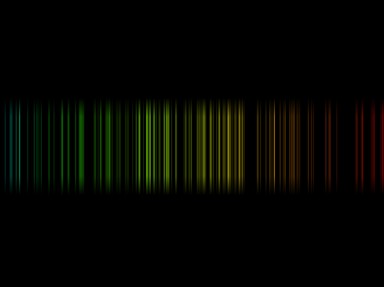
Despite its generally uneventful life, krypton-just for a minute or two-carried a lot of responsibility in the world of science. Yes, it was used to define the meter, that unit of length MOST people in the world use... and won't shut up about when talking to Americans. In particular, the length of one meter was tied to a specific number of wavelengths of the orange-red light emitted by krypton-86 atoms. It was a clever little trick before more modern methods took over.

Those methods? Well, scientists decided to define the meter using the speed of light in a vacuum. Still, krypton-86 had its shining moment in the field of metrology... at least between 1960 and 1983. And considering krypton's shyness as a noble gas, I'm guessing it hated it the whole time.
6. When placed under extreme conditions, krypton forms compounds primarily with which highly electronegative element?

Answer: Fluorine

Yeah, fluorine is the famous bully of noble gases.

Well, actually, chemists are the famous bullies of noble gases. Fluorine is just their weapon of choice. Turns out if you bully a noble gas enough, you CAN make them react. British chemist Neil Bartlett was the first in 1962, creating xenon hexafluoroplatinate.

Fluorine is the most electronegative element on the periodic table, which basically means it has a powerful pull on electrons. Under the right conditions, it can tempt even a famously chill noble gas like krypton to get off its butt and form compounds such as krypton difluoride.

It's NOT an everyday reaction. Definitely not kitchen chemistry... unless you like your kitchen very cold indeed (or if you don't mind a ridiculously high electric bill).
7. Which application uses krypton as an insulator for improved energy efficiency?

Answer: Double-pane windows

Okay, enough jokes about krypton being nothing but a lazy noble gas. How does it actually earn its keep?

Krypton is a madman when it comes to high-performance double-glazed windows. It's denser than air, so when you seal it between panes of glass, krypton slows down heat transfer more effectively. It helps keep warm air inside during winter and outside during summer. So krypton can actually save you money. That's something!

Okay, krypton isn't the only gas used this way. Argon is far more common because it is cheaper. Ah, cruel fate. However, krypton does show up in premium windows where maximum insulation matters, especially when there are thinner gaps between panes.
8. Because Krypton-81 is chemically inert and its decay rate is constant, it is often used for ancient dating.

Answer: True

Krypton-81 is one of those weird isotopes that has an incredibly specific job.

It is chemically inert, so it doesn't react with surrounding materials. In addition, it decays at a steady, predictable rate. Put those two together, and scientists can use it as a kind of atomic clock. Its half-life is about 229,000 years, which makes it especially useful for dating very old groundwater and polar ice. That's far older than what carbon-14 can handle.

If you are trying to figure out how long water or ice has been tucked away deep underground you can calculate the age by finding bubbles in the sample. Have you found some? Good. Now compare the remaining amount of krypton-81 against the amount of stable krypton-83, do some math, and you've got your answer. It's just that easy!
9. When a high-voltage current is passed through a tube filled with krypton at low pressure, the gas emits a brilliant, smoky white light. This makes it ideal for which of the following applications?

Answer: High-speed camera flashes

Yep. Push electricity through low-pressure krypton gas and things get interesting. The gas ionizes and begins to glow with a bright, pale white light that is intense and quick to respond. That makes it perfect for high-speed photography, where you want a flash that can fire rapidly and freeze motion in fractions of a second.

Krypton flash lamps and strobes have been used in situations involving split-second captures from explosions and ballistic tests to that perfect midair splash shot of a single drop of water. Go, krypton!
10. Krypton-85 is often monitored in the atmosphere because it can indicate what type of human activity?

Answer: Nuclear fuel reprocessing

Krypton-85 is a radioactive isotope that doesn't occur in substantial quantities in nature. When it shows up in the atmosphere, people pay attention, because it usually points to human activity.

In particular, it is released during nuclear fuel reprocessing, when spent fuel rods are chemically treated to extract usable materials like uranium and plutonium. Because krypton is a noble gas, it does not easily react or get trapped. As a result, it escapes into the air and spreads globally, making it a handy tracer for monitoring nuclear activity.

That fun little property has made krypton-85 a quiet watchdog for the nuclear world. Scientists can measure its concentration in the atmosphere to estimate how much reprocessing is happening, even across borders.

And that's all I have to say about krypton.
Source: Author JJHorner

This quiz was reviewed by FunTrivia editor rossian before going online.
Any errors found in FunTrivia content are routinely corrected through our feedback system.
Related Quizzes
1. Tin Planet Average
2. The Einsteinium Quiz Easier
3. Lithium Average
4. Bromine: An Unusual Element Average
5. The Dark Side of Calcium Average
6. Sulfur: The Stench of Life Average
7. Pay the Iron Price Average
8. Essentially Nitrogen - Life with Element 7! Average
9. Mercury: A Slippery Element Average
10. Neon Tough
11. Xenon Is Just One Average
12. Actinium Average

5/7/2026, Copyright 2026 FunTrivia, Inc. - Report an Error / Contact Us