FREE! Click here to Join FunTrivia. Thousands of games, quizzes, and lots more!
Stripe Me Lucky Trivia Quiz
Striped Mammals
In the wild, the stripes on animals are not just for show, they are a survival tool. This quiz takes a look at how mammals utilize their stripes to stay lucky.
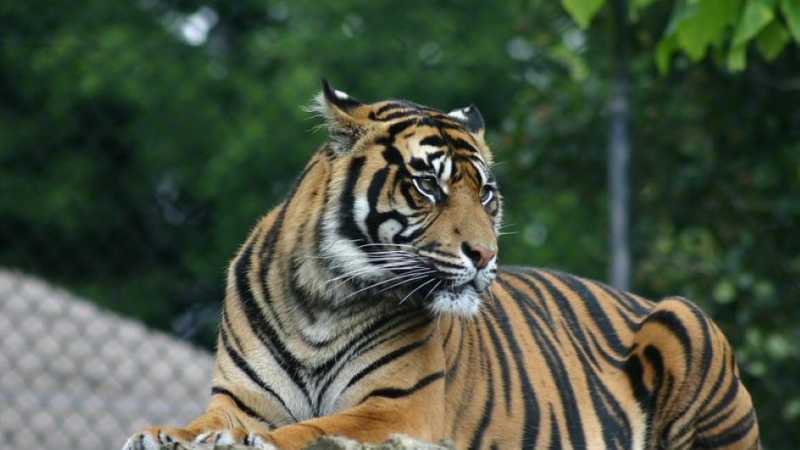
It seems a little ironic that the tiger's distinctive black stripes against its reddish-orange coat are both easily recognizable and, in its natural habitat, the big cat's form of camouflage, aiding it in both stealth and concealment. To this end, the vertical stripes help to break up its outline in grasslands and dense forests. Additionally, in much the same way of human fingerprints, each tiger's stripe patterns are different.
We still have five subspecies of tigers alive in the 2020s but, sadly, they are all on the endangered list... the South China tiger, critically so.
2. Striped skunk
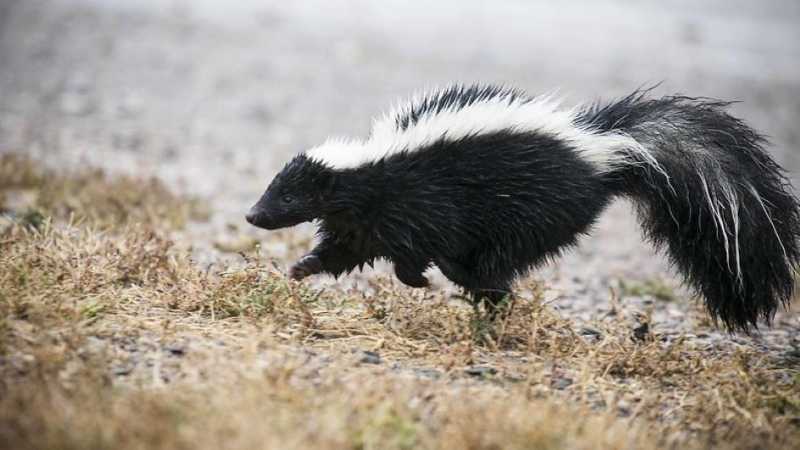
The striped skunk is native to North America and is easily recognized by the two white stripes that run down the centre of its back. The stripes are purely a piece of aposematism... in other words, it's an advertisement to predators that it carries a foul smelling scent that it can secrete from a set of glands that are located near its tail.
The spray, whilst (generally) not lethal, contains a number of sulphur based compounds that the skunk can spray up to a distance of twenty feet. It will however, cause severe eye irritation, nausea and vomiting in humans.
3. Zebra
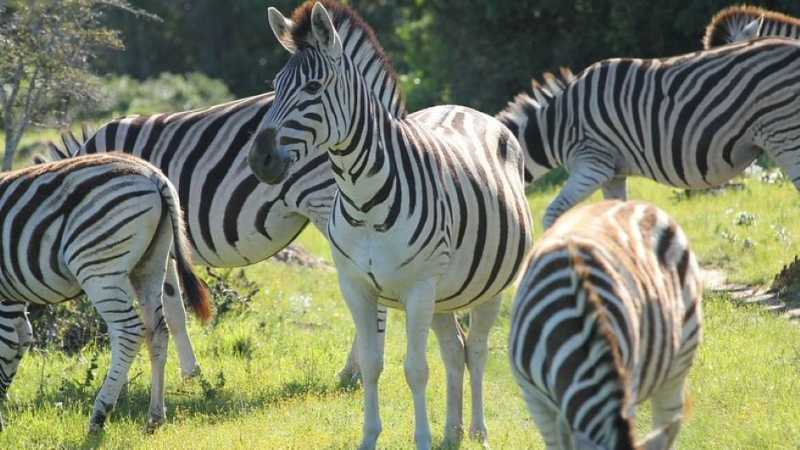
There are three zebra species in the wild, these being the plains zebra (Equus quagga), the Grevy's zebra (Equus grevyi) and the mountain zebra (Equus zebra). Similarly, the stripes on each of these species differs... the plains zebra has the broadest stripes which will go all the way around its body, the mountain zebra has similar stripes, but they don't encircle the body i.e. they have a "white tummy", and the Grevy's zebra's stripes are narrower, but they will have more in number.
So why do they have stripes? Primarily, to protect them from biting horseflies and you may note that zebras living in areas that do not have these insects, are likely to have less in the way of striping. Initially there was a theory that the stripes aided camouflage by mimicking grass however, this has not been proven and is considered to be a furphy (tall tale). That said, when the herd moves as one the display can be quite dazzling and this will make it a little more difficult for a predator to single out an individual zebra.
4. Ring-tailed lemur
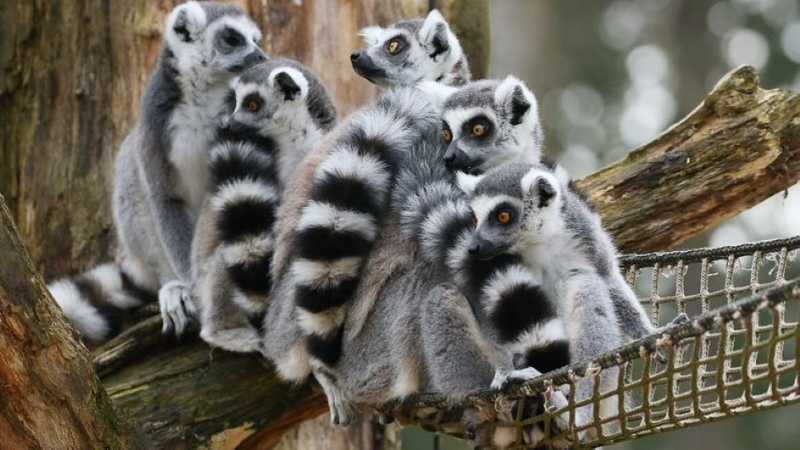
The striped tail (there are 13 black and white rings) is a vital communication device for the ring-tailed lemur. They will hold their tails up in the air so that the rest of the troop can identify where each other is and can easily follow. In addition, it becomes a warning signal when danger lurks.
The lemur is a primate that dwells in the forests and scrublands of the south to south-western areas of Madagascar. Unfortunately, both hunting and the destruction of their habitat has seen their numbers dwindle, so much so that they are classified as an endangered species.
5. Striped hyena
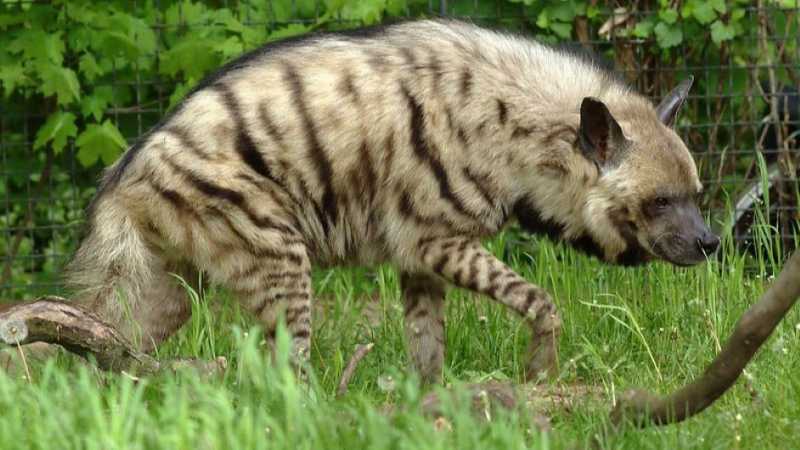
Found across North and East Africa, as well as the Middle East and the Indian sub-continent, the striped hyena is the smallest of the true hyenas. They are generally found in either rocky or grassy landscapes and their vertical striping, along with their shaggy coats, are an enormous advantage for them in this terrain, either hiding them from potential predators or providing wonderful camouflage from their prey.
As they're a scavenging beast, they seek any advantage they can find and, to this end they have a bushy mane along the lengths of their backs which they can make to stand up. This will make them look bigger and more threatening than they really are, a great resource with which to intimidate any possible competition.
6. Bongo
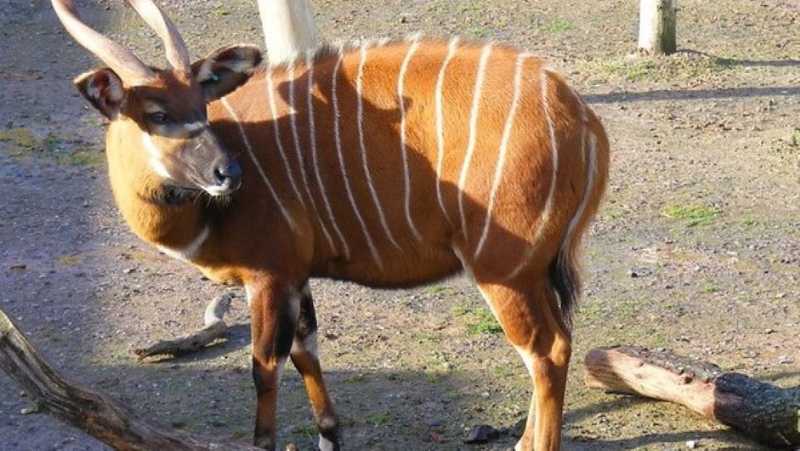
Found in the forests of Central and West Africa, the bongo is a large nocturnal member of the antelope species. It bears a reddish-brown coat splayed with vertical white stripes that imitate sunlight streaming through the trees, making it difficult for predators to spot them.
In addition to this camouflage, the bongo has very keen hearing which will also assist it to avoid detection.
7. Malayan tapir
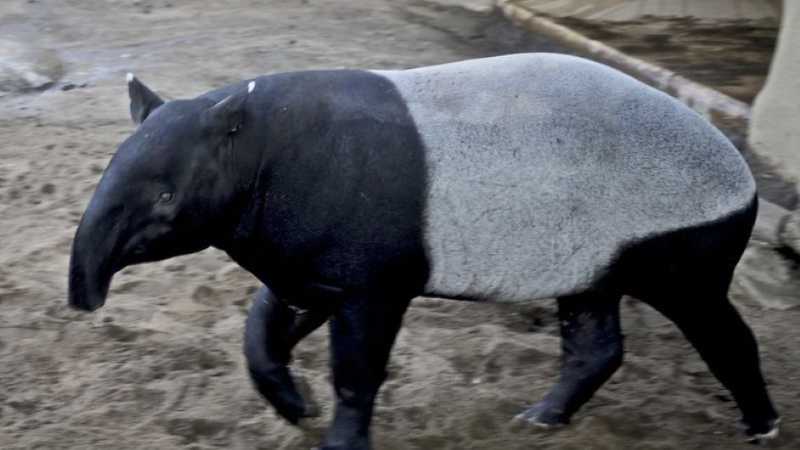
The "Oreo cookie" colouring, or "saddle" of the Malayan tapir is perfect cover for this creature in the rainforests of Southeast Asia. During the day it serves as a disruption of its outline in the dappled light of the forest, and it creates a similar effect under moonlight, creating a clever disguise when hunting and concealment when resting.
The tapir will also rest in dry river beds, keeping its darker parts in shadow and leaving the saddle exposed where it will mimic a rock on the ground. This saddle is not evident in juveniles of the species, instead they are blessed with a range of spots and stripes that will change as they age.
8. Okapi
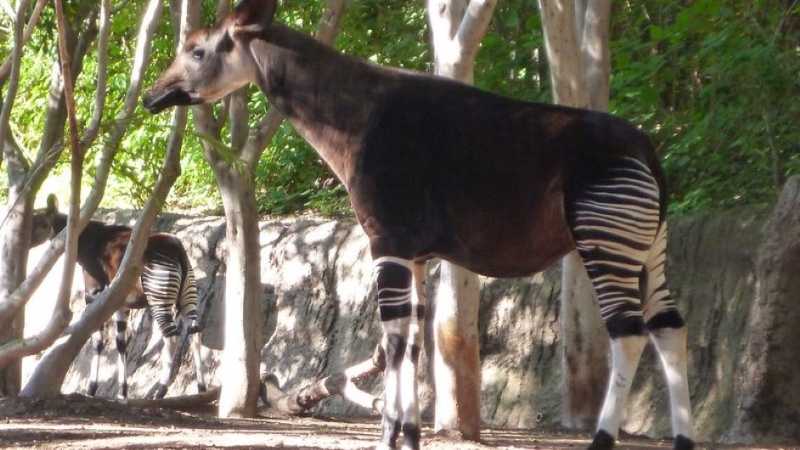
With its striking stripes on its hindquarters and legs, it is easy to make the mistake of thinking that the okapi is related to the zebra but, no, instead, it is the only relative of the giraffe. Found in the dense forests of the Congo Basin, it uses those stripes as camouflage. They break up the mammal's outline, which it cleverly uses to imitate light and shadow making them difficult for its main predator, the leopard, to spot.
Like a number of other striped creatures, their stripes are unique to each individual member. This has two purposes; the first it makes identification amongst the group easier and, second, it provides the mother with a "follow me" tag that her calves can follow.
9. Eastern chipmunk
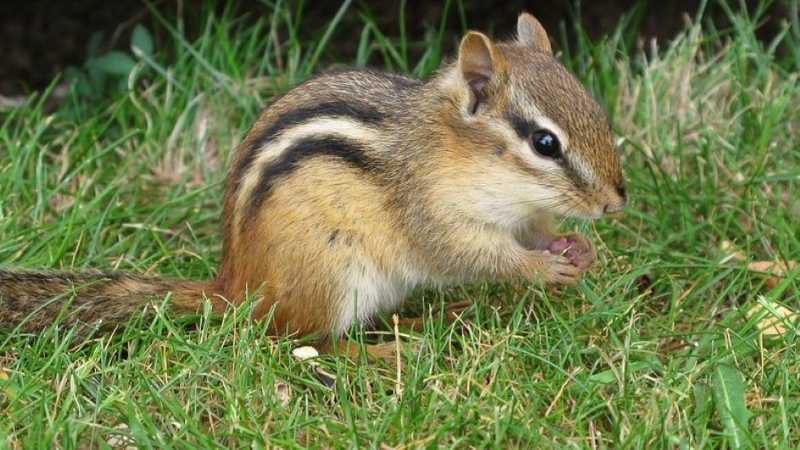
Running down the back of the Eastern chipmunk are five stripes that range in colour between black and dark brown, all on reddish-brown fur. Their tails are slightly darker. For the chipmunk, this is disruptive camouflage with the alternating colours allowing it to blend in with the woodland surroundings that it prefers to be in.
In other words, it can hide against trees or among the leaf litter that graces the forest floor.
10. Aardwolf
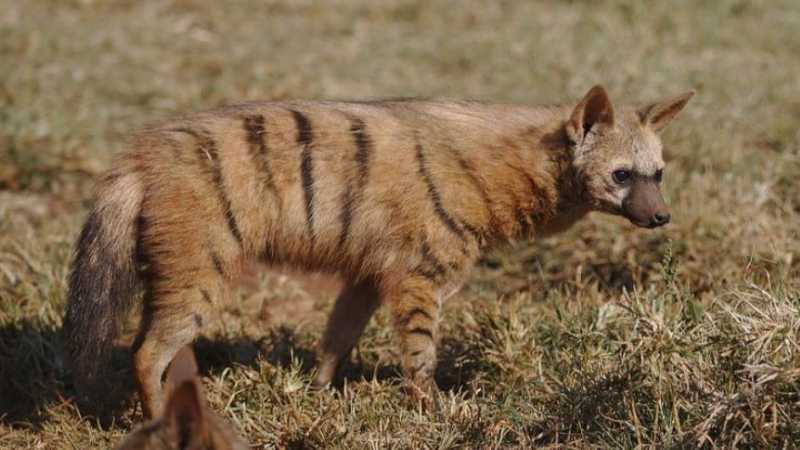
Its name means "earth wolf"... but it's not a wolf, it is a member of the hyena family, and it roams the regions of eastern and southern Africa.
Aardwolves are termite eaters and, as a consequence, they will remain in regions where their food source will be prominent, i.e. semi-arid plains and grasslands.
This is where their sandy fur and distinctive black striping make them the masters of camouflage and allows them to hide themselves from their predators. As a back-up, they have a shaggy mane around their necks and shoulders that they can puff up in an effort to make themselves appear more formidable.
This quiz was reviewed by FunTrivia editor rossian before going online.
Any errors found in FunTrivia content are routinely corrected through our feedback system.