FREE! Click here to Join FunTrivia. Thousands of games, quizzes, and lots more!
Quiz about Genesis Chronologically

Genesis Chronologically Trivia Quiz

Part 1 - Chapters 1-12

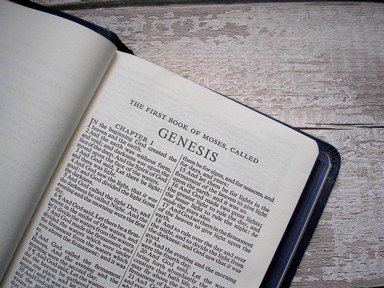
Genesis, the first book of the Bible, could be considered a prologue to the Bible. It established the world God created, the initial fall of humanity, and the lineage of God's chosen people. This quiz, Part 1, covers the first twelve chapters of Genesis.

An ordering quiz by 1nn1. Estimated time: 3 mins.
  1. Home
  2. »
  3. Quizzes
  4. »
  5. Religion Trivia
  6. »
  7. Old Testament / Tanakh
  8. »
  9. Genesis

Author
1nn1
Time
3 mins
Type
Order Quiz
Quiz #
421,161
Updated
Jan 26 26
# Qns
10
Difficulty
New Game
Avg Score
9 / 10
Plays
16
Last 3 plays: GoodwinPD (10/10), misstified (8/10), lethisen250582 (10/10).
Mobile instructions: Press on an answer on the right. Then, press on the question it matches on the left.
(a) Drag-and-drop from the right to the left, or (b) click on a right side answer, and then click on its destination box to move it.
Please put the following events in chronological order as they appear in the Bible (KJV).
What's the Correct Order?Choices
1.   
(Chapter 1)
"And the dove came in to him in the evening; and, lo, in her mouth was an olive leaf pluckt"
2.   
"And the Lord God planted a garden eastward in Eden; and there he put the man whom he had formed."
3.   
"Now the Lord had said unto Abram, Get thee out of thy country... And I will make of thee a great nation"
4.   
"...when they were in the field, that Cain rose up against Abel his brother, and slew him."
5.   
(Antedivulian)
"The length of the ark shall be three hundred cubits, the breadth of it fifty cubits, and the height of it thirty cubits."
6.   
"God created the heaven and the earth."
7.   
"Now the serpent ... said unto the woman, Yea, hath God said, Ye shall not eat of every tree of the garden."
8.   
"...let us build us a city and a tower, whose top may reach unto heaven"
9.   
"And it repented the Lord that he had made man on the earth, and it grieved him at his heart."
10.   
(Name change)
"I do set my [rain]bow in the cloud, and it shall be for a token of a covenant between me and the earth."


Most Recent Scores
Today : GoodwinPD: 10/10
Today : misstified: 8/10
Today : lethisen250582: 10/10
Today : Sheep_Dip: 10/10
Today : Guest 130: 10/10
Today : shadygenea: 9/10
Today : Rtdbanker: 10/10
Today : NASAGreg: 9/10
Today : Guest 124: 9/10

Quiz Answer Key and Fun Facts
1. "God created the heaven and the earth."

Genesis 1:1 "In the beginning God created the heaven and the earth".

Perhaps the most familiar chapter in the entire bible, Chapter 1 of Genesis describes the six days it took God to create the heavens and the Earth: He took disorder and darkness and made an earth where life could flourish.

Verses 26 and 27 are pertinent:
"27 So God created man in his own image, in the image of God created he him; male and female created he them.
28 And God blessed them, and God said unto them, Be fruitful, and multiply, and replenish the earth, and subdue it: and have dominion over the fish of the sea, and over the fowl of the air, and over every living thing that moveth upon the earth"

humans were made to be reflections, not just representatives, of God's character. They were appointed to rule God's world on his behalf. They were both stewards and shepherds - they were told to capture its potential, to care and nurture it, and to make it a place where they and all the creatures could multiply and flourish. God blessed the humans. God created a utopian world. All humans had to do was keep up their end of the bargain.
2. "And the Lord God planted a garden eastward in Eden; and there he put the man whom he had formed."

The quote is from Genesis chapter 2, verse 8. This chapter, after God rested on the seventh day, was about the creation of the Garden of Eden, the four rivers, and the world beyond.

By giving humans a garden as a starting point from which to build the world, there was an important point introduced at this point: they had a choice on how this world was going to be built, which was represented by the tree of knowledge. God had defined what was good and what was not good, but God had given humans the power to choose: they could trust His definition of good or not good, or they could act with autonomy and define good and evil for themselves.

The tree of life represented the gift of life. If man spurned this and rebelled against God, he embraced death. The stakes were high.
3. "Now the serpent ... said unto the woman, Yea, hath God said, Ye shall not eat of every tree of the garden."

The full verse is:
"Now the serpent was more subtil than any beast of the field which the Lord God had made. And he said unto the woman, Yea, hath God said, Ye shall not eat of every tree of the garden?" Genesis chapter 3, verse 1.

This chapter documents the fall of Man.
A snake, a creature of God, was in rebellion against God. He talked to the woman, promising that eating from the tree of knowledge would not bring death, but it was the true way to life and to become like God himself. However Man was already like God, as they were created in his own image. They acted autonomously and took the knowledge of good and evil for themselves. At that moment, the story of man spiralled downward. When God discovered what happened, the snake was doomed, but not without the snake first biting Man, inflicting mortality upon him.

However, even though the humans chose badly, God promised to rescue them, but at a cost that did not erase the consequences of their choice. God informed them that all parts of their life together will be full of grief and pain because of their rebellion, and ultimately, they will die. God banished them from the Garden and placed cherubims and flaming swords at the entrance to ensure they could never return.
4. "...when they were in the field, that Cain rose up against Abel his brother, and slew him."

Genesis Chapter 4 is the story of Cain and Abel, Adam and Eve's first two children.

The quote above is from verse 8. The full verse and the context are:
5 But unto Cain and to his offering he had not respect. And Cain was very wroth, and his countenance fell.
6 And the Lord said unto Cain, Why art thou wroth? And why is thy countenance fallen?
7 If thou doest well, shalt thou not be accepted? And if thou doest not well, sin lieth at the door. And unto thee shall be his desire, and thou shalt rule over him.
8 And Cain talked with Abel his brother: and it came to pass, when they were in the field, that Cain rose up against Abel his brother, and slew him."

Cain was a farmer and offered fruits and products of the land to the Lord, but God was not pleased. Abel was a shepherd who offered lambs from his flock. God was pleased with Abel's offerings, and Cain was jealous. Cain killed Abel, and when God found out, he stopped his future crops from growing, making him a wanderer in the land of Nod, but he still protected Cain from death. Cain went on to build a city named after his son Enoch. Four generations later, Enoch's descendant, Lamech, was born, who was the first person in the Bible to take two wives. Adam, aged 120, and Eve had another son, Seth. Genesis continued with the descendants of Seth.
5. "And it repented the Lord that he had made man on the earth, and it grieved him at his heart."

The quotation is from Genesis chapter 6, verse 6. The full context is given by verses 5-7:
"And God saw that the wickedness of man was great in the earth, and that every imagination of the thoughts of his heart was only evil continually.
6 And it repented the Lord that he had made man on the earth, and it grieved him at his heart.
7 And the Lord said, I will destroy man whom I have created from the face of the earth; both man, and beast, and the creeping thing, and the fowls of the air; for it repenteth me that I have made them."

These verses described how human life had become so corrupt, which caused God great pain and grief, which emphasised, not dispassionate judgment but a painful moral response. Wickedness was seen constantly and universally ("only evil continually"). The regret that God described did not suggest an error in divine foresight but a massive change in his relationship with humanity, which required judgment. So deep was the corruption, a total "de-creation' was deemed essential, which required a total clearing of the earth. Only Noah and his family were to be spared as described in verses 8-10:

8 But Noah found grace in the eyes of the Lord.
9 These are the generations of Noah: Noah was a just man and perfect in his generations, and Noah walked with God.
10 And Noah begat three sons, Shem, Ham, and Japheth.
6. "The length of the ark shall be three hundred cubits, the breadth of it fifty cubits, and the height of it thirty cubits."

The quotation is part of Genesis chapter 6 verse 15. The parts of the chapter that refer to the reasons for and the building of the ark are verses 13-16:

"13 And God said unto Noah, The end of all flesh is come before me; for the earth is filled with violence through them; and, behold, I will destroy them with the earth.
14 Make thee an ark of gopher wood; rooms shalt thou make in the ark, and shalt pitch it within and without with pitch.
15 And this is the fashion which thou shalt make it of: The length of the ark shall be three hundred cubits, the breadth of it fifty cubits, and the height of it thirty cubits.
16 A window shalt thou make to the ark, and in a cubit shalt thou finish it above; and the door of the ark shalt thou set in the side thereof; with lower, second, and third stories shalt thou make it."

Noah was to load two of "every living thing of all flesh", male and female, into the ark. Noah followed all of these instructions.
7. "And the dove came in to him in the evening; and, lo, in her mouth was an olive leaf pluckt"

Genesis chapter 7 described the loading of the ark with the animals and Noah's wife, his sons and their wives. The flood came, and it rained "upon the earth forty days and forty nights" (verse 4), and the flood waters "prevailed upon the earth an hundred and fifty days" (verse 24)

After seven months, the ark rested against Mt Ararat, and the water receded. After ten months, he sent out a raven and then a dove. Both came back to the ark as there was "no resting place for the sole of her foot" (chapter 8, verse 9).

He waited another 7 days, and the bird returned with an olive leaf (verse 11, above). After another seven days, the dispatched dove did not come back. After the earth dried, God spoke to Noah,
"Go forth of the ark, thou, and thy wife, and thy sons, and thy sons' wives with thee.
17 Bring forth with thee every living thing that is with thee, of all flesh, both of fowl, and of cattle, and of every creeping thing that creepeth upon the earth; that they may breed abundantly in the earth, and be fruitful, and multiply upon the earth." (verse 16-17).

Noah built an altar and burnt offerings on it (verse 20) and promised Noah he would not cleanse the world again (verse 21)
8. "I do set my [rain]bow in the cloud, and it shall be for a token of a covenant between me and the earth."

The rainbow was a token of the covenant that God had with Noah (chapter 9, verse 13, above) that he would never flood the earth again, but there were some rules Noah and his family must follow as they set about rebuilding the earth, in return.

Noah planted a vineyard, and his three sons, Shem, Ham, and Japheth (plus Canaan, Ham's son), dispersed to build and populate the earth as described in verses 18-19:
" 18 And the sons of Noah, that went forth of the ark, were Shem, and Ham, and Japheth: and Ham is the father of Canaan.
19 These are the three sons of Noah: and of them was the whole earth overspread."

Noah lived for another 350 years and died when he was 950.
9. "...let us build us a city and a tower, whose top may reach unto heaven"

Genesis chapter 10 described the dispersion of Noah's sons and their descendants and the cities that they built. In chapter 11, we learned of the Tower of Babel, one of the most powerful passages of the bible but the whole story is restricted to nine verses (1-9). The passage in the quotation above is part of verse 4. The context is as follows:
"4 And they said, Go to, let us build us a city and a tower, whose top may reach unto heaven; and let us make us a name, lest we be scattered abroad upon the face of the whole earth.
5 And the Lord came down to see the city and the tower, which the children of men builded."

It only took a few generations after God blessed Noah that Man had little interest in obeying God's command to fill the earth. At this time, the whole earth had a single language. In the land of Shinar (later Mesopotamia), the settlers wanted to build a tower that could reach up to heaven and to avoid spreading over the world, "and let us make us a name, lest we be scattered abroad upon the face of the whole earth". (verse 4).

By building such a tower, they enabled themselves to remain together in defiance of God's command. God was aware of what they were doing, so he intervened, but with mercy. His intervention was not by destruction of a flood, nor by directly driving them out to be wanderers (as he did with Cain, Genesis 4:12). Instead, God divided their single language into multiple languages, creating a language barrier. The people who were determined to stay together could not even understand each other. Construction of the tower and the city stopped because either they lost interest in the city due to the inability to communicate with one another, or because they recognised God's judgment and feared further punishment if they continued in their rebellion. Verse 9 explained: "Therefore is the name of it called Babel; because the Lord did there confound the language of all the earth: and from thence did the Lord scatter them abroad upon the face of all the earth."
10. "Now the Lord had said unto Abram, Get thee out of thy country... And I will make of thee a great nation"

The full quotation is from Genesis chapter 12 verses 1-2
"1 Now the Lord had said unto Abram, Get thee out of thy country, and from thy kindred, and from thy father's house, unto a land that I will shew thee:
2 And I will make of thee a great nation, and I will bless thee, and make thy name great; and thou shalt be a blessing."

God called on Abraham to leave his home to travel to Canaan, where God promised to make Abram "into a great nation, to make his name great, and to bless him". This reflected on earlier parts of the book when Babel or Babylon tried to make a "great name" for itself, but was instead scattered across the earth. God bestowed a "great name" on Abraham, changing his name from Abram ("exalted father") to Abraham ("father of a multitude"). In verse 3, we understood why God was going to bless this man and his family so that all the families of the Earth would find blessing in Abraham. It was clear that God planned to rescue and bless his rebellious world through Abraham's family, who would eventually be called Israel.
Source: Author 1nn1

This quiz was reviewed by FunTrivia editor looney_tunes before going online.
Any errors found in FunTrivia content are routinely corrected through our feedback system.
1/26/2026, Copyright 2026 FunTrivia, Inc. - Report an Error / Contact Us