FREE! Click here to Join FunTrivia. Thousands of games, quizzes, and lots more!
The Colourful CN Tower Trivia Quiz
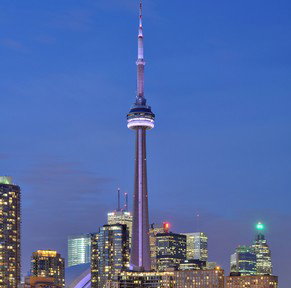
Toronto's CN Tower's overnight light display uses special colours to celebrate a number of cultural events, as well as to support charitable organisations. Can you identify which of these days have a special light show?
A collection quiz
by looney_tunes.
Estimated time: 3 mins.
Last 3 plays: Guest 31 (9/20), rivenproctor (19/20), LauraMcC (18/20).
Select only the major cultural commemorations approved by the CN Tower Authority for the display of a special lighting show. Ignore the other suggestions.
There are 20 correct entries. Get 2 incorrect and the game ends.
St Patrick's Day Victoria DayApril Fool's Day National Indigenous Peoples' Day Kwanzaa Emancipation Day Australia Day Canada Day Vesak Day Easter Rosh Hashanah Holi Valentine's Day Diwali Nowruz Presidents' Day ANZAC Day International Francophonie Day Hanukkah ChristmasNew Year's Day Eid al-Fitr Bastille Day Hallowe'en Lunar New Year
Left click to select the correct answers. Right click if using a keyboard to cross out things you know are incorrect to help you narrow things down.
These are not the only approved days, but they indicate the intent of the program, which also includes special lighting on Canada Multiculturalism Day (June 27), celebrated as part of the week leading up to Canada Day on July 1. The days on the approved list include popular culture celebrations, historically significant days and a range of religious festivals. In addition to these, the tower's lights are set for special shows for certain sporting events, and charitable organisations are invited to apply to have a night's lighting dedicated to them. As well as the themed display for the night, which runs from sunset until 2am, there is usually an animated show for the first five or ten minutes of each hour, and a rainbow display (for solidarity and acceptance) for five minutes at the half hour.
When the tower opened in 1976, it was lit by incandescent lights. These were removed in 1997, because they were expensive to run and difficult to replace. In 2007 a full set of 1330 LED lights, capable of producing over 16 million different colours from each display, allowing for even more possibilities when they are linked). LEDs, unline incandescent lights, are unidirectional, which means the direction in which they send out their light can be precisely controlled to light up the desired areas, while minimising the impact on other areas nearby. They are still quite bright, of course, and are dimmed during periods of bird migration (late March - late June, late September - early December), so as to reduce their impact. But the show goes on.
The secular holidays which have special lighting include:
*New Year's Day, when a multi-coloured light show runs from a few minutes before midnight on December 31 through into the new year, before reverting to red-and-white or solid red for the start of January's health-based RED January;
*Lunar New Year, sometimes referred to as Chinese New Year, whose date varies each year, but is typically in February or March, when the tower is lit in red for luck and prosperity, and includes programs displaying characters of the Chinese zodiac;
*Valentine's Day (February 14), when the tower is lit in several shades of red, whose intensity is varied to produce a pulsating effect, suggestive of a beating heart;
*St. Patrick's Day (March 17), when the entire tower is a bright green;
*International Francophonie Day (March 20), the tower is lit in a vertical set of stripes (red, blue, yellow, green and purple) to represent the five continents on which members of the French-speaking community reside;
*Nowruz, also known as Persian New Year (the vernal equinox, March 20 or21), when green is used to represent renewal and new beginnings, and the awakening of nature with the coming of spring
* Victoria Day (originally the actual birthday of Queen Victoria on 24 May, now celebrated on the Monday preceding May 25), when the display is red and white, Canada's national colours;
* National Indigenous Peoples' Day (June 21), when the lights are programmed to suggest the traditional Medicine Wheel in colours of yellow, blue, red and white;
*Canada Day (1 July), another day on which the national red and white are on display;
*Emancipation Day (Aug 1), when the Pan-African freedom and heritage colours of red, green and gold cover the tower;
*Hallowe'en (October 31), when the primary colour is pumpkin orange (sometimes shadowed to look as if it has been carved), with green to represent the stem; on years when this coincides with part of the celebration of Diwali (see below), purple is incorporated into the display.
*Kwanzaa (Dec 26-31), when the three specific colours of the Pan-African flag (black for the people, red for the shared blood and historical struggles, green for fertile land and hope) are used.
The CN Tower Authority does not allow religious groups to request light shows in honour of their individual celebrations, with the exception of a list chosen to represent some of the most significant days for the major world religions - Christianity, Islam, Hinduism and Judaism. The precise dates for most of these varies from year to year, so no exact dates will be listed. It should also be noted that some of them sometimes overlap or coincide, in which case the display is adjusted to acknowledge both. The designated days include:
*Holi, which has a shifting rainbow palette, suggesting the coloured powder thrown during celebrations of this Hindu festival;
*Easter, with pastel shades of blue, pink and yellow suggestive of the delicacy of springtime and Easter eggs;
*Eid al-Fitr, when the tower displays the traditional Islamic colours: green for peace and paradise, white for purity and festivity;
*Vesak Day, when the tower is lit in the shades of blue, yellow, red, white, and orange found in of the Buddhist flag;
*Rosh Hashanah, when the tower is bathed in bright solid white, the traditional colour for Jewish High Holy Days because it represents purity;
*Diwali, when the fact that the celebration of the triumph of good over evil is celebrated by all three of India's main religions (Hiuduisn, Sikhism and Jainism) is reflected by the use of the colours of the Indian tricolor: saffron, white and green;
*Hanukkah, with the observation pod's brilliant white providing a contrast to the vivid blue of the base, elevator shafts and antenna spire;
*Christmas, when the tower features alternating blocks of red and green, with periodic dynamic displays in which the colours swirl and are overlaid with white snowflakes
The CN Tower Authority also promotes sporting achievements, with special light shows for designated events. The first home game for any of Toronto's major league clubs leads to the club colours being featured - and if that conflicts with other planned lighting, this display occurs at the top of each hour instead of the usual display at that time. This happens again should they make the playoffs in their respective sport, and even for non-Toronto Canadian teams who make playoffs in an international competition (usually the National Hockey League) - after all, their success brings reflected glory to the citizens of Toronto as well as the rest of Canada, not just their home city. For example, when the Edmonton Oilers played in the 2025 Stanley cup final, the tower was lit in their team colours of royal blue, orange and white.
The CN Tower Authority has a standing invitation for charitable organisations to request a special display to raise awareness for their cause. One of these was mentioned above: RED January is a health campaign encouraging everyone to 'Rise Every Day', committing themselves to increased physical activity and a healthy lifestyle. Other days, such as World AIDS Day and World Cancer Day are regularly featured. On occasion the Tower Authority changes the lighting in response to a significant international event, such as the death of Nelson Mandela on December 5 2013, when the tower was lit in the colours of the South African flag. Following the Russian invasion of Ukraine in 2022 the tower was lit in the blue and yellow colours of the Ukrainian flag for several weeks.
This quiz was reviewed by FunTrivia editor stedman before going online.
Any errors found in FunTrivia content are routinely corrected through our feedback system.