FREE! Click here to Join FunTrivia. Thousands of games, quizzes, and lots more!
Quiz about Avian Ambassadors

Avian Ambassadors Trivia Quiz

Birds Shared Between the UK and USA

Several species enjoyed by British birders range across the pond to the US; others were introduced there, and there's the rare example of a US bird introduced to the UK. Can you recognize these avian ambassadors?

A photo quiz by pusdoc. Estimated time: 2 mins.
  1. Home
  2. »
  3. Quizzes
  4. »
  5. Animal Trivia
  6. »
  7. Wild Birds
  8. »
  9. Wild Birds UK

Author
pusdoc
Time
2 mins
Type
Photo Quiz
Quiz #
424,787
Updated
Jul 15 26
# Qns
10
Difficulty
New Game
Avg Score
8 / 10
Plays
24
Last 3 plays: Jaydel (7/10), JoannieG (4/10), Lindaellen (7/10).
-
Question 1 of 10
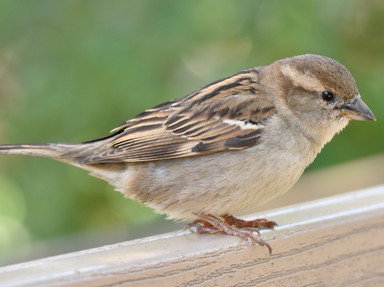
1. Which noisy bird, often found in large flocks, was introduced to the US in New York and in Portland, Oregon in the 1800s? Hint


Question 2 of 10
2. These are the swans involved in "swan upping" in the UK. Which type are they? Hint


Question 3 of 10
3. This bird has spread to new territory on its own, appearing in the UK in 1955. The US population spread from a small group that escaped in the Bahamas in 1974. Hint


Question 4 of 10
4. Which dabbling duck, found in both the UK and US, is named for a visible part of its physiognomy? Hint


Question 5 of 10
5. What type of seabird is this? The bill is black with a yellow tip. Hint


Question 6 of 10
6. In the UK, this is just called a "swallow." In the US, it has the name of its frequent habitation attached - which qualifier is this? Hint


Question 7 of 10
7. This is the peregrine falcon, famed for its lightning fast dives after prey. What is its favorite food? Hint


Question 8 of 10
8. In the UK, this is called simply "teal." In the US, the bird is named for which colorful part of its anatomy? Hint


Question 9 of 10
9. The osprey predominantly eats what sort of prey? Hint


Question 10 of 10
10. The Canada goose was intentionally introduced to England from North America. In which century did this first introduction occur? Hint


(Optional) Create a Free FunTrivia ID to save the points you are about to earn:

arrow Select a User ID:
arrow Choose a Password:
arrow Your Email:


View Image Attributions for This Quiz

Most Recent Scores
Today : Jaydel: 7/10
Today : JoannieG: 4/10
Today : Lindaellen: 7/10
Today : Guest 69: 10/10
Today : Guest 72: 5/10
Today : debbitts: 7/10
Today : Guest 73: 5/10
Today : thomas1975: 7/10
Today : Guest 78: 6/10

Quiz Answer Key and Fun Facts
1. Which noisy bird, often found in large flocks, was introduced to the US in New York and in Portland, Oregon in the 1800s?

Answer: Starling

Starlings (Sternus vulgaris, common name is European starling in the US) have a metallic sheen and speckles - they may appear black but as they turn into the light purples and greens may appear. They nest in cavities, and happily adapt to urban environments where many suitable spaces can be found. As they eat insects prodigiously (they aren't picky; they also eat seeds and fruit), they were introduced in Australia in efforts to control agricultural pests. The introductions to the United States were inspired by a desire to introduce birds of cultural significance as well as utility.

They are found throughout the UK except parts of Scotland. In winter, birds from Scandinavia migrate to the UK. Great flocks of starlings create murmurations - billowing clouds of black birds seemingly moving in choreographed flight. Despite their adaptability, their numbers are declining in the UK. Although only about 100 birds were introduced to the US, their numbers have exploded to over 200 million birds in North America.

The incorrect answers are also black birds but all are native to the US - of note the red-winged blackbird of the US is not in the same family as the common blackbird of the UK.
2. These are the swans involved in "swan upping" in the UK. Which type are they?

Answer: Mute swans

Mute swans (Cygnus olor) are native to northern Europe and parts of Asia but introduced populations are found in Australia, New Zealand, the US and Japan. The number of mute swans in the UK has been increasing, most likely due to a ban on fishing tackle containing lead. The introduced US birds are thought to have filled the environmental niche left by declining numbers of native trumpeter swans.

Although the birds are now protected in most areas, they were previously considered a delicacy. As a result, in the UK the mute swans were considered property of the King, and the reigning monarch is dubbed the Seigneur of the Swans. Currently it is only the swans in certain stretches of the Thames that are rounded up for the annual Swan Upping each July.

Mute swans aren't truly silent, they're just quieter than other species of swans. They have a knob on their orange bills - the shape and color of the bill is a key feature to distinguish swan species. The other listed swans are all native to the US; whooper and tundra swans (subspecies Bewick's swan) can be found in the UK as well.
3. This bird has spread to new territory on its own, appearing in the UK in 1955. The US population spread from a small group that escaped in the Bahamas in 1974.

Answer: Collared dove

The collared dove (Streptopelia decaocto) is referred to as the Eurasian collared dove in the US. It is fairly large for a dove, and the overall color is pinkish gray, with the notable black collar. It can raise up to three broods per year, which may be partly responsible for its prolific spread both naturally and through intentional release and escapes. Collared doves are found throughout the UK except for small areas of Scotland and Ireland; in North America they inhabit all but the northern reaches of the US and Canada.
4. Which dabbling duck, found in both the UK and US, is named for a visible part of its physiognomy?

Answer: Shoveler

The shoveler (Northern shoveler in the US, Spatula clypeata) is named for its enormous, spatulate bill. The other ducks mentioned are diving ducks, not dabblers. Waterfowl are generally more able to spread across the oceans, so this bird is native to both Europe and North America rather than being an introduced species. Like other dabbling ducks, it forages with its head down and tail up - they filter edible items from the water with their large bills.

The birds are sexually dimorphic, meaning that males and females differ. The photo shows the colorful male, with a green head, chestnut sides and bright white chest. The female has the same bill shape but is a more mottled brown; both sexes have bright orange legs.
5. What type of seabird is this? The bill is black with a yellow tip.

Answer: Tern

This is the sandwich tern, (Thalasseus sandvicensis), named for the locality in Kent where it was first described. Terns tend to have narrower wings and a more aerodynamic silhouette than the familiar gulls. They feed by plunging into the water after prey - for the sandwich tern this is primarily small fish.

Gulls are heavier bodied and are more likely to scavenge food although they will catch prey directly. Skuas and petrels are aggressive birds - skuas have hooked bills whereas petrels belong to the tubenose group like albatross. Sandwich terns are found only in coastal areas, seen in the UK mostly in the summer months. The US birds are on the Atlantic and Gulf coasts. The yellow tip to the bill is distinctive - it looks like the bird dipped its beak in mustard for its sandwich!
6. In the UK, this is just called a "swallow." In the US, it has the name of its frequent habitation attached - which qualifier is this?

Answer: Barn

In the UK, most birds of this type are referred to as martins and this bird is the generic "swallow." There are many subspecies of this bird, scientific name Hirundo rustica. They are extremely widespread, found on every continent with vagrants even showing up in Antarctica. The barn swallow builds cup nests formed from balls of mud, often constructing these nests in buildings and structures erected by humans.

They are noted for their forked tail, hence the term "swallow-tailed". Agile flyers, they hunt insects on the wing, often over bodies of water. Swallows live throughout the UK except a few patches in Scotland. They migrate annually to sub-Saharan Africa, returning in spring to breed in the UK. The US birds fly south to Central and South America for the winter months, often departing as early as June.
7. This is the peregrine falcon, famed for its lightning fast dives after prey. What is its favorite food?

Answer: Birds

The peregrine (Falco peregrinus) in the photo is clutching a pigeon, one of its most common prey along with doves and waterfowl. Favored by falconers, the bird is highly intelligent and trainable. The speed of their dives, or stoops, has been measured in multiple ways and has topped out at well over 200 miles/hour (>320 kph).

After DDT induced dips in population, the population of peregrines has increased as they have adapted to nesting on tall buildings to take advantage of the copious pigeon numbers in cities. The falcon is distributed across the world except Antarctica, and has different color variations in disparate regions.
8. In the UK, this is called simply "teal." In the US, the bird is named for which colorful part of its anatomy?

Answer: Green-winged

The teal (Anas crecca) or green-winged teal drake has a noticeable green eye stripe, but it is a seldom seen speculum on the wing that lends its name. The female birds are a more mottled brown but still have the green speculum. Great game birds, teal are known for their rapid take-off from water and quick flight. Dabbling ducks, they feed on aquatic vegetation.

Teal are found year-round in the UK, with the population increasing in winter as more northerly birds migrate to open water areas in the UK. In the US, a similar increase in winter numbers is seen. The wrong answers are the start of other bird species of North America such as the chestnut-collared longspur, the white-tailed kite and the red-footed booby.
9. The osprey predominantly eats what sort of prey?

Answer: Fish

The osprey (Pandion halieaetus) feeds nearly exclusively on fish - the one in the photo is perched on a telephone pole to consume its latest catch. They dive into water, talons extended, to snatch the fish and then fly with the fish held head forward to a perch to eat - that is the most aerodynamic way to carry their prey.

The osprey is widespread, found on every continent except Antarctica. In the UK they are predominantly found in Scotland whereas they are more widespread in the US. They build stick nests, and have taken advantage of nesting poles erected by people eager to help their survival. The osprey is the only species in its family and looks much the same world-wide. The juveniles appear speckled due to lighter tips on the feathers, and females often have a "necklace." They fly with their wings bent at the "wrist," forming an M shape in the air.
10. The Canada goose was intentionally introduced to England from North America. In which century did this first introduction occur?

Answer: 1600s

The Canada goose, Branta canadensis, has grown in population and range, most likely due to removal of natural predators in many areas. The first pairs in Europe were a gift from Samuel Champlain to France, birds were sent to England to join the waterfowl flock in St. James Park in the latter half of the 1600s. Some birds reach the British shores naturally, usually mixing in with flocks of native geese; the birds also naturally reach Siberia across the Bering Strait. New Zealand also has a large, introduced population of the geese.

In the US, some formerly migratory groups have now become resident, adapting well to parks and retention ponds. The birds are vegetarian but not picky about which vegetation and seeds they consume.
Source: Author pusdoc

This quiz was reviewed by FunTrivia editor rossian before going online.
Any errors found in FunTrivia content are routinely corrected through our feedback system.
7/15/2026, Copyright 2026 FunTrivia, Inc. - Report an Error / Contact Us