FREE! Click here to Join FunTrivia. Thousands of games, quizzes, and lots more!
Won't You Be My Neigh-Bor Trivia Quiz
Identifying Horse Anatomy
There are a lot of unique features in the anatomy of a horse. Some of these features are more prominent in specific breeds of horse that identify them as such. How well do you know these parts of a horse?
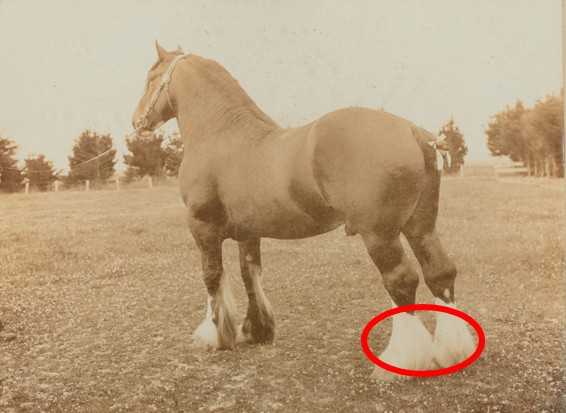
The Clydesdale is a draught horse of Scottish origin. It is a very well-known breed, often recognized by the long, silky hair on the lower legs. This longer hair is known as feathers, or feathering. Feathering is common in several other draught breeds and many breeds of pony.
The particular horse in the photograph is Tam O'Shanter, a prizewinning Clydesdale owned by David Clark in the early 20th century.
2. Jibbah
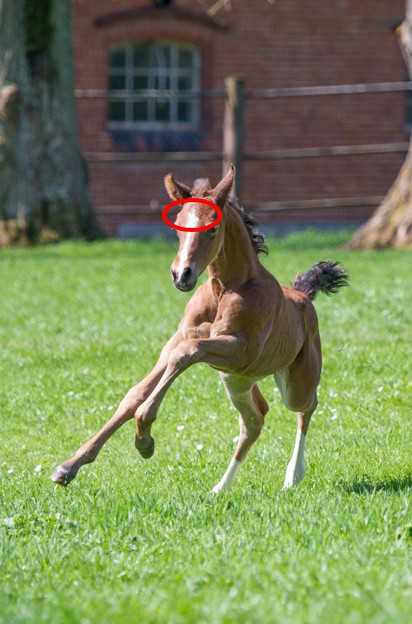
The Arabian horse is a breed that was developed in the Middle East, primarily (as the name suggests) the Arabian peninsula. The Arabian has a characteristically broad forehead that sometimes bulges outward. The nomadic Bedouin tribes call this wide space between the eyes the jibbah. The jibbah of the Arabian horse is considered a mark of beauty and nobility.
3. Cannon
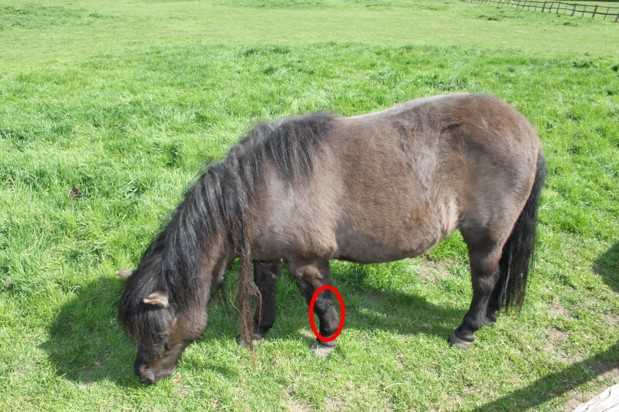
The main bone in the lower leg of a horse is called the cannon. It is found between the knee and the fetlock. In the case of the Shetland pony, this bone is generally much shorter in comparison to its overall size than other breeds. Because the cannon is a weight bearing bone, the shortness of the Shetland's cannon bones keep it significantly hardy, which made it historically ideal for working on farms and in coal mines.
4. Tobiano
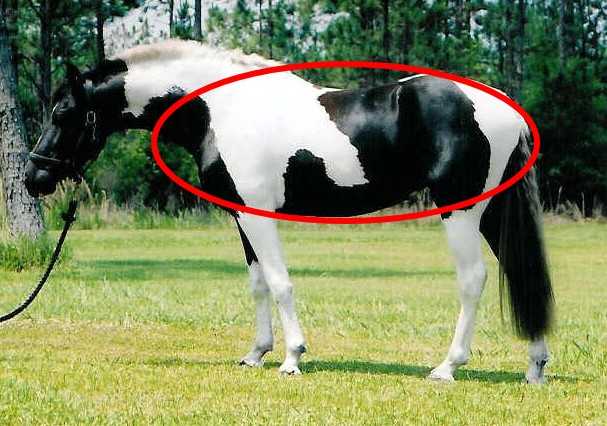
Tobiano is a dominant color pattern common on pinto horses. Pinto horses are also referred to as paints, or piebalds in British English. There are variations of tobiano; if the colors are black and white, as the pinto in the picture shows, it would be considered piebald. Any other color, such as bay or gray, is referred to as skewbald.
In American English, these color combinations are also sometimes referred to simply by their color (e.g. black-and-white or bay-and-white painted). Other paint variations that may look similar but are distinctly different are overo, splash, and sabino.
5. Skirt
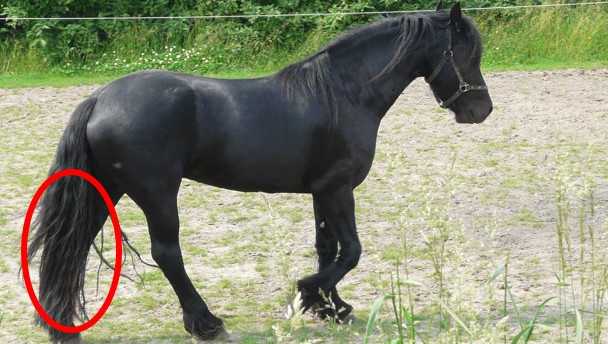
A horse's tail contains two parts; the dock and the tail. The dock is the muscle and skin that creates the tail's shape, and the skirt is the long hair that falls past the dock. Friesians are known to have a long skirt, feathers, and mane. Most horses have at least some amount of skirt, though perhaps most not as thick as a Friesian.
6. Pangaré
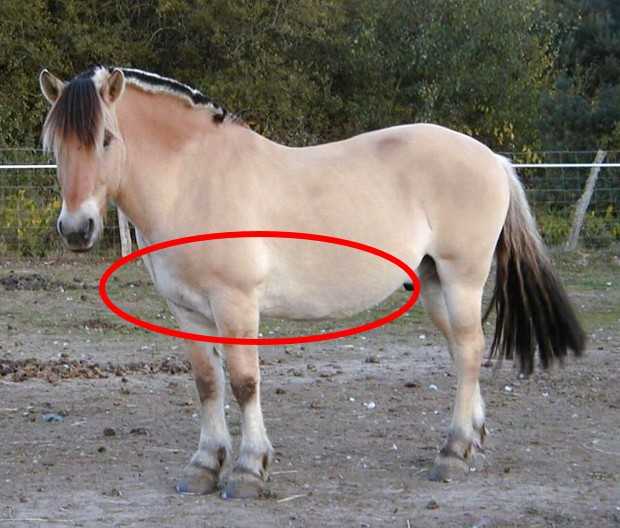
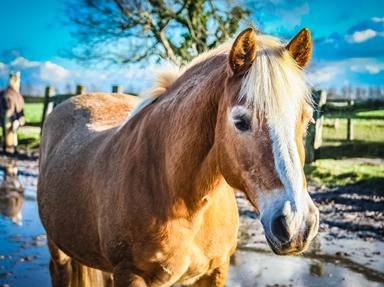
Pangaré is a coat trait that is found on several breeds of horses, as well as some wild horses. It may be most recognizable (and almost always present) on the wild Przewalski's horse and domestic donkey. The trait includes pale hair around the eyes, muzzle, and underbelly. The horse pictured is not that of a Przewalski, but of a Fjord horse, which also commonly sports the pangaré coat.
7. Sickle-hock
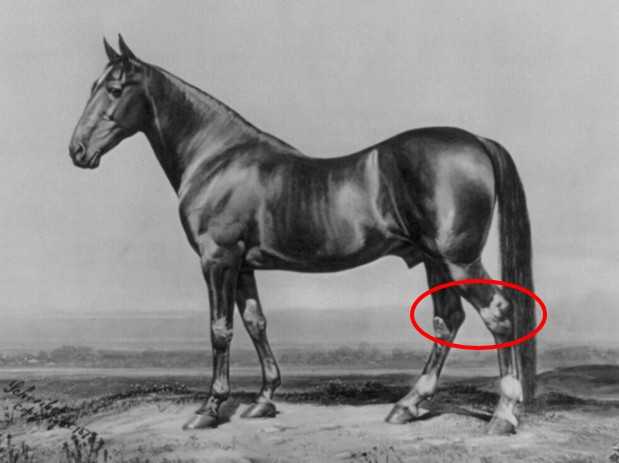
The hock of a horse can be most akin to the ankle of a human. Too much angle on these joints is known as sickle-hock, which creates uneven wear on the hooves. This can cause much pain for an affected horse. Interestingly, however, the Tennessee Walking Horse is an exception, and sickle-hock is a distinct feature of the breed.
The horse in the photo is not a Tennessee Walking Horse; Hambletonian 10 was a Standardbred horse. He was of an unusual build, and featured hocks much more angled than the usual Standardbred.
8. Sclera
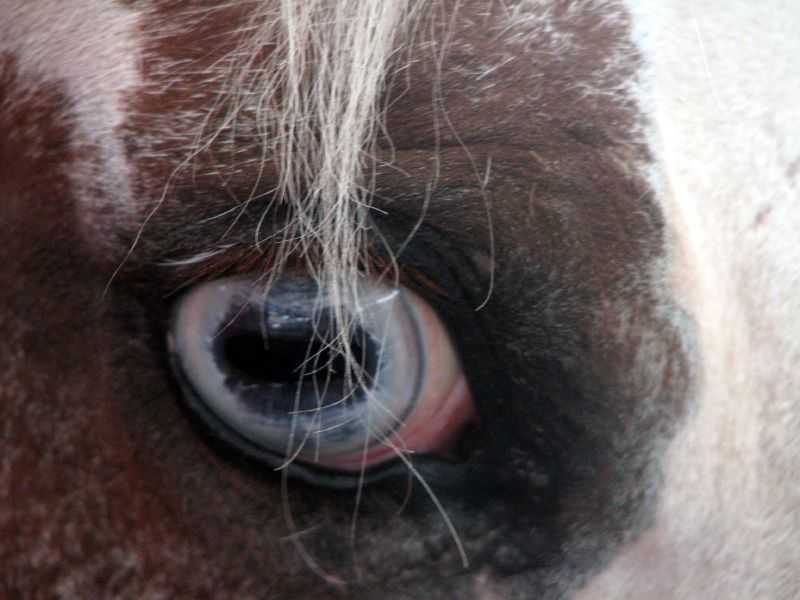
The Appaloosa is perhaps most noted for its leopard-like coat, but it is not the only unique feature of the breed. It also has mottled skin, striped hooves, and visible white sclera. Sclera is often referred to as the "white of the eye". While this is commonly visible on humans, this is not usually the case with horses, as they usually remain hidden.
The Appaloosa is one of very few breeds that have the white sclera visible at all times.
9. Forelock
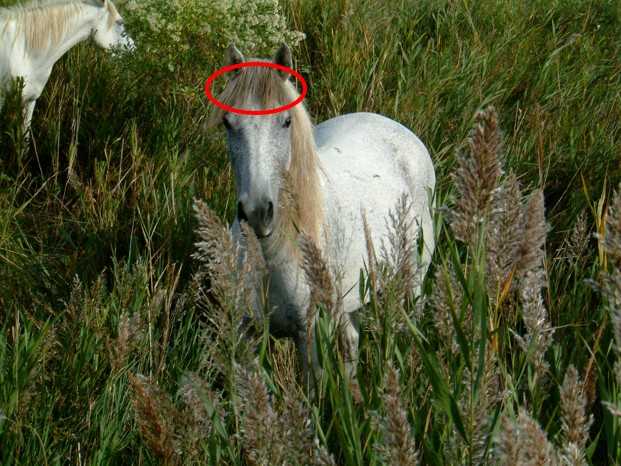
The forelock is the part of a horse's mane that falls forward onto the forehead, beginning from the poll (the spot between the ears). Most horses have some sort of forelock, though some wild breeds such as zebras and donkeys lack them entirely. Little is known as to why these forelocks exist, though it is noted that most breeds with longer, thicker forelocks are typically found in colder, wetter climates, and thin or lacking forelocks are found on breeds used to harsher, hotter climates. Pictured is the Camargue horse, known for always being gray and having a full forelock.
10. Withers
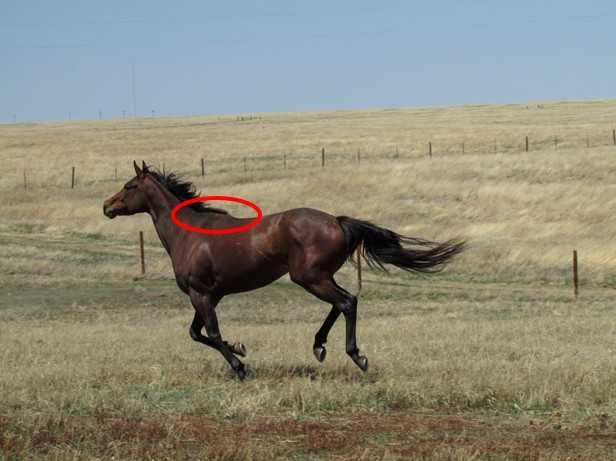
Every horse has withers, the point above the shoulders found between the neck and back. When measuring a horse's height (in hands), the horse is measured to the top of the withers. In the case of the Thoroughbred pictured, the withers are much more prominent than in most other breeds.
This aids in their speed and agility, which is important in a horse bred for such purposes. It does, however, make it more difficult to fit saddles without pinching the horse's nerves, so special tack is often used.
This quiz was reviewed by FunTrivia editor rossian before going online.
Any errors found in FunTrivia content are routinely corrected through our feedback system.