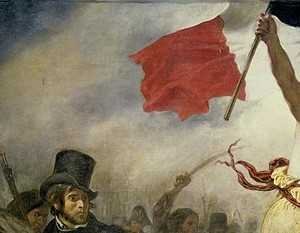
"Liberty Leading the People" by Eugene Delacroix dates to 1830 and comes out of the Romantic period. Delacroix's style stands out for its energetic brushwork and strong sense of movement. The French government acquired the painting in 1874 so it could be displayed in the Louvre.
While it is often associated with the ideals of liberty, equality, and fraternity from the original French Revolution, the scene actually represents the events of the 1830 revolution. Over time, it has taken on a broader meaning, becoming an enduring symbol of French patriotism and revolution and influencing artists and activists around the world.
2. Georgia O'Keeffe
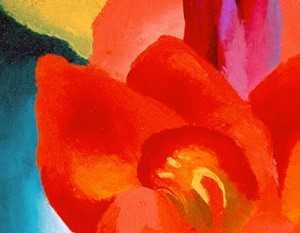
Painted in 1919, "Red Canna" by Georgia O'Keeffe reflects her Modernist approach. She became known for abstract work that focused on capturing the essence of a subject rather than recreating it realistically, although this particular piece leans slightly more toward realism than many of her others. O'Keeffe returned often to floral imagery, producing works like "Black Iris" and "Red Poppy," each offering a fresh way of looking at nature.
Her distinctive style and willingness to experiment secured her place as a major, sometimes controversial, figure in American art.
3. Francisco Goya
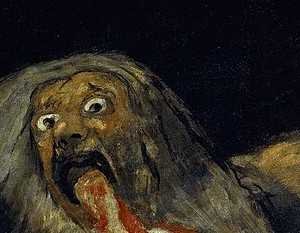
Francisco Goya's "Saturn Devouring His Son" is one of the most unsettling works of the early 19th-century Romantic period. It belongs to the Black Paintings series, which Goya painted directly onto the walls of his home. These works are known for their dark palette and are often linked to his personal struggles and disillusionment.
The painting shows Saturn from Roman mythology, who feared being overthrown by his children and consumed them. Goya's version emphasizes the brutality of the act, creating a powerful sense of horror and despair. Taken together, the Black Paintings reveal both his inner turmoil and the instability of the era.
4. Michelangelo
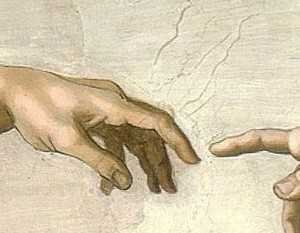
Created in the early 16th century, "The Creation of Adam" is one of Michelangelo's most recognizable works from the Renaissance. Pope Julius II commissioned him to decorate the Sistine Chapel ceiling in Vatican City, where this image appears. The piece reflects the High Renaissance style, especially in its idealized human forms and careful attention to anatomy.
The most famous detail shows God's and Adam's fingers reaching toward one another, capturing a moment of tension and connection between the divine and the human.
5. Claude Monet
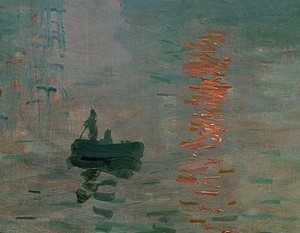
Claude Monet painted "Impression, Sunrise" in 1872, and it ended up giving the Impressionist movement its name. The scene captures the harbor at Le Havre, focusing on shifting light and atmosphere rather than precise detail. At the time, France was undergoing major changes tied to industrialization and modernization, and the painting reflects that sense of transition. Early reactions were mixed, with some critics dismissing it as insignificant, but its influence quickly grew.
It is now considered a defining work of Impressionism.
6. Hieronymus Bosch
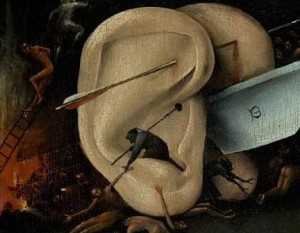
Between 1490 and 1510, Hieronymus Bosch created "The Garden of Earthly Delights," a complex triptych from the Northern Renaissance. His work is known for its imaginative and often surreal qualities. The painting presents an earthly paradise, but the right panel shifts dramatically into a chaotic vision of Hell filled with detailed punishments. Among the strange imagery are ears, sometimes interpreted as symbols of sinful listening and gossip.
The overall message points to the consequences of indulgence and sin, reflecting the moral and religious concerns of the time.
7. Emanuel Leutze
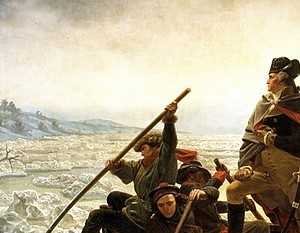
Emanuel Leutze's "Washington Crosses the Delaware" comes from the mid-19th century and depicts George Washington leading his troops during the American Revolutionary War. The composition highlights both realism and drama. The original version of the painting was accidentally destroyed during an Allied bombing raid on the Kunsthalle Bremen, where it had been displayed. Fortunately, Leutze created other versions, and one of them now hangs in the Metropolitan Museum of Art in New York City.
8. Pablo Picasso
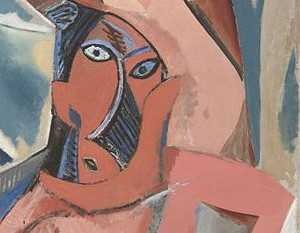
Painted in 1907, "Les Demoiselles d'Avignon" shows Pablo Picasso moving into the groundbreaking style of Cubism. The figures are fragmented and presented from multiple viewpoints, a clear break from traditional representation. Influences from African and Iberian art are also visible in the stylized forms.
The painting had a major impact on modern art, challenging established norms and inspiring other artists. Figures like Georges Braque and Juan Gris went on to develop Cubism further after encountering this work.
9. Sandro Botticelli
Sandro Botticelli created "The Birth of Venus" in the 15th century, and it remains one of the best-known examples of Early Renaissance art. The style emphasizes natural forms while drawing heavily on classical mythology. Venus, the goddess of love and beauty, is shown emerging from the sea, fully grown according to the myth.
Her pose follows the contrapposto stance, with weight shifted onto one leg, giving her a more natural and balanced appearance. She stands on a scallop shell, a symbol tied to her origin and her connection to the sea.
10. Piet Mondrian
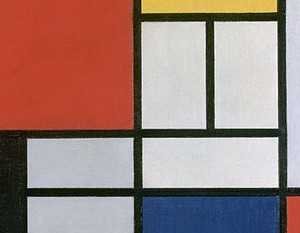
In 1921, Piet Mondrian produced "Composition with Large Red Plane, Yellow, Black, Grey and Blue," a key example of De Stijl, also known as Neoplasticism. This movement aimed to express universal harmony through abstract geometric forms. Mondrian spent time in Paris, where he encountered Cubism and other avant-garde ideas that shaped his approach.
His work focuses on balance, using primary colors along with black, white, and grey to create a sense of order. For him, these colors represented fundamental aspects of visual perception and contributed to a pure, balanced composition.
11. Mary Cassatt
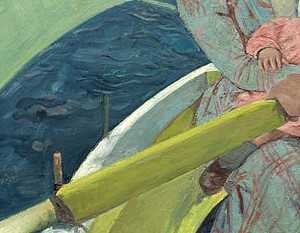
Mary Cassatt painted "The Boating Party" between 1893 and 1894, working within the Impressionist style. As a woman, she had to overcome barriers to establish herself in the art world. The painting shows a relaxed scene of a man and woman in a boat, with the woman holding a baby and surrounded by natural elements. Cassatt drew inspiration from Japanese woodblock prints, which can be seen in her flattened perspective and cropped composition.
12. Georges Seurat
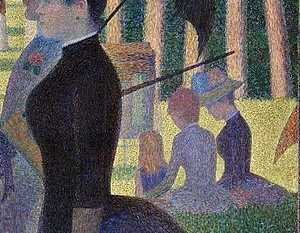
Georges Seurat completed "A Sunday on La Grande Jatte" between 1884 and 1886, and it became a defining work of Pointillism, or Neo-Impressionism. Instead of blending colors on the canvas, Seurat used small, separate dots of pure color that visually merge when viewed from a distance.
The painting presents a calm park scene along the River Seine, where people from different social classes spend their leisure time. Careful attention is given to the figures' clothing and outward appearance, offering a glimpse into the fashion and social structure of the period.
This quiz was reviewed by FunTrivia editor looney_tunes before going online.
Any errors found in FunTrivia content are routinely corrected through our feedback system.